Asmita Karki
The number you want to know is 5,364 meters. That is the official elevation of Everest Base Camp on the Nepal side, and the figure that decides whether your trek is a triumph or a hospital evacuation. Our field coordinators in the Khumbu have watched fit, athletic trekkers turn back at Dingboche while quiet, unhurried hikers stroll into Base Camp smiling. The difference is rarely fitness. It is altitude strategy.
This guide breaks down every sleeping elevation on the classic 12-day Everest Base Camp route, explains exactly how your body will react, and walks you through the preparation that actually matters for 2026.
Source: Rajan Dahal
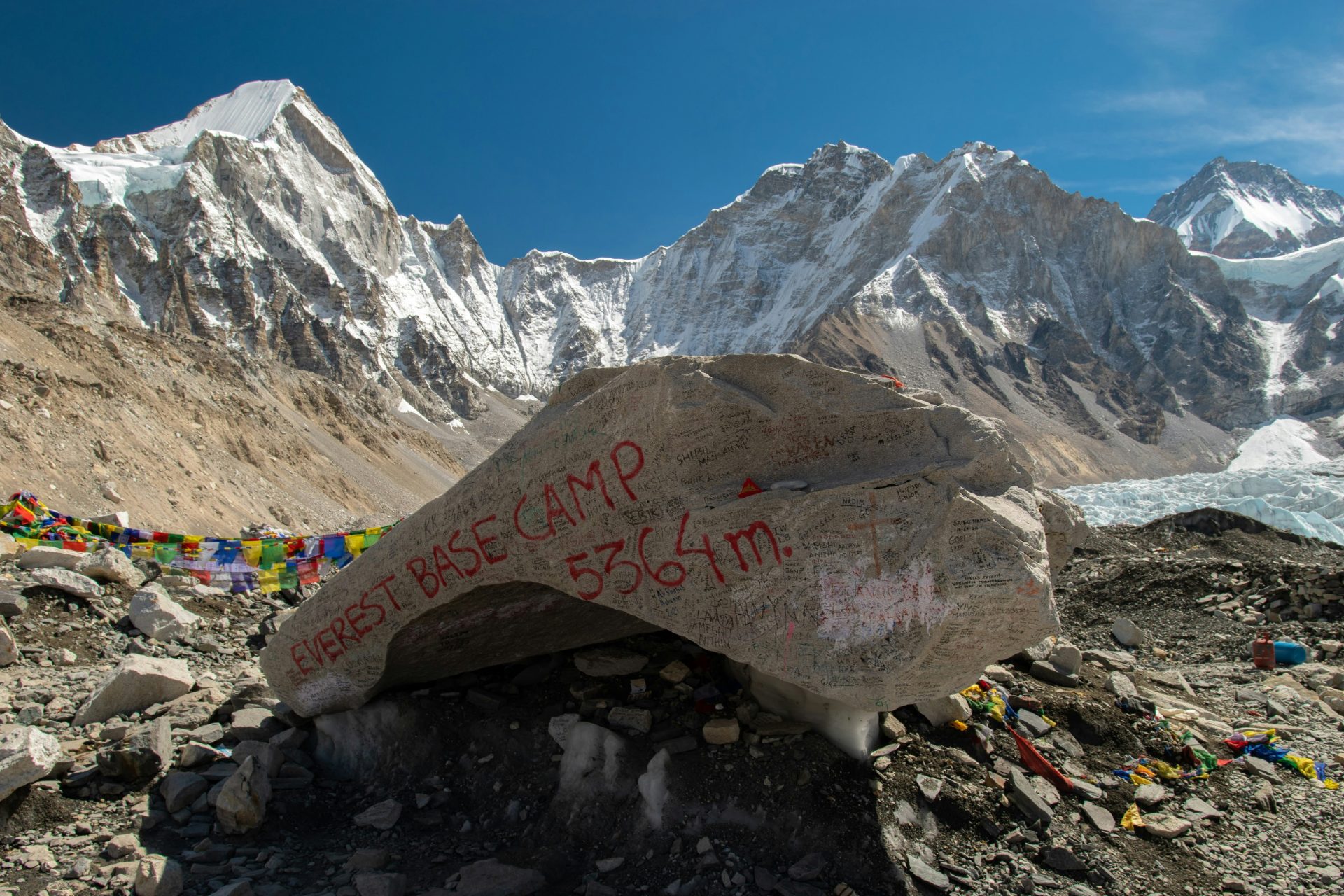
A gaint rock display the altitute at Everest Base Camp.
Everest Base Camp (South) sits at 5,364 meters (17,598 feet) at the foot of the Khumbu Icefall. The trek also includes a side hike to Kala Patthar at 5,545 meters, which is the highest sleeping-adjacent point of the journey and the best viewpoint for Mount Everest itself.
Altitude sickness is not triggered by the highest point you reach during the day. It is triggered by where you sleep. Below is the standard acclimatization-safe itinerary our marketplace guides follow, respecting the 300-500 meter per day sleeping rule above 3,000 meters.
The ultimate guide to planning your dream web travel adventure with the experts from myeasyguide.
Spam free. Unsubscribe anytime. We respect your privacy.
Notice that even on summit day, you sleep lower than your highest point. This is the golden rule of Himalayan trekking: climb high, sleep low.
Above 2,500 meters the air pressure drops noticeably, and by 5,000 meters you breathe in roughly 50% of the oxygen molecules per breath compared to sea level. Expect breathlessness on stairs, broken sleep, mild headaches, and a heart rate 20-30 BPM higher than normal, even when resting.
Source: Kalle Kortelainen
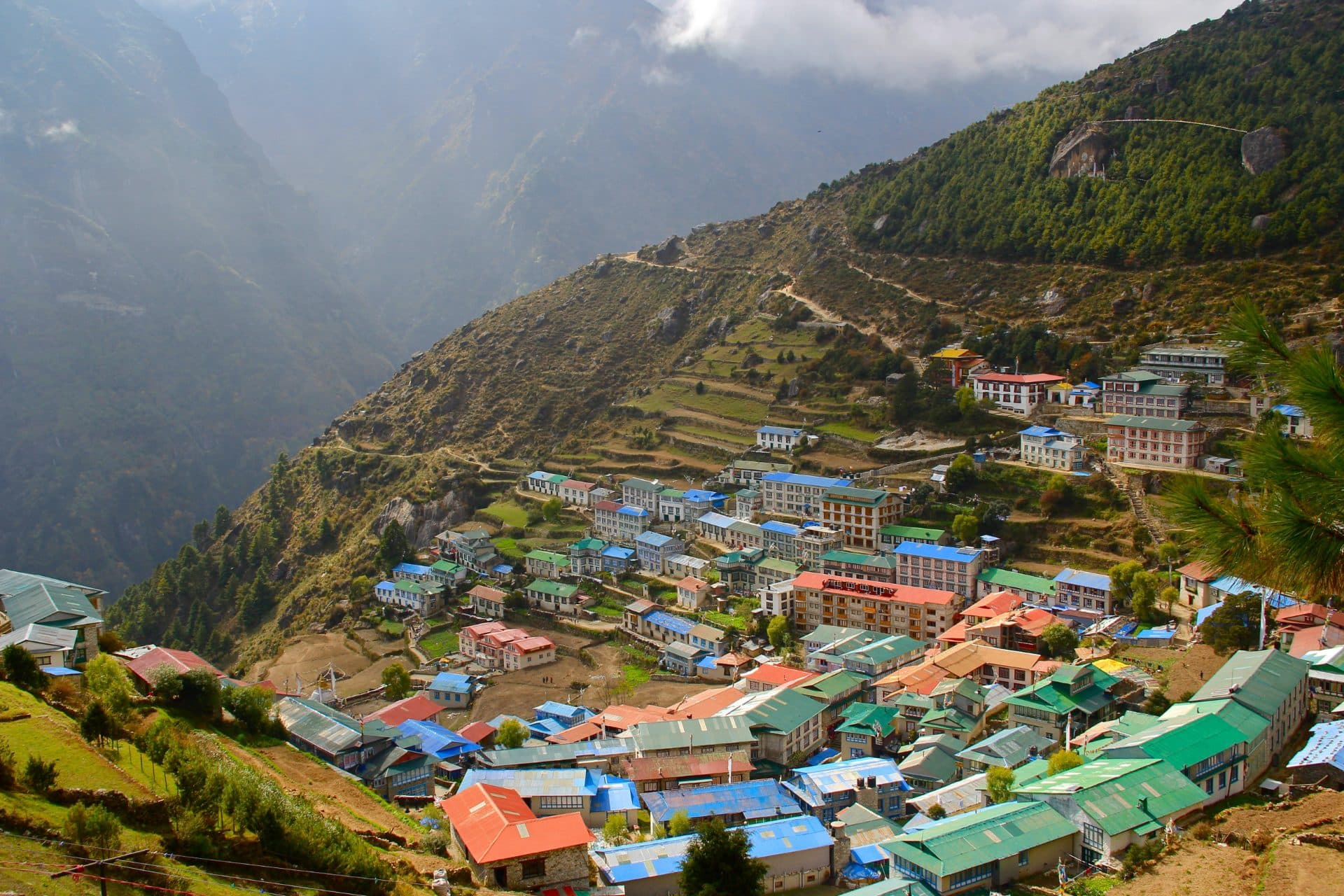
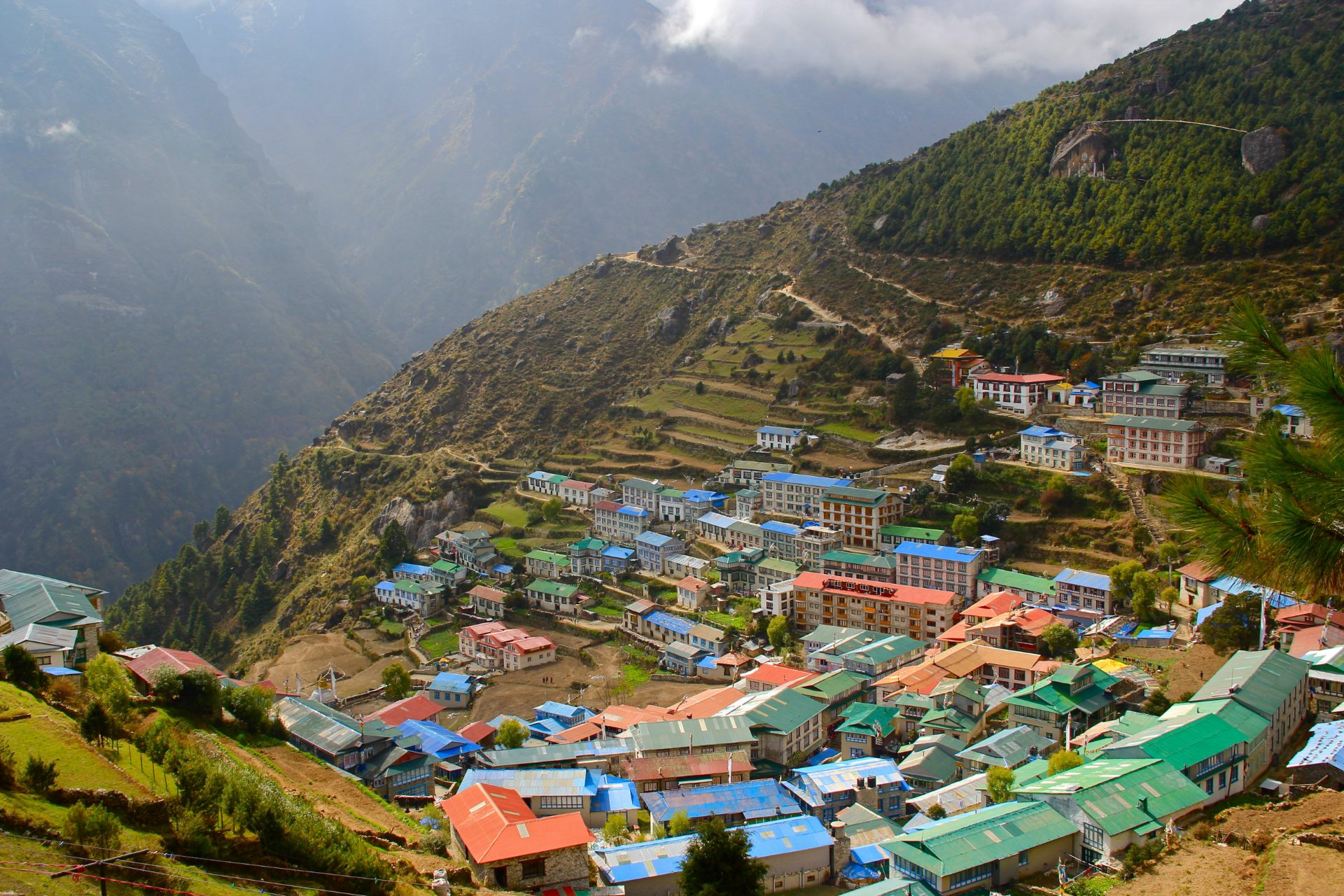
Amphitheater-shaped Sherpa town of Namche Bazaar on the Everest Base Camp trek route.
The climb from Jorsale to Namche is brutal, a relentless 600-meter switchback gain in under three hours. Many trekkers feel their first headache here. The mandatory rest day is non-negotiable. Use it to hike up to the Everest View Hotel at 3,880 meters and descend back down to sleep.
Source: Wikipedia
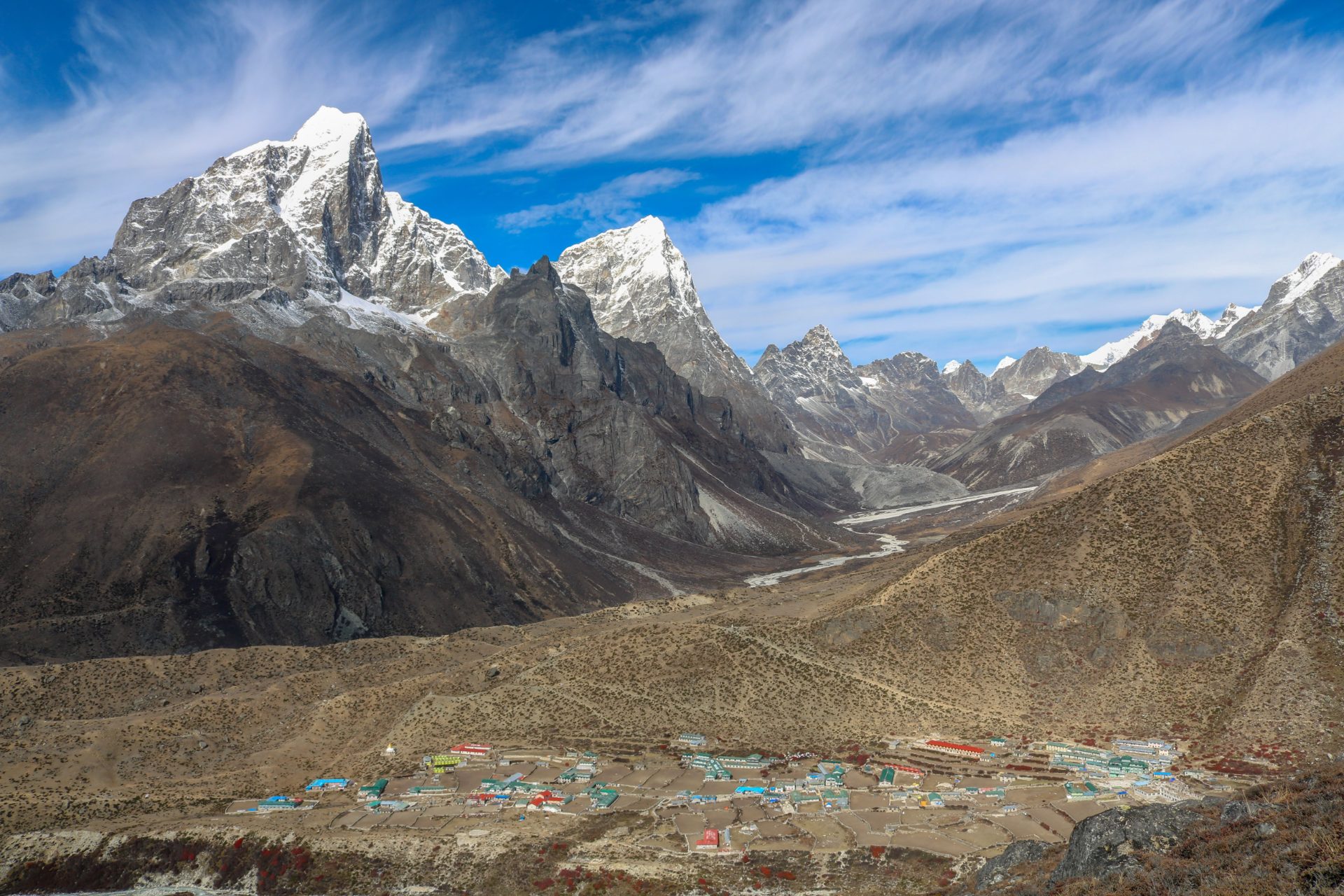
Stone-walled fields and mountain lodges in Dingboche village below Ama Dablam peak.
The air feels thin here, appetites vanish, and minor headaches become persistent. Your second acclimatization day involves climbing Nangkartshang Peak (5,083 m). If you cannot complete this hike, do not continue toward Lobuche.
Source: Wikipedia
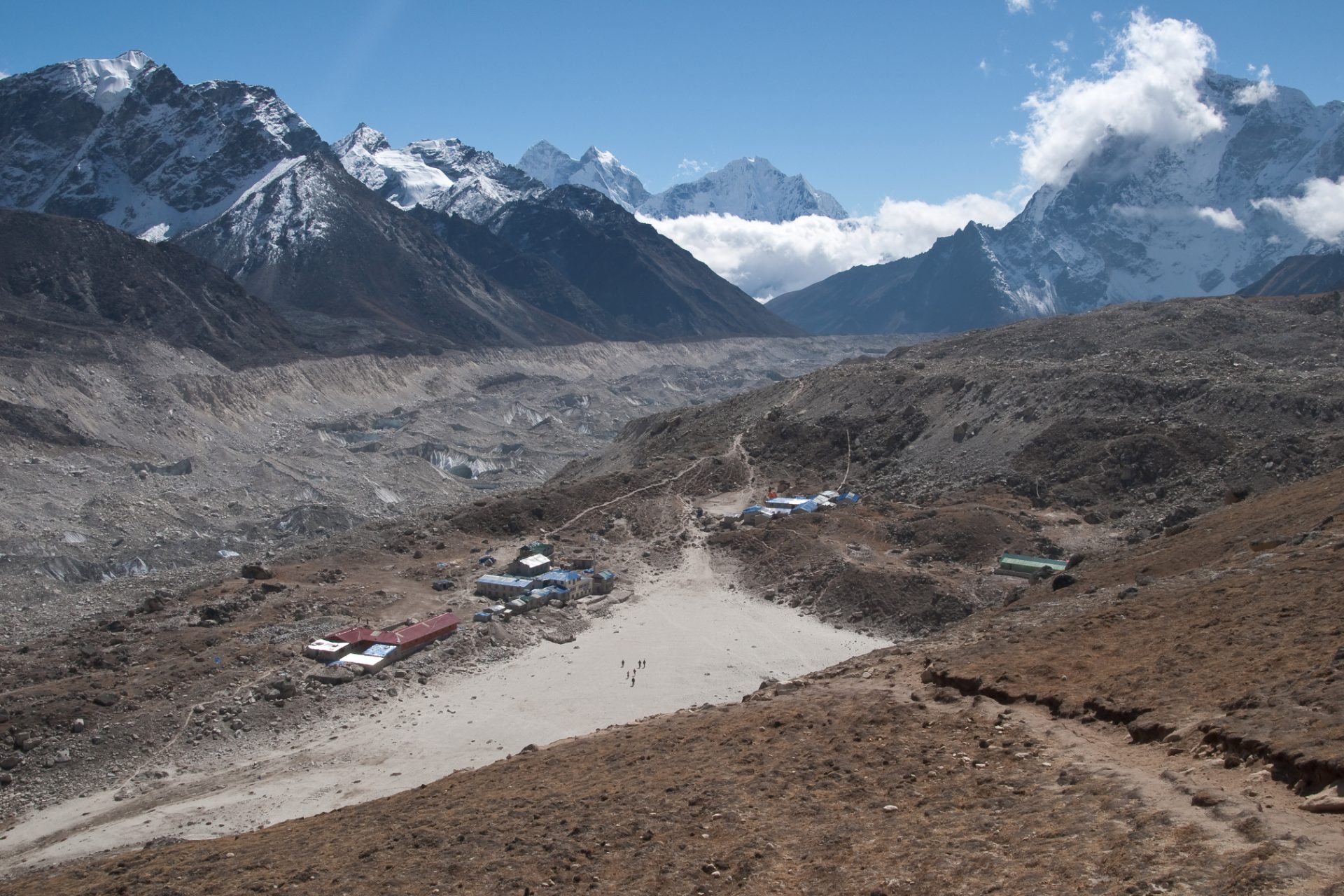
The high-altitude sandy dry lake bed settlement of Gorak Shep near Mount Everest.
Sleeping at Gorak Shep is genuinely uncomfortable. Lodges are basic, temperatures inside rooms drop to -10°C, and Cheyne-Stokes breathing (periodic gasping during sleep) is common. This is one night only, push through it.
AMS exists on a spectrum from mild discomfort to life-threatening HAPE (fluid in lungs) and HACE (brain swelling). Mild symptoms include headache, nausea, fatigue, and disturbed sleep. These are tolerable. Severe symptoms, confusion, loss of coordination (ataxia), wet cough with pink sputum, or breathlessness at rest, demand immediate descent of at least 500-1,000 meters.
Our crews carry pulse oximeters and check oxygen saturation each evening from Dingboche upward. Readings below 75% combined with symptoms trigger an automatic descent protocol.
Foreign trekkers legally require a TIMS card/e-TIMS registration alongside the Sagarmatha National Park entry pass and local municipal fee. To enter the Everest area, you need three specific permits:
Solo trekking has become increasingly restricted across Nepal. While Everest is not classified as a Restricted Area, most agencies and the Nepal Tourism Board now strongly enforce licensed guide requirements. Travelers should confirm current enforcement with their local operator before booking.
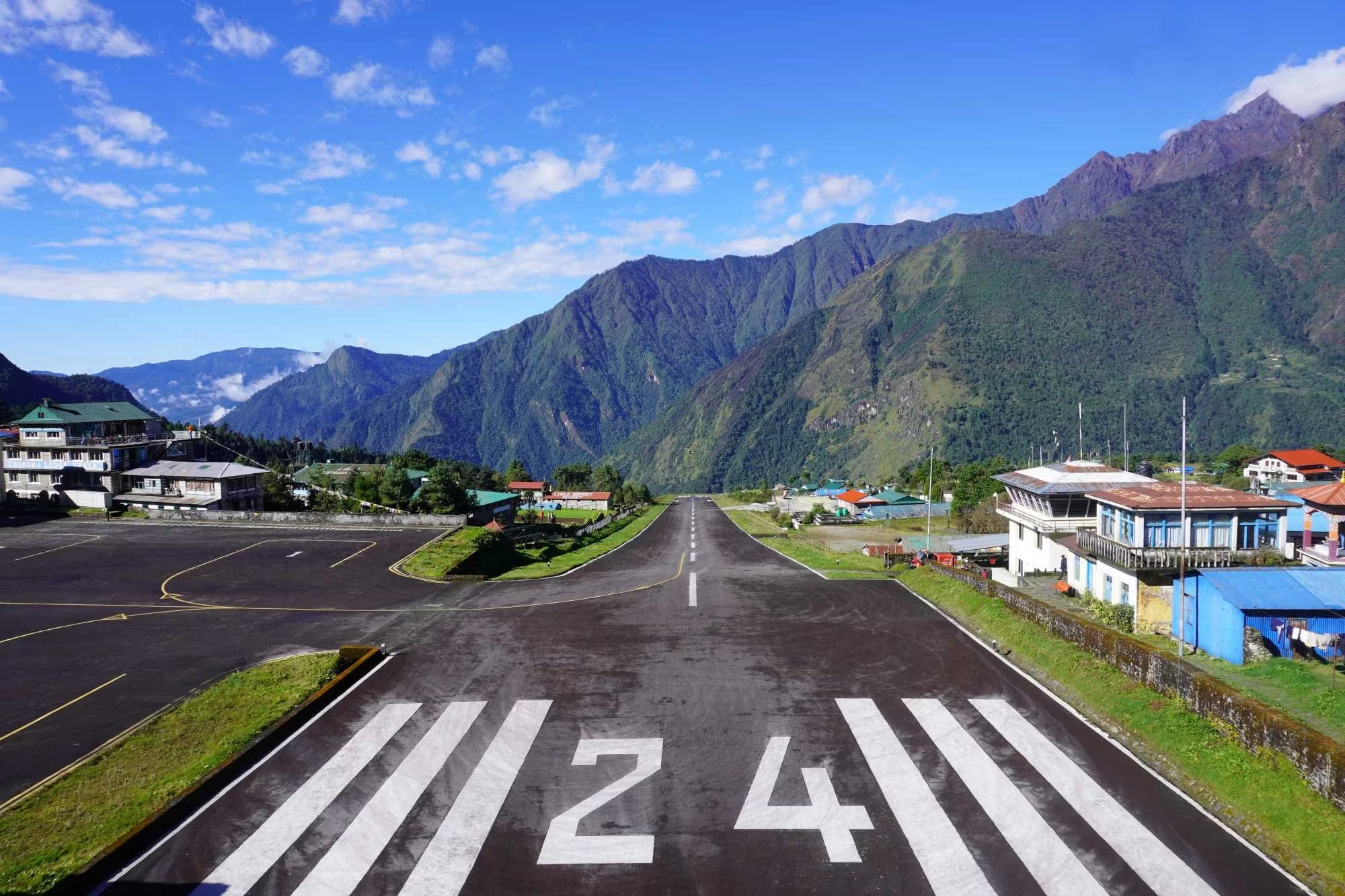
Ground-level view looking up the short tarmac runway of Lukla Airport towards the terminal building.
During peak trekking seasons, March to May and September to November, flights to Lukla do not depart from Kathmandu. They operate from Manthali Airport in Ramechhap, requiring a 4-5 hour pre-dawn drive starting around 1:00 AM. Build 1-2 buffer days into your itinerary for weather delays, which are frequent. Domestic flight costs vary significantly by season; verify live pricing through your marketplace booking agency.
You cannot simulate altitude at sea level, but you can build the aerobic engine that copes with it. Aim for 4-5 sessions per week of zone 2 cardio, long walks, stair climbing, hiking with a loaded pack, or cycling. Build to sustaining 4-6 hours of moderate effort without exhaustion.
Once a week, hike hills with a 7-9 kg backpack. This conditions the exact muscles, ligaments, and posture you will use daily on trail. Add stair-master sessions if you live in flat terrain.
Focus on legs (squats, lunges, step-ups), core stability, and shoulders for pack carry. Two strength sessions weekly is plenty.
Discuss Acetazolamide (Diamox) with your physician before departure. Many trekkers use a prophylactic dose of 125 mg twice daily starting one day before crossing 3,000 meters. It is not a magic pill, it cannot replace proper ascent rates, but it speeds adaptation.
Hydration is the most underrated tool. Drink 3-4 liters of water daily on trail, monitor urine color, and avoid alcohol entirely above 3,500 meters.
Standard travel insurance will not cover you here. You need a policy that explicitly covers high-altitude trekking up to 6,000 meters, emergency helicopter evacuation, and medical treatment for AMS, HAPE, and HACE. A helicopter rescue from Gorak Shep to Kathmandu can cost $5,000-8,000 USD upfront, paid by you if uninsured.
Eat vegetarian. The Khumbu is a Buddhist region where slaughtering animals is locally prohibited, all meat is carried in by porters or mules over multiple unrefrigerated days. Stick to Dal Bhat (lentils, rice, vegetable curry) which offers free refills, balanced carbohydrates, and clean fuel for high-altitude exertion.
Never buy plastic bottled water on the trail. Carry a reusable bottle paired with a SteriPEN UV purifier, Sawyer filter, or chlorine dioxide drops. Boiled water is available at lodges for a small fee.
ATMs disappear past Namche Bazaar. Carry sufficient Nepalese Rupees for the entire trek. Expect to pay extra for:
For mobile data, Nepal Telecom (NTC) outperforms Ncell in the Everest region. Pick up an NTC SIM in Kathmandu.
Always pass mani stones, chortens, and prayer wheels on the left side, keeping them to your right. Walk clockwise around all stupas and religious structures. Remove shoes and hats before entering monasteries like Tengboche Monastery at 3,867 meters. Photography inside prayer halls is prohibited unless a resident monk explicitly permits it.
Tipping is not optional in Nepal, it forms a vital part of guide and porter income. The marketplace standard is 15-20% of your total trek cost, distributed at the end of the trek. A porter who carries 20-25 kg of your gear for 12 days through ice and altitude deserves meaningful recognition.
EBC is not a technical climb. There is no ice axe, no rope, no exposure. What makes it hard is the cumulative effect of 12 days of walking 5-7 hours daily on rocky terrain while your body is starved of oxygen. The mental challenge, cold nights, basic food, no shower, broken sleep, humbles even seasoned hikers.
But standing at 5,364 meters with the Khumbu Icefall churning at your feet and Pumori looming overhead is one of the rare experiences that lives up to every expectation.
Everest Base Camp sits at 5,364 meters (17,598 feet) on the South (Nepal) side. The popular Kala Patthar viewpoint reaches 5,545 meters and offers better photographs of Mount Everest itself.
You need solid aerobic endurance, not athletic fitness. If you can hike 6 hours with a 7 kg daypack on consecutive days at sea level without exhaustion, you have the base required. Altitude is the wildcard, not fitness.
No. ATMs end at Namche Bazaar, and even there reliability is poor. Withdraw all trail cash in Kathmandu. Budget NPR 3,000-5,000 per day on trail for incidentals, drinks, charging, and Wi-Fi.
Technically yes, but visibility is poor, flights are cancelled for days, and leeches infest lower trails. For a monsoon Himalayan trek, choose the rain-shadow regions of Upper Mustang or Upper Dolpo instead.
Roughly 10-15% of trekkers turn back before reaching Base Camp, almost always due to altitude sickness or insufficient acclimatization scheduling. Properly paced 12-day itineraries with a licensed guide have success rates above 95%.
At Gorak Shep, nighttime temperatures drop to -15°C to -20°C in peak season, and lower in winter. Lodge rooms are unheated. A genuine 4-season sleeping bag is non-negotiable.