Asmita Karki
Nepal's trekking landscape looks different in 2026. New permit structures, stricter guide mandates, and updated restricted-area rules mean the freewheeling solo trekking of a decade ago is officially over. Our team of Pokhara-based coordinators has spent the past months tracking each rule change through the Nepal Tourism Board, the Department of Immigration, and the regional conservation offices. Here is the honest, ground-truth picture of what trekking Nepal costs and demands this year.
Whether you are planning the classic Everest Base Camp walk, the long arc of the Annapurna Circuit, or a remote push into Upper Dolpo, the rules below apply. We have grouped them by what genuinely matters at the trailhead: permits, guides, money, safety, and seasonal logistics.
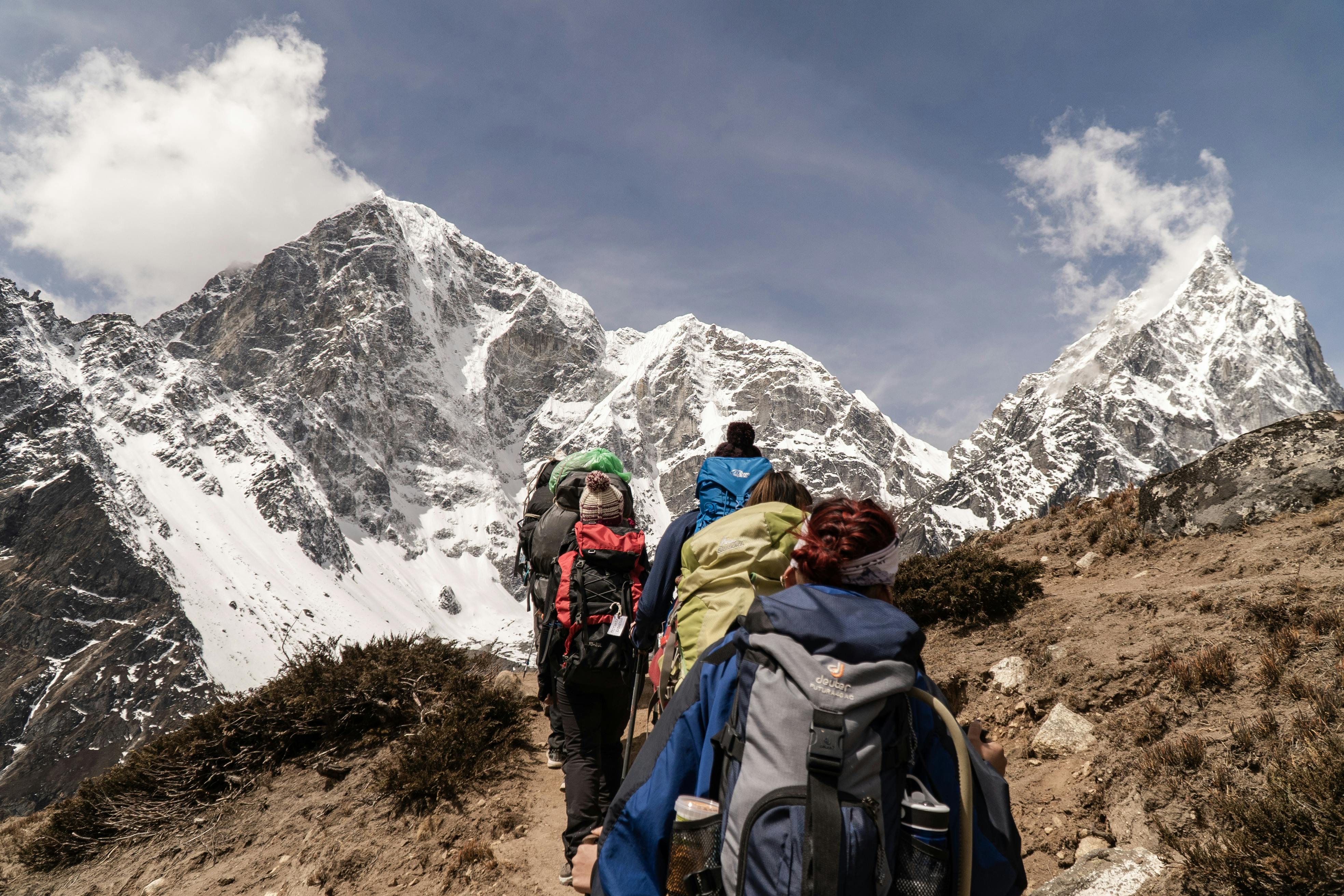
Source: Bisesh Gurung
Group of hikers trekking on a sunny day with snow-capped mountains in the background.
Since April 2023, Nepal has required all foreign trekkers entering national parks and conservation areas to hire a licensed guide. In 2026 this rule is fully enforced at checkpoints. Solo trekking on major routes is illegal, and porter-only arrangements no longer qualify, your guide must hold a valid government license.
The reasoning is practical. Search-and-rescue operations on routes like Annapurna Base Camp and the Langtang Valley were costing the state significantly, and unguided trekkers accounted for the majority of incidents. Licensed guides now register your itinerary at every checkpoint, which means if you miss a planned overnight, a search is triggered within hours.
A single traveler can now obtain a Restricted Area Permit (RAP) for Manaslu, Upper Mustang, Dolpo, or Tsum Valley. The previous two-person minimum has been scrapped. However, a licensed guide remains mandatory, and the guide-to-trekker ratio is capped at 1:7 in restricted zones.
This is genuinely good news for solo travelers who previously had to pay 'ghost permit' fees for a fictitious second trekker. The rule change has opened up the Manaslu Circuit and Upper Mustang to authentic solo journeys, provided you walk with a guide.
Tourist visas are issued on arrival at Tribhuvan International Airport in Kathmandu and at major land borders. The 2026 fee structure is unchanged from late 2024.
The ultimate guide to planning your dream web travel adventure with the experts from myeasyguide.
Spam free. Unsubscribe anytime. We respect your privacy.
Pay in clean USD bills or use the card machines at the visa counter. The kiosks now accept Visa and Mastercard, but they fail frequently, carry cash as backup. Bring two passport photos to skip the kiosk queue entirely.
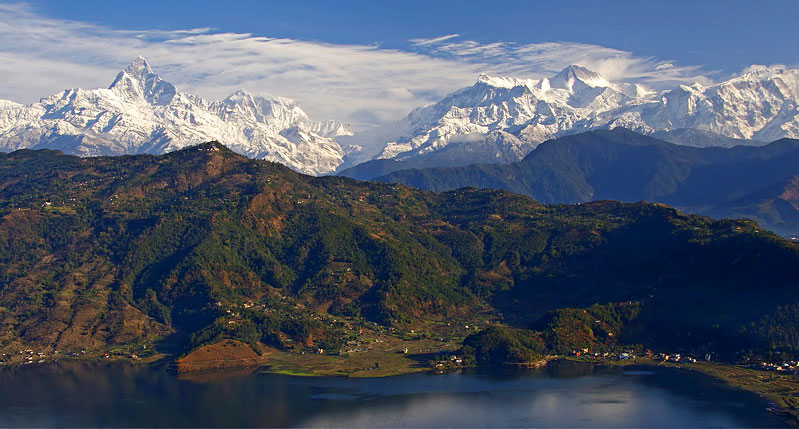
Source: Wikipedia
Aerial view of the annapurna conservation area project when it started in 1985.
Permit costs vary enormously between regions. The standard combination is a region-specific conservation or national park entry plus the e-TIMS QR card. Restricted areas carry separate, much higher fees.
The Trekkers' Information Management System has gone completely digital as an e-TIMS QR code, costing NPR 2,000 for international trekkers. Because independent solo trekking is banned, you can no longer self-issue this; your registered trekking agency must process it online through the portal.
The Regional Exemptions: The Everest (Khumbu) region completely bypasses the e-TIMS framework. Instead, you pay the Khumbu Pasang Lhamu Rural Municipality Fee of NPR 2,000 on arrival in Lukla or Monjo, plus the Sagarmatha National Park Permit (NPR 3,000), bringing your total base permit outlay here to NPR 5,000 (around $37 USD). Additionally, the Annapurna region has transitioned away from active TIMS validation at major trailheads like Birethanti and Besisahar, relying instead on strict checking of your ACAP (NPR 3,000) permit alongside your guide's credentials
The Annapurna Conservation Area Permit (ACAP) costs NPR 3,000 for foreign nationals and NPR 1,000 for SAARC citizens. This single permit covers Annapurna Base Camp, the Annapurna Circuit, Mardi Himal, Poon Hill, and Khopra Ridge. Add the e-TIMS card and you are legally cleared.
The Manaslu Circuit requires three permits stacked together:
The old framework forcing a rigid $500 flat block fee for Upper Mustang has been officially replaced by a flexible $50 USD per person, per day pay-as-you-go system, calculated on the exact days spent past the checkpoint. This makes modular itineraries and shorter, overland jeep tours vastly more affordable.
Conversely, Upper Dolpo remains Nepal's most expensive corridor, keeping its strict entry tier of $500 USD for the first 10 days, and $50 USD per day thereafter. Both regions strictly require a licensed guide registered with a government-approved trekking agency.
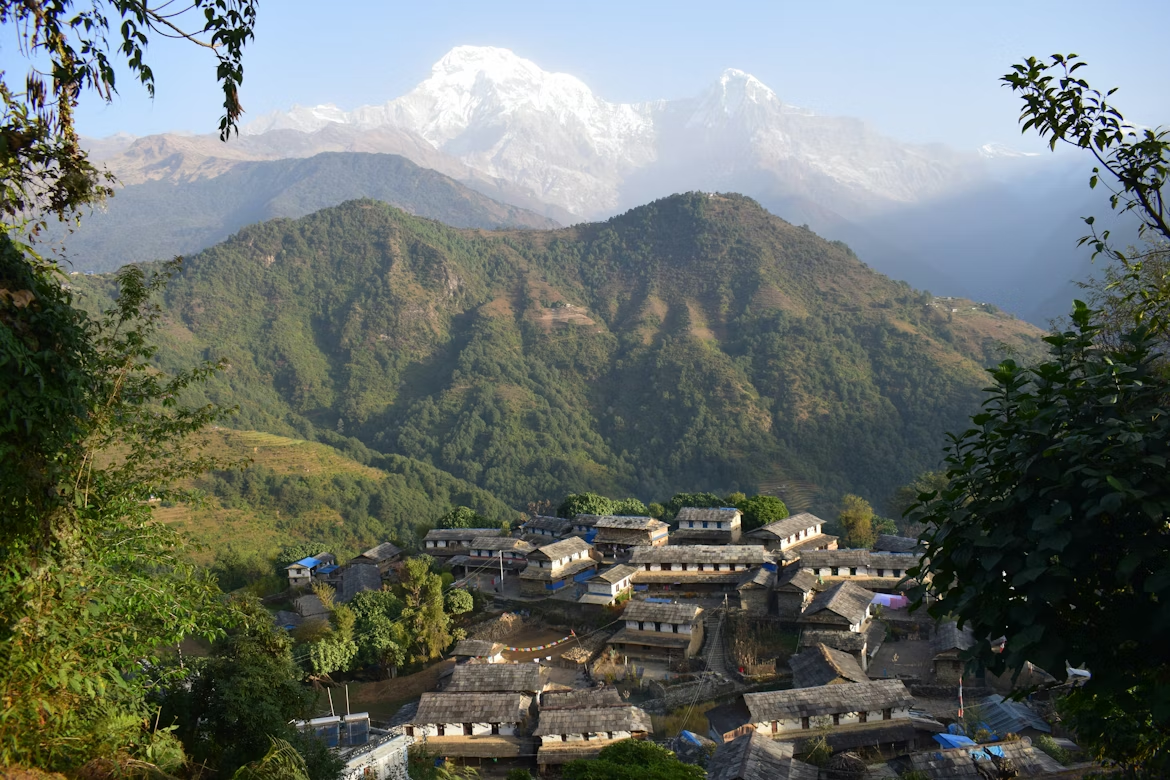
Source: Inspirado
Teahouses in the gurung village of Ghandruk
Permits are only the start. The real budget lives in daily lodge costs, transport, gear, and the invisible 'micro-economy' of the trail.
In 2026, a private teahouse room with shared bathroom runs NPR 500–1,500 per night at lower elevations and climbs to NPR 1,500–3,000 above 4,000 meters. Lodges often offer rooms cheaply on the condition you eat dinner and breakfast there, refusing meals usually triples the room price.
Meals scale with altitude. A plate of Dal Bhat costs NPR 600 in Pokhara and reaches NPR 1,200 at Lobuche. We strongly recommend prioritizing this dish, it comes with free refills, uses fresh local vegetables and lentils, and avoids the food-safety risk of meat carried up by mule for days without refrigeration.
Lodges generate income through add-ons. Expect these everywhere above 3,000 meters:
ATMs do not exist past Namche Bazaar in the Everest region or past Jomsom in the Annapurna region. There are no ATMs at all on the Manaslu Circuit, in Upper Mustang, or in Dolpo. Carry sufficient Nepalese Rupees in cash, we budget travelers around NPR 3,500–5,000 per day per person on the trail to cover meals, lodging, charging, and tips.
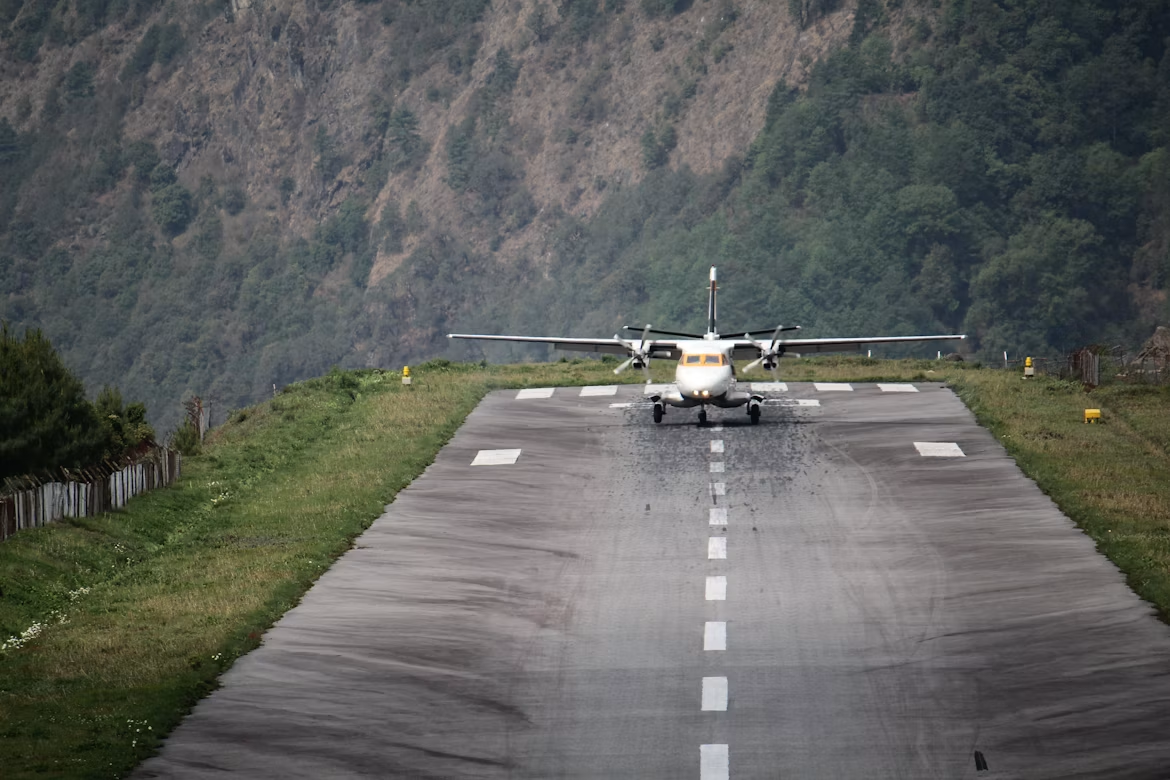
Source: Siddharth Jadhav
A small twin-otter passenger plane landing on the steep mountain runway at Lukla Airport, Nepal.
During peak trekking seasons (March–May and September–November), Lukla flights do not depart from Kathmandu. They operate from Manthali Airport in Ramechhap. Trekkers must drive 4–5 hours from Kathmandu starting around 1:00 AM to catch the morning flight window.
Always build 1–2 buffer days into your itinerary for weather delays at Lukla. Cancellations are routine, and helicopter shuttles (which run regardless of weather windows the planes can't manage) cost $500–600 USD per seat one-way.
We do not publish fixed flight prices because they shift weekly. As a realistic 2026 range, expect Kathmandu–Lukla flights around $200–230 USD one-way and Kathmandu–Pokhara around $110–140 USD. Always confirm live rates through your booking agency.
Jeep roads have reached deep into the Annapurna and Manaslu circuits. Sections like Besisahar to Chame and Jomsom to Muktinath are now dusty motor routes. Use the NATT (New Annapurna Trekking Trail) alternative footpaths wherever possible, they parallel the road on quieter ridges with proper trail experiences.
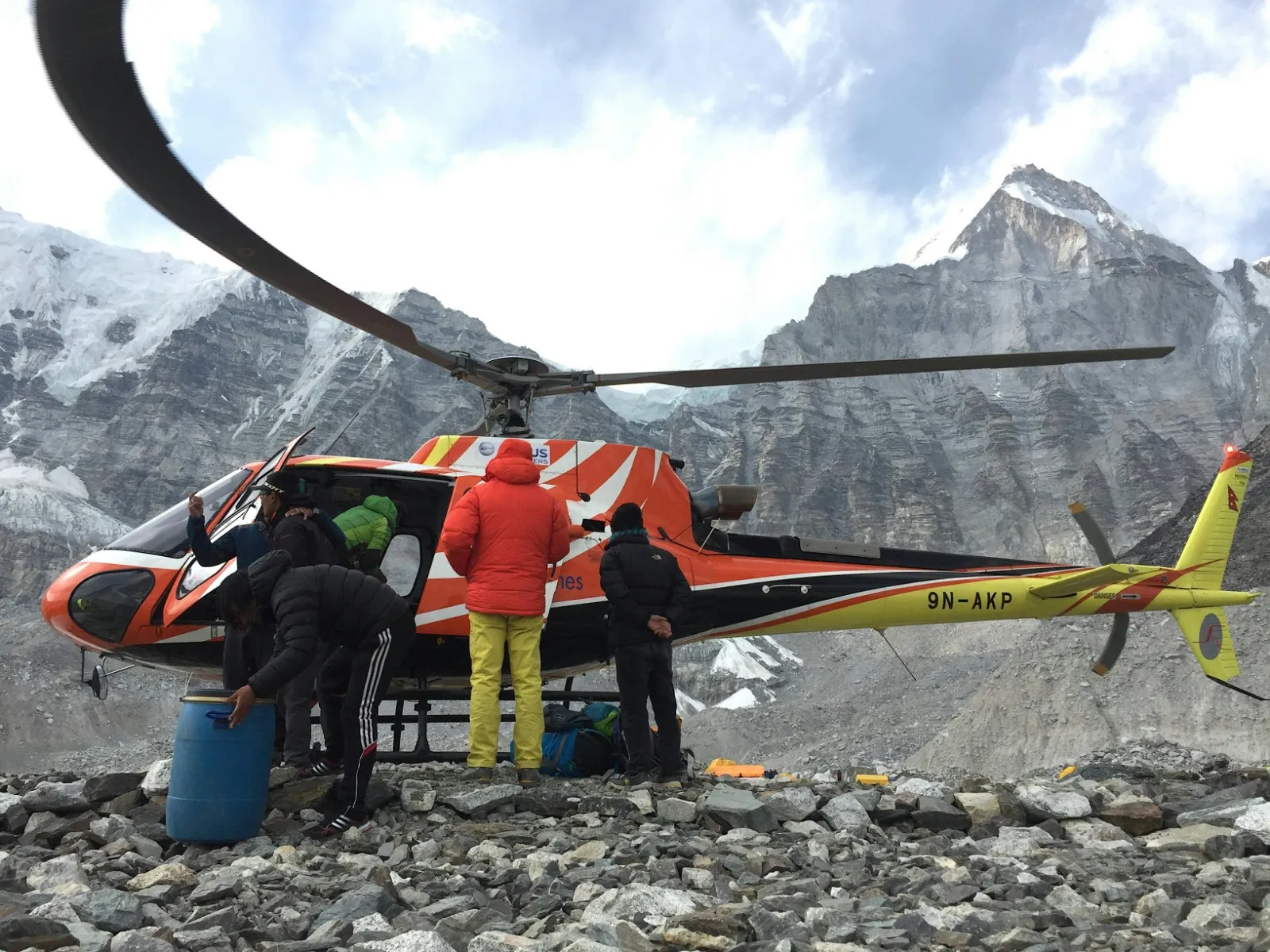
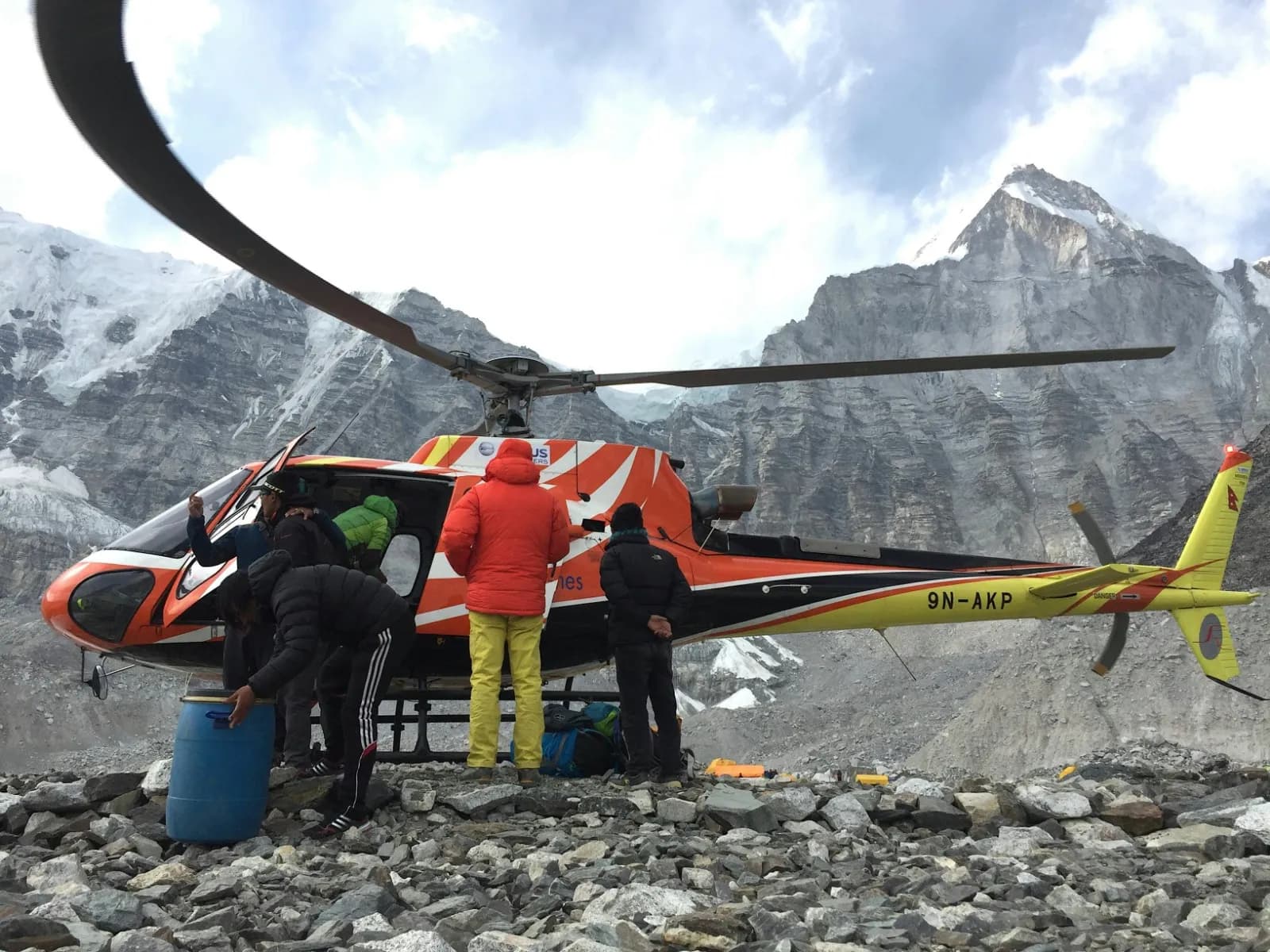
Helicopter used for transfering people and goods in the mountain region
Standard travel insurance does not cover trekking above 3,000 meters. You need a specific policy covering high-altitude helicopter evacuation up to 6,000 meters plus inpatient treatment for AMS, HAPE, and HACE. As of 2026, Restricted Area Permit offices require proof of this insurance before issuing the RAP.
Above 3,000 meters, sleep elevation must not increase by more than 300–500 meters per day. Mandatory acclimatization rest days are built into every responsible itinerary, typically at Namche Bazaar (3,440m) on the Everest route and at Manang (3,540m) on the Annapurna Circuit.
Skip the plastic bottles. They cost more, pollute the trails, and contribute to waste the high villages cannot process. Carry a reusable bottle paired with a UV purifier (Steripen), a Sawyer squeeze filter, or chlorine dioxide drops.
Nepal’s trekking regulations in 2026 have become significantly stricter, especially in popular and protected regions such as Everest, Annapurna, Langtang, and Manaslu. The key change is the strong enforcement of hiring a licensed trekking guide registered with the Nepal Tourism Board (NTB) through an authorized trekking agency. In most regulated trekking routes, independent trekking without a licensed guide is no longer practically allowed due to checkpoint verification and permit processing systems.
Under the updated system, a pure porter is not permitted to act as a trekking guide or escort, as they are only authorized to carry luggage and not to lead trekkers or handle permit validation. This means porters cannot clear checkpoints, manage trekking documentation, or verify e-TIMS or permit QR systems on behalf of trekkers.
There is also increasing regulation around the informal “porter-guide” role, which was previously used as a cost-saving option. In 2026, this hybrid role is no longer accepted as a substitute for a certified guide in regulated trekking areas. If trekkers wish to hire a porter for assistance, they must also hire a separate licensed guide as the official trek leader, ensuring compliance with Nepal’s updated trekking policies and safety standards.
In 2026, Nepal’s trekking flight logistics are divided into two major operational systems depending on whether you are heading to the Annapurna region or the Everest and Manaslu regions. These differences significantly affect your travel time, airport choice, and overall trekking itinerary planning.
For Annapurna, Mardi Himal, and surrounding trekking routes, flights from Kathmandu to Pokhara continue to operate smoothly through Pokhara International Airport, offering frequent daily domestic connections. This route remains the most convenient and stable air corridor in Nepal’s trekking network, with minimal rerouting and relatively predictable schedules, making access to the Annapurna region straightforward for most trekkers.
However, for the Everest Base Camp and Manaslu trekking regions, flight logistics become more complex during peak seasons (typically April–May and October–November). During these high-traffic periods, the Civil Aviation Authority of Nepal (CAAN) often redirects Lukla-bound flights from Kathmandu to Manthali Airport in Ramechhap to reduce air congestion. As a result, trekkers must travel by road from Kathmandu to Ramechhap, which is typically a 4–5 hour overnight drive starting around 1:00 AM, followed by an early morning mountain flight to Lukla.
Due to the high variability of mountain weather in the Everest region, it is strongly recommended to include at least two buffer days at the beginning or end of your itinerary. This helps accommodate possible flight delays or cancellations, which are common in Khumbu’s rapidly changing weather conditions.
The standard monsoon months are June through August. Most of Nepal becomes wet, leech-infested, and cloud-locked. But two regions sit in the Himalayan rain shadow and remain bone-dry through the summer: Upper Mustang and Upper Dolpo. If you can only travel in July, these are your premier options, the rest of the trekking world goes quiet, and you walk through arid, Tibetan-style landscapes under blue skies.
Ncell provides reliable 4G coverage through the Annapurna Circuit and Annapurna Sanctuary. Nepal Telecom (NTC) is essential in the Everest region, Manaslu, and Upper Mustang. Many guides carry both. Pick up a tourist SIM at the Kathmandu airport arrival hall, they cost NPR 1,000–1,500 with a starter data pack.
Always pass mani stones, chortens, and stupas on the LEFT side, keeping the structure to your right. Walk clockwise around all religious sites. Remove shoes and hats before entering any monastery, and never photograph inside prayer halls unless a resident monk explicitly permits it.
Tipping is culturally expected in Nepal, it forms a significant portion of guide and porter income. Our marketplace guideline is 15%–20% of the total trek cost, distributed among the crew at the end of the trip. The lead guide typically receives a larger share, but porters carry your load through the hardest terrain and deserve generous recognition.
No. Past Namche Bazaar, Jomsom, or any restricted-area entry, cards are useless. A handful of lodges in lower villages accept Visa with a 4% surcharge, but assume cash-only above 3,000 meters.
Yes, but it costs extra. Most lodges sell Everest Link or local Wi-Fi vouchers for NPR 500–700 per day. Speeds are slow. We recommend a Nepal Telecom SIM as a more reliable backup.
You need to walk 5–7 hours per day for 12 consecutive days at altitudes between 2,800m and 5,545m. Train with weighted hikes for at least 8 weeks before departure. Cardiovascular fitness matters more than raw strength.
Yes, on lower-altitude routes. Annapurna Base Camp, Mardi Himal, and Poon Hill remain feasible, though cold. High-altitude passes like Thorong La and Cho La often close due to snow. Lodges thin out and prices drop.
Children under 10 are exempt from most permit fees, but they still need to be registered. Bring birth certificates or passports to verify age at conservation area checkpoints.
Checkpoints turn you back. Fines range from NPR 10,000–50,000, and your permit is revoked. In restricted areas, the consequences are more serious, including potential deportation.