Prabesh Tamang
Phewa Lake is the heartbeat of Pokhara. Step off Lakeside's main road, walk past the rows of brightly painted wooden boats lined along the shore, and within minutes you can be paddling acrossmirror-still water with Machhapuchhre (Fishtail), Annapurna South, and the Annapurna massif rising directly above the valley skyline. We've put together this guide from years of coordinating boating excursions, sunrise paddles, and Peace Pagoda crossings for travelers arriving in our home city.
Whether you're squeezing in a one-hour float between trek days or planning a full half-day on the water, here's exactly what to expect, costs, routes, seasonal timing, and the small details most blogs miss.
Source: Meera Pankhania
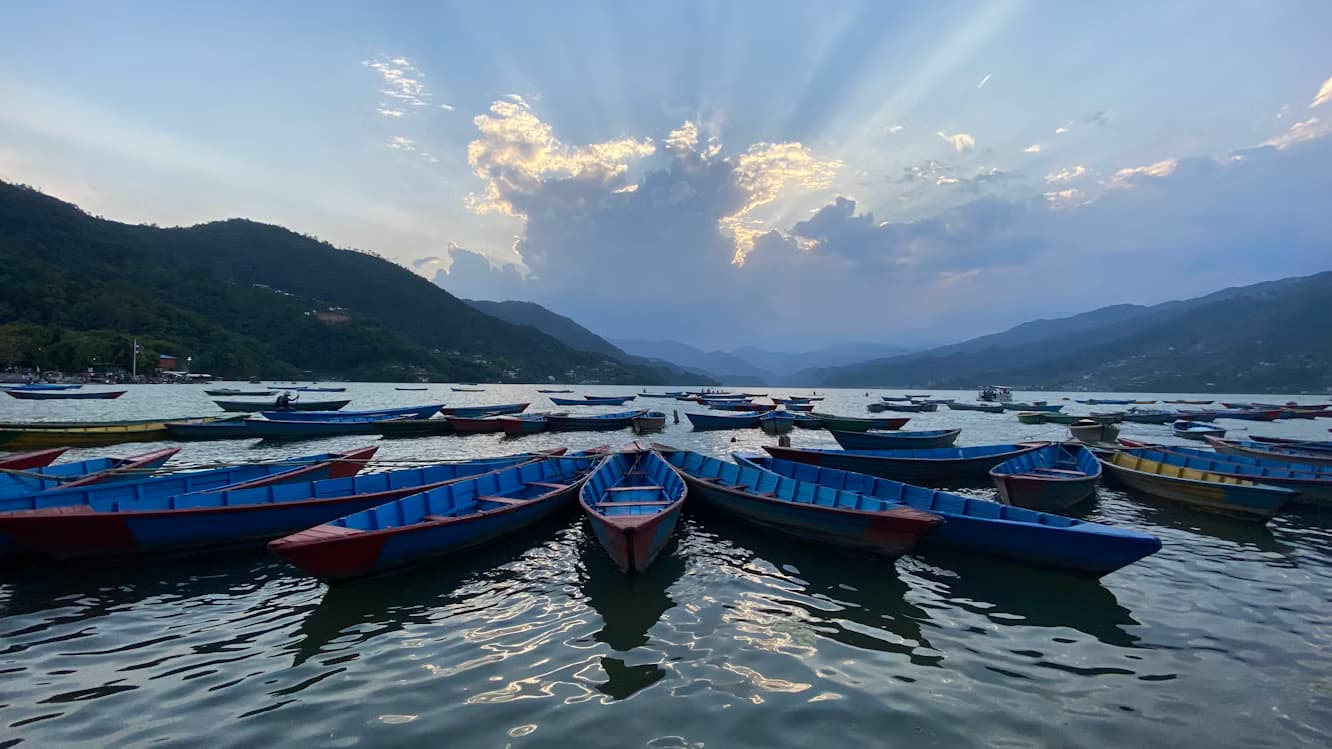
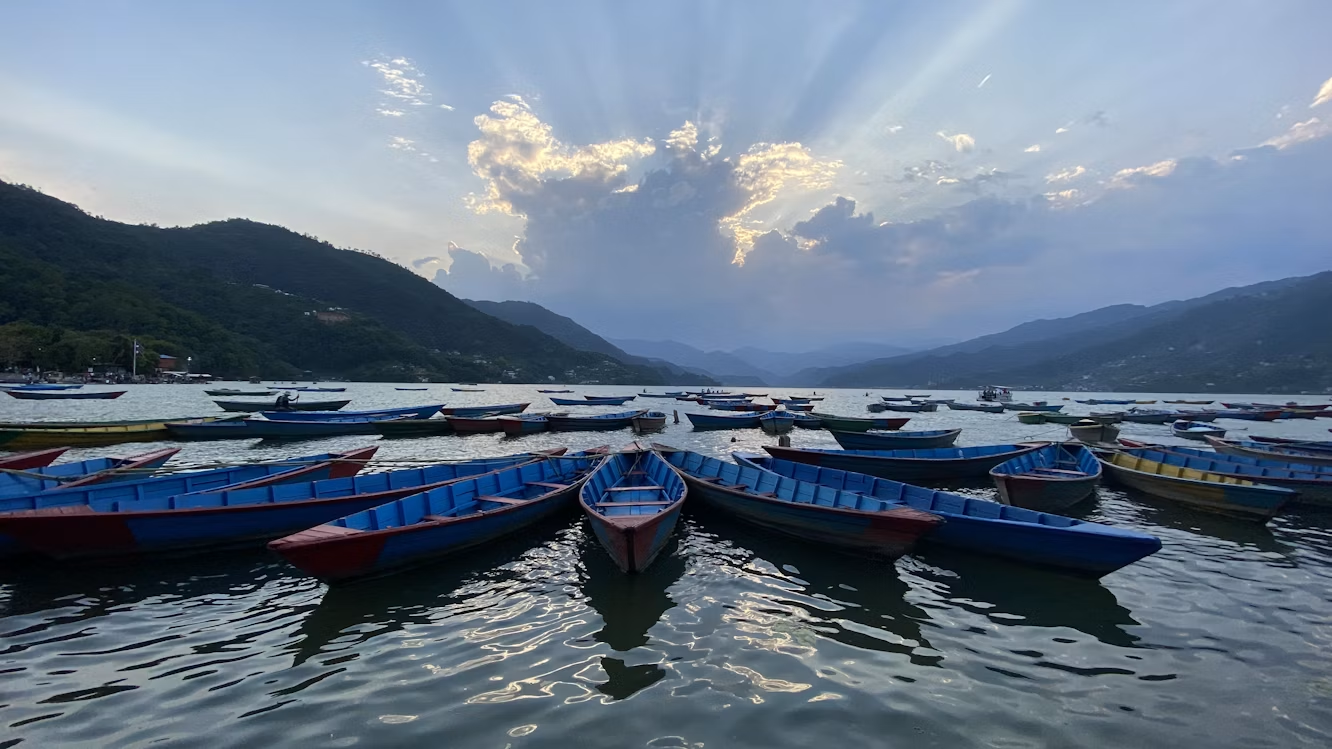
Evening view of Phewa Lake waterfront during sunset in Lakeside, Pokhara.
Phewa Lake (also spelled Fewa Lake) is one of Nepal’s largest and most famous freshwater lakes, covering roughly 4.4 square kilometers at an elevation of 742 meters. It sits directly west of Pokhara's tourist hub, Lakeside (Baidam), and on clear mornings reflects Machhapuchhre (Fishtail) and the Annapurna range across its surface. Boating on Phewa remains the defining slow-paced experience of Pokhara between treks, flights, and mountain excursions.
Boat rentals are coordinated through the Phewa Boat Entrepreneurs Association, which maintains standard baseline pricing, though seasonal demand and trip length can affect final rates. A self-paddled doonga costs NPR 600–800 per hour, a rowed boat with a local oarsman runs NPR 1,500–2,500 per hour, and pedal boats sit around NPR 500–700 per hour. Most rentals include life jackets and a small conservation fee.
The ultimate guide to planning your dream web travel adventure with the experts from myeasyguide.
Spam free. Unsubscribe anytime. We respect your privacy.
A few honest notes on pricing: rates increase slightly during peak season (October–November and March–April), and rower tips are not included. A reasonable tip for a one-hour rowed tour is NPR 200–500 depending on commentary and service. Always carry small denomination Nepalese Rupees, boat operators rarely accept cards and ATMs require a walk back to the main Lakeside strip.
Source: Heather Upadyay
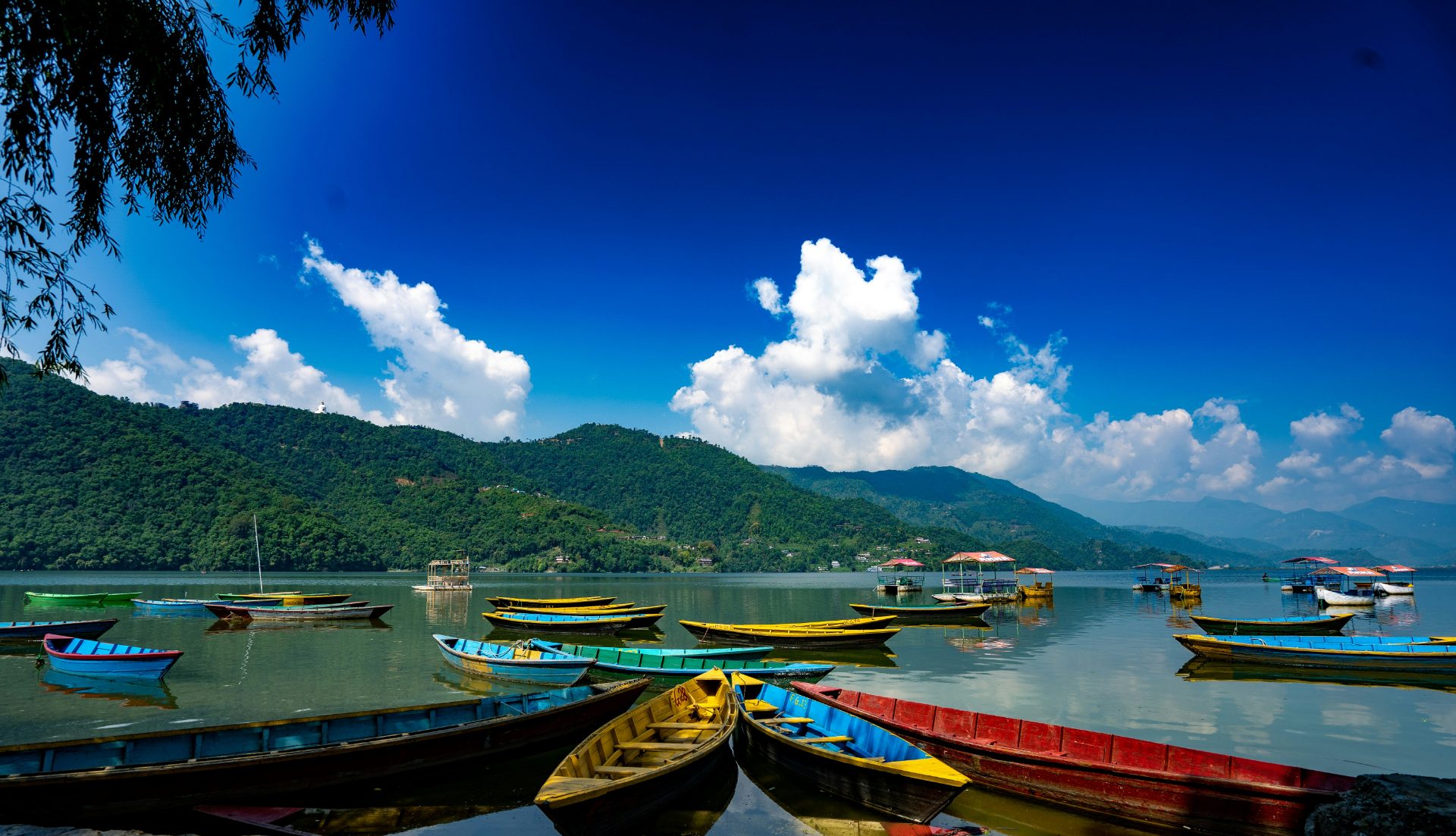
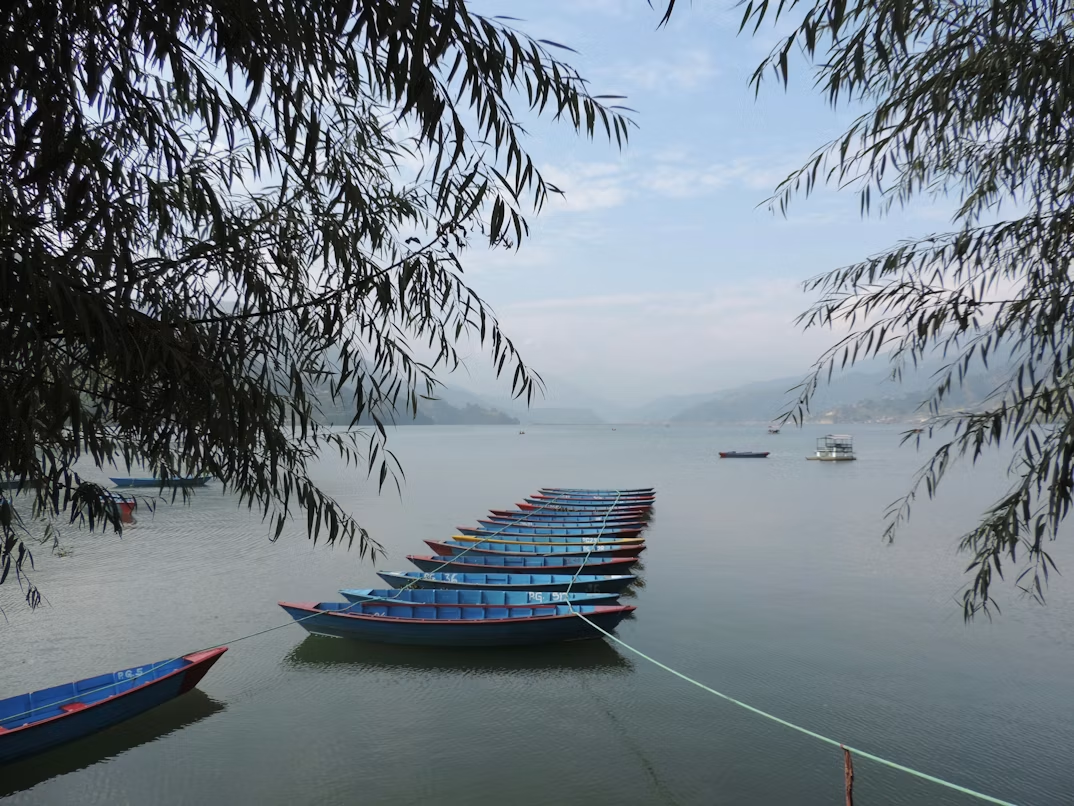
Brightly painted traditional colorful wooden boats moored on the banks of Phewa Lake.
Phewa has several official boat docks, each with slightly different vibes and proximity to attractions.
Barahi Ghat is the busiest and most central dock, directly opposite the temple island. Most colorful doonga boats depart from here, and it's the easiest pickup point for first-time visitors staying in central Lakeside. Expect crowds between 4:00 PM and 6:00 PM.
The south end of the lake near the dam is quieter, with fewer boats and better access to the Peace Pagoda trailhead at Anadu. Our field coordinators usually route Peace Pagoda combo trips through here to avoid the Lakeside rush.
Less frequented and ideal for travelers staying in Sedi or Khapaudi guesthouses. Rates are sometimes 10–15% cheaper because there's less foot traffic.
Source: myRepublica
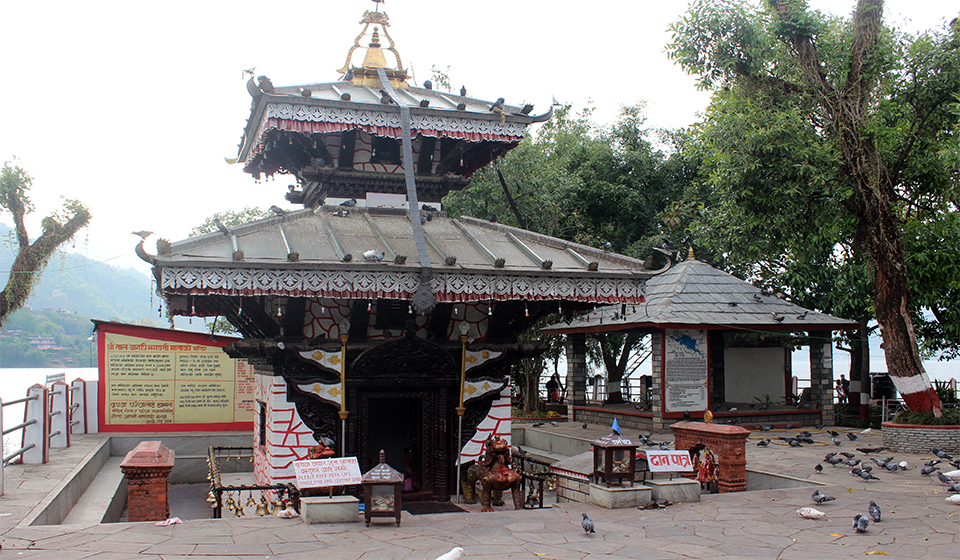
Beautiful view of the temple Tal Barahi located in the phewa lake
Tal Barahi is the small two-story pagoda temple on an island in the middle of Phewa Lake, dedicated to the Hindu goddess Barahi. Tal Barahi Temple sits on a small island a short paddle from central Lakeside, and the round-trip paddle takes 30–45 minutes. Boats moor at the island's stone steps, and visitors typically spend 15–20 minutes on the island.
Remove your shoes before approaching the inner shrine. Saturday mornings see large local crowds bringing offerings, interesting to witness, but plan an early or weekday visit if you want a peaceful experience. Photography of the temple exterior is fine; the inner sanctum is off-limits to non-Hindus during active worship.
Source: Raimond Kalvins
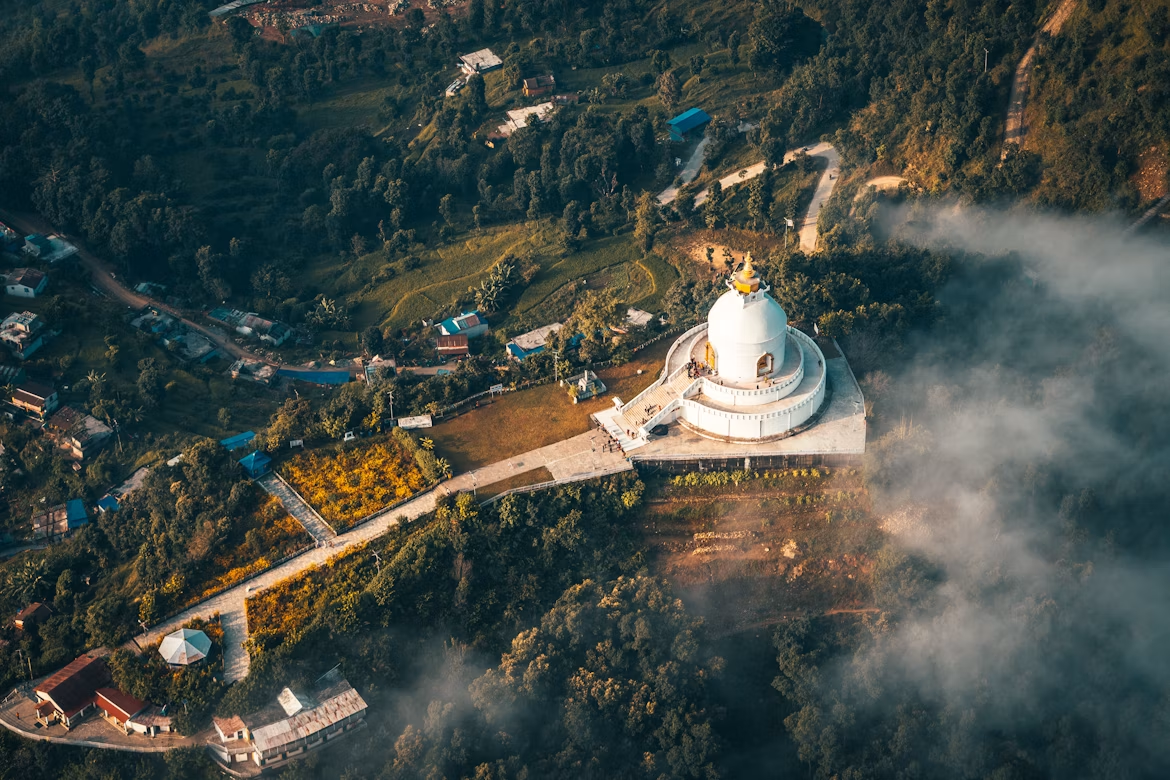
The brilliant white Shanti Stupa (World Peace Pagoda) overlooking Phewa Lake and Pokhara valley.
This is the half-day signature route. Row or paddle from Barahi Ghat or Damside across to the south shore landing at Anadu, secure your boat, then hike 30–45 minutes uphill through subtropical forest to the gleaming white Shanti Stupa at 1,100 meters.
From the pagoda terrace, the view sweeps across Pokhara Valley, Phewa Lake, and the full Annapurna range, Annapurna South (7,219 m), Machhapuchhre (6,993 m), and Annapurna IV. Budget 4–5 hours total: paddle, hike, viewing, descent, and return row. Carry 1.5 liters of water per person and avoid the midday sun by leaving Lakeside by 7:00 AM.
Source: Maria Bolgiani
Clear, peaceful waters of Phewa Lake reflecting the surrounding green hills in Pokhara.
For strong paddlers, circling the entire perimeter takes 4–6 hours covering roughly 12 kilometers. This route hugs the quieter western shore past traditional Gurung fishing communities, drifts under the forested cliffs below the Peace Pagoda, and returns via the open northern bay. Best done in a double kayak with a guide, winds pick up after 11:00 AM and the western shore has fewer rescue points.
Source: Shepherd
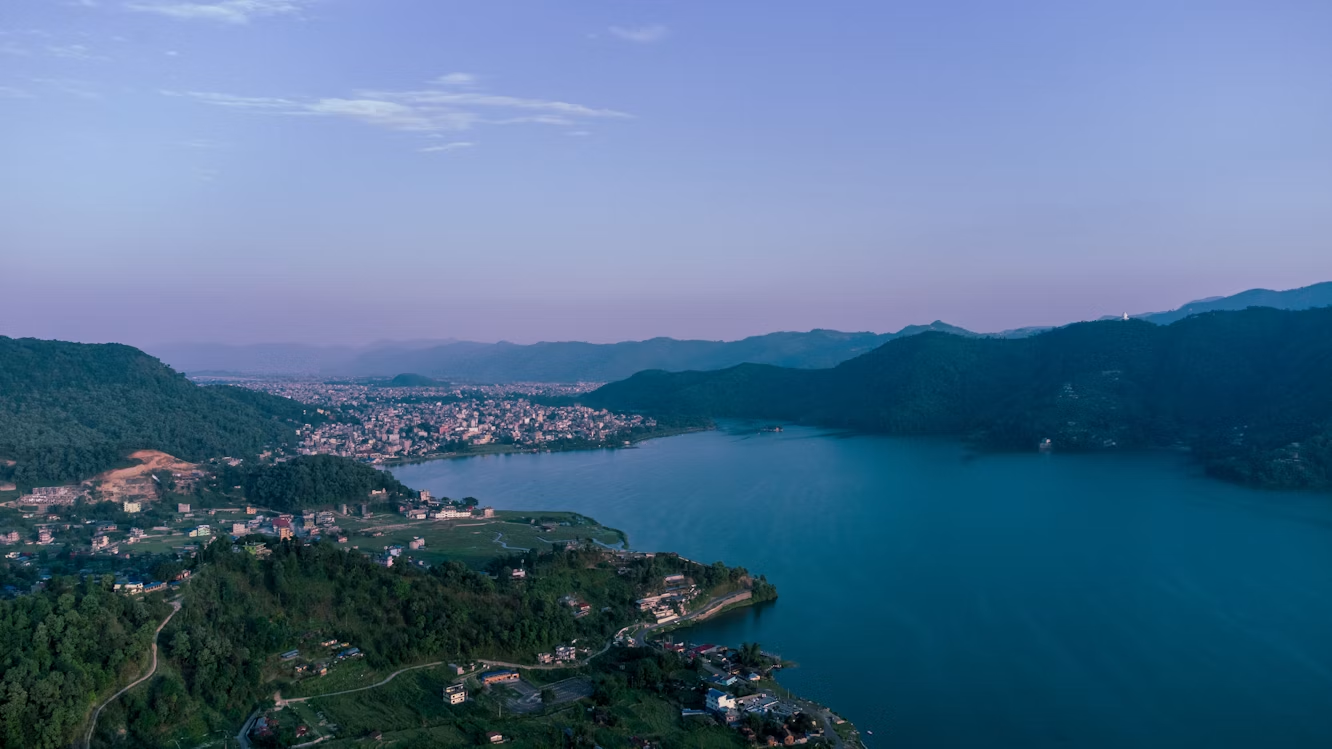
Lush, green lakeside landscape of Pokhara during the month of May.
Clear skies, mirror-still mornings, and unobstructed mountain reflections. This is when Phewa earns its postcard reputation. Daytime temperatures sit at 20–25°C, mornings drop to 10–12°C. Book boats by 6:00 AM during October peak.
Rhododendrons bloom on the surrounding hills, water is calm, and crowds are slightly thinner than autumn. Afternoon haze can blur the mountains by 11:00 AM, so prioritize sunrise paddles.
Cold but spectacularly clear. Morning fog lifts off the lake by 8:00 AM, revealing snow-dusted peaks. Bring a fleece and gloves for the 5:30 AM start. Boating remains fully operational year-round.
Heavy rains swell the lake, runoff turns the water murky brown, and mountain views disappear behind cloud banks. Boating still runs, but expect afternoon thunderstorms and sudden squalls. If you're in Pokhara during monsoon, paddle only between 6:00 AM and 9:00 AM when the lake is calmest.
Sunrise wins decisively for serious photographers and mountain views. Between 5:30 AM and 7:00 AM, the lake surface is glass-still and Machhapuchhre catches alpenglow. Sunset is more atmospheric for couples and casual visitors, the western sky lights up around 5:30 PM, but the mountains are usually hidden behind afternoon haze.
Tal Barahi Temple is an active Hindu shrine. Walk clockwise around the inner sanctum, remove shoes and hats before approaching the deity, and never point your feet at the shrine when sitting. Photography of worshippers performing puja should always be preceded by eye contact and a nod of permission.
At the World Peace Pagoda, a Buddhist stupa constructed by monks of the Japanese Nipponzan-Myōhōji Buddhist order as part of the global Peace Pagoda movement, circle the structure clockwise, speak quietly, and remove shoes before climbing the upper platform. Don't photograph monks without asking.
Morning conditions on Phewa Lake are usually calm, especially between sunrise and 9:00 AM. By late morning and early afternoon, valley thermals begin pushing wind across the open water, creating choppier conditions, particularly toward the western shoreline and near the dam.
During pre-monsoon months (April-May), sudden afternoon gusts occasionally force smaller rental boats to return early. Local rowers monitor conditions closely, and if weather shifts quickly, follow their instructions immediately.
If you're planning photography, kayaking, or a Peace Pagoda crossing, early morning departures consistently provide the safest water and clearest mountain visibility.
Boats must return to the dock by 6:00 PM, the clearest reflections typically occur shortly after sunrise before valley winds and haze build later in the morning. Swimming is uncommon and generally discouraged due to cold water, underwater vegetation, occasional boat traffic, and inconsistent shoreline water quality. The lake reaches depths of over 20 meters in some sections near the dam.
Mobile coverage from both Ncell and Nepal Telecom (NTC) is generally reliable across most of the lake and Lakeside ridge areas. If you're heading up to the Peace Pagoda, Ncell tends to hold a stronger signal on the ridge.
A typical full Pokhara day we coordinate for clients:
Phewa Lake is one of those rare places where the experience matches the photographs. Whether you want a quiet sunrise drift, a Peace Pagoda combo, or a guided kayak loop with someone who actually grew up rowing these waters, the right local operator makes the difference between a generic photo and a genuinely memorable morning.
Self-paddled doongas cost NPR 600–800 per hour, rowed boats NPR 1,500–2,500 per hour, pedal boats NPR 500–700, and kayaks NPR 500–1,200 depending on single or double. Full-day rates run NPR 2,500–3,500.
Sunrise between 5:30 AM and 7:00 AM offers the clearest Annapurna reflections and calmest water. Late afternoon is scenic for sunsets but the lake is busier and the mountains are often hazy.
No personal permit is required. A small conservation fee is built into the rental price, and life jackets are mandatory. Rentals are regulated by the Phewa Boat Entrepreneurs Committee.
Yes. Rent a self-paddled doonga from Barahi Ghat or Damside, cross to Anadu (20–30 minutes paddle), tie up at the landing, and hike 30–45 minutes uphill. Budget 4–5 hours round trip.
Boating operates year-round but monsoon (June–September) brings murky water, sudden storms, and zero mountain views. If paddling in monsoon, stay between 6:00 AM and 9:00 AM before afternoon thunderstorms develop.
No. All boat rentals, tips, and temple donations require cash in Nepalese Rupees. The nearest ATMs are along the main Lakeside road, a 5-minute walk from Barahi Ghat.