Sandeep Shrestha
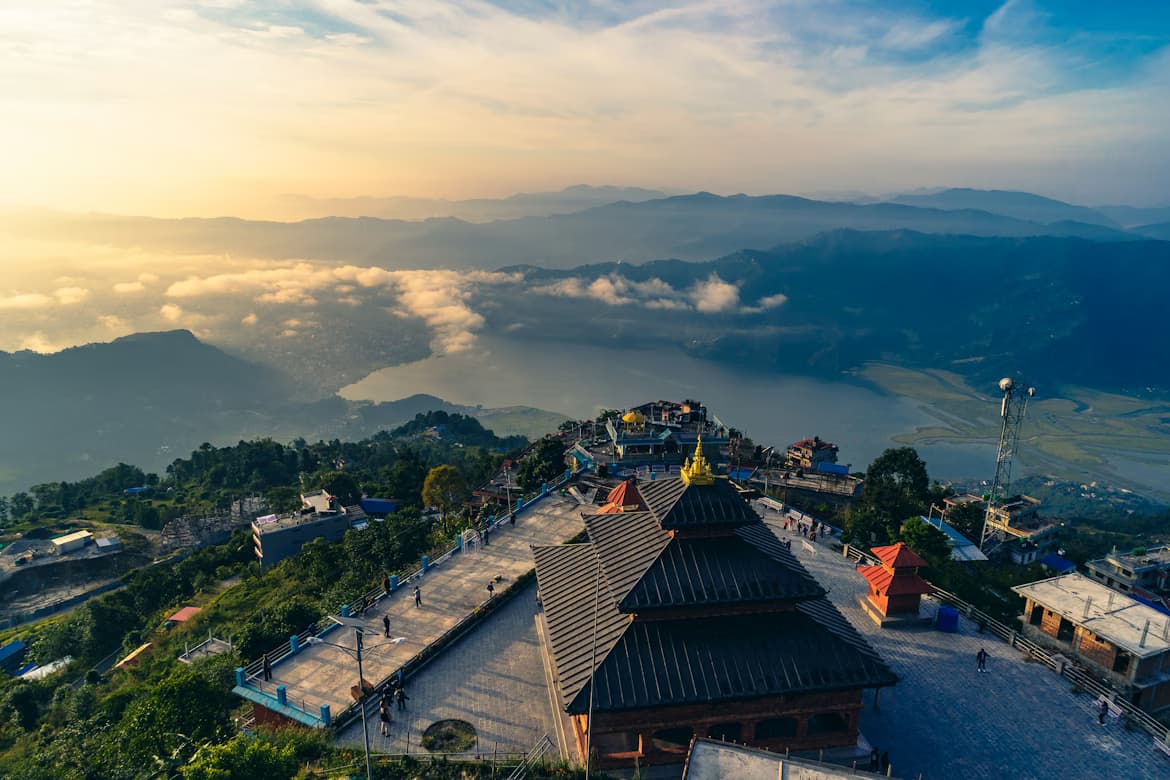
Pokhara sits at 822 meters (2,697 feet) in a sub-tropical bowl, staring directly up at the Annapurna massif and the fishtail silhouette of Machhapuchhre (6,993 meters). Picking when to visit isn't about chasing perfect weather, it's about matching the season to the kind of traveler you actually are. A paraglider needs different conditions than a yoga retreat participant or a Thorong La-bound trekker. We've coordinated arrivals into Pokhara across every month of the calendar, and the differences between, say, late September and mid-October are sharper than most guidebooks admit.
This guide breaks down all twelve months for 2026, with honest weather data, current pricing, festival overlaps, and the specific traveler profile each window suits.
Source: Meera Pankhania
Evening view of Phewa Lake waterfront during sunset in Lakeside, Pokhara.
The best time to visit Pokhara is October to mid-November for clear mountain views, stable weather, and full trekking access. March to April ranks a close second, offering rhododendron blooms and warmer temperatures. Budget travelers should target late February or early September for shoulder pricing, while monsoon months (June-August) suit only those prioritizing low costs over visibility.
Pokhara receives more annual rainfall than almost any other Nepali city, roughly 3,700 mm per year, nearly double Kathmandu's. This shapes everything. The valley is humid even in winter, the lake fog can hang until 10 AM in December, and mountain visibility is a fickle thing outside the two clear-weather windows.
The ultimate guide to planning your dream web travel adventure with the experts from myeasyguide.
Spam free. Unsubscribe anytime. We respect your privacy.
Source: Maria Bolgiani
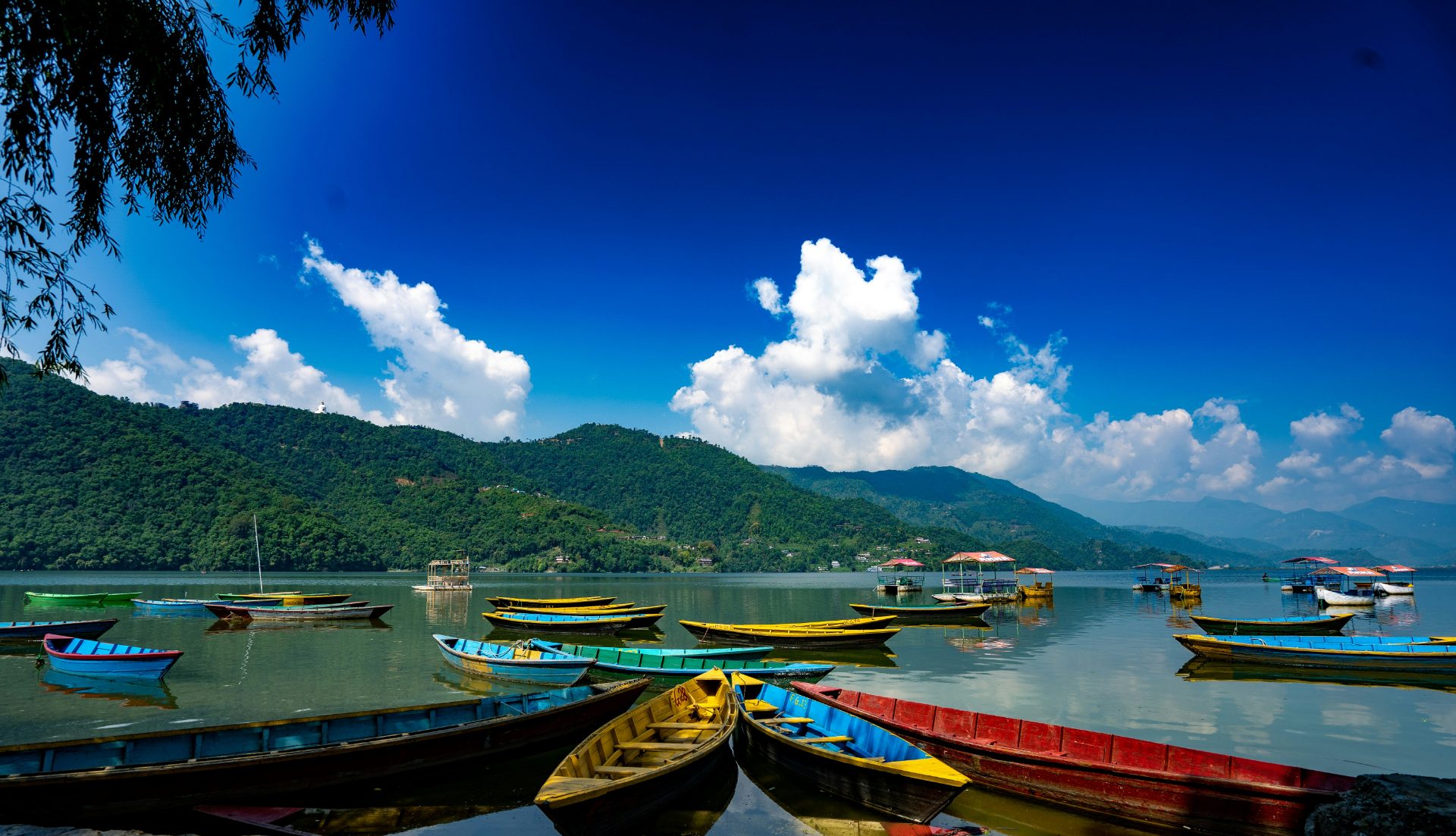
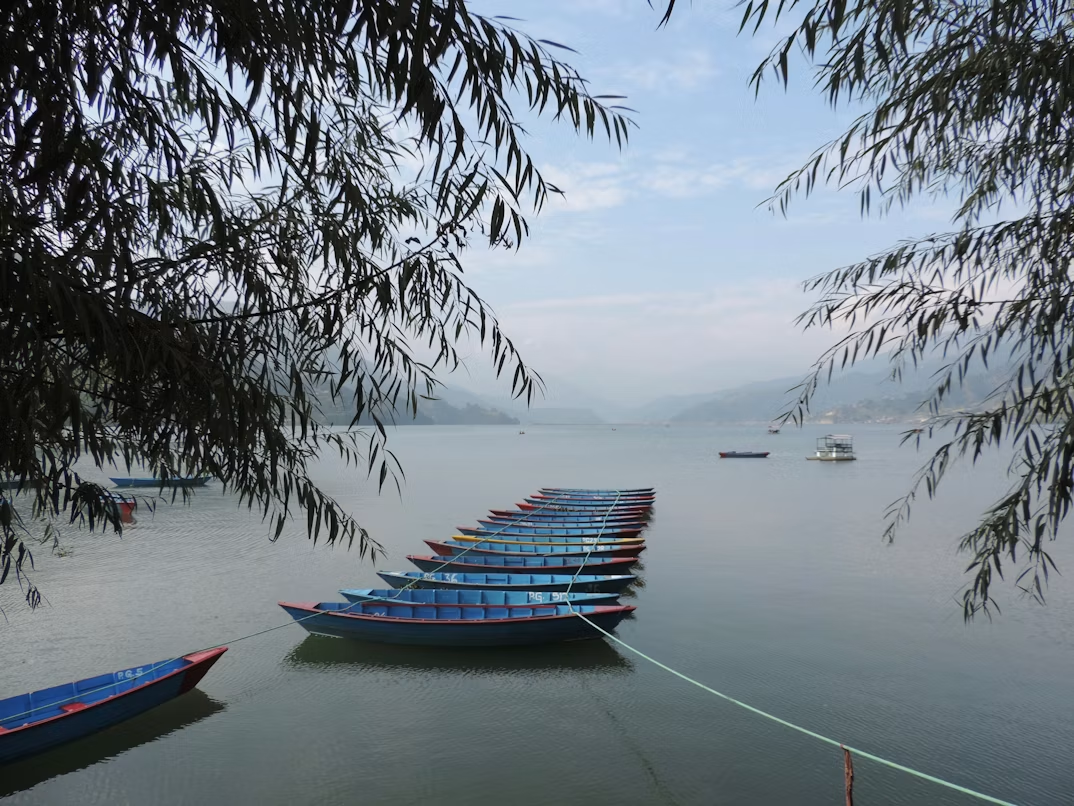
Clear, peaceful waters of Phewa Lake reflecting the surrounding green hills in Pokhara.
January is Pokhara's coldest month, with overnight lows of 3-7°C and daytime highs around 17-19°C. Mornings start with thick lake fog that burns off by 10 AM, then yields some of the year's sharpest mountain views. Most lakeside guesthouses don't have central heating, you'll get a thin blanket and maybe a small electric heater for an extra NPR 300-500 per night.
Who it suits: Budget travelers, photographers chasing crisp Annapurna reflections on Phewa Lake at sunrise, and trekkers heading to lower routes like Ghorepani Poon Hill (3,210 meters) or Mardi Himal Low Camp. High passes are firmly closed.
Golden Rule: If you're trekking in January, the Thorong La pass (5,416 meters) on the Annapurna Circuit is effectively closed due to deep snow and avalanche risk. Don't let any agency tell you otherwise, pivot to Ghorepani or Khopra Ridge instead.
Source: Kaushal Subedi
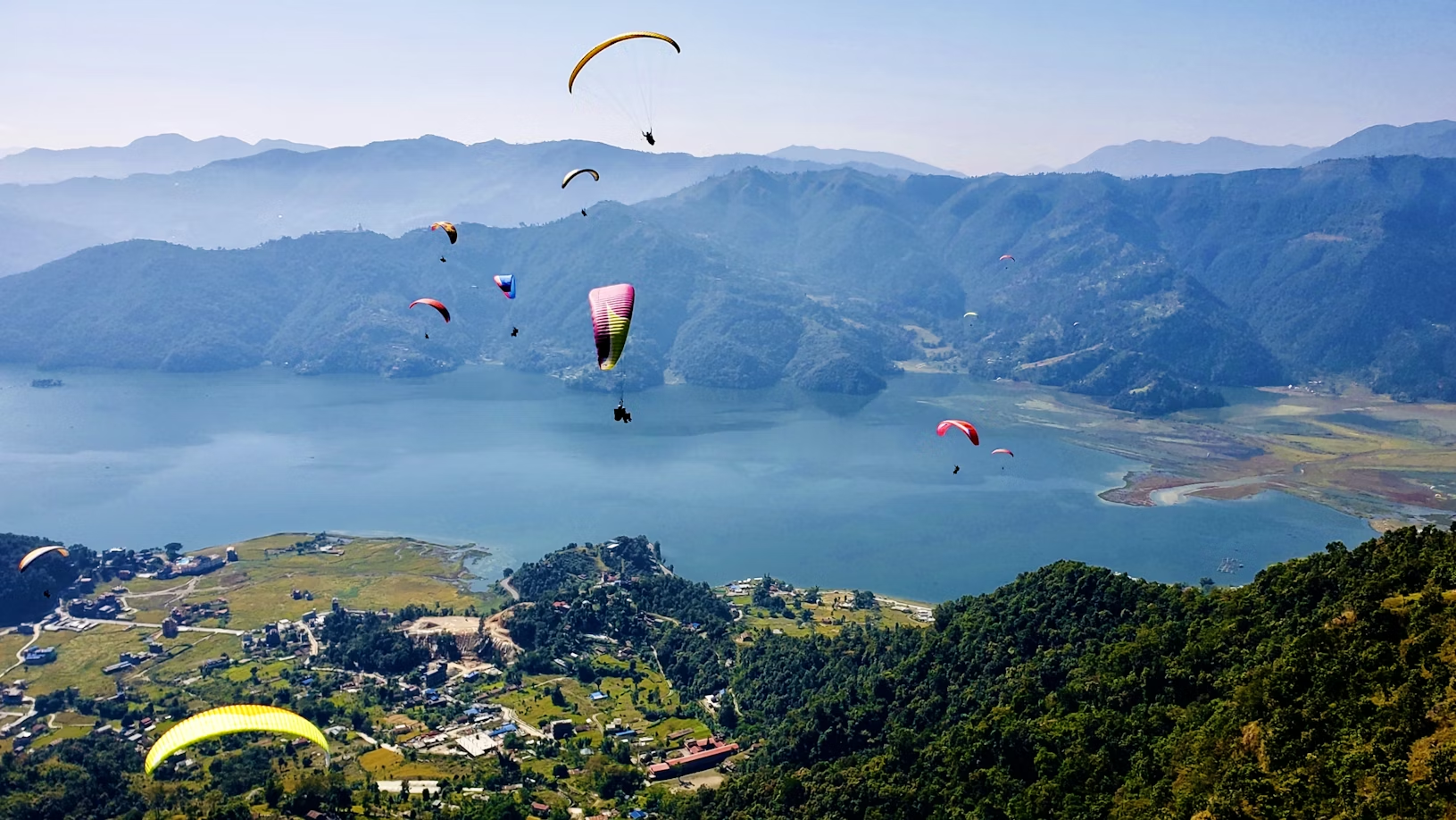
Tandem paragliding adventure flying over Phewa Lake with the Annapurna mountain range in Pokhara.
February brings warming days (20-22°C) while retaining January's clear post-fog skies. Cherry blossoms begin near the Peace Pagoda by mid-month. Hotel rates remain at shoulder pricing, typically NPR 1,500-3,500 for a decent mid-range room in Lakeside, compared to NPR 3,500-6,000 in October.
This is when we recommend Pokhara to first-time visitors who want clear views without the October chaos. Paragliding from Sarangkot (1,592 meters) operates reliably, and the air is dry enough for long flights toward Phewa lake.
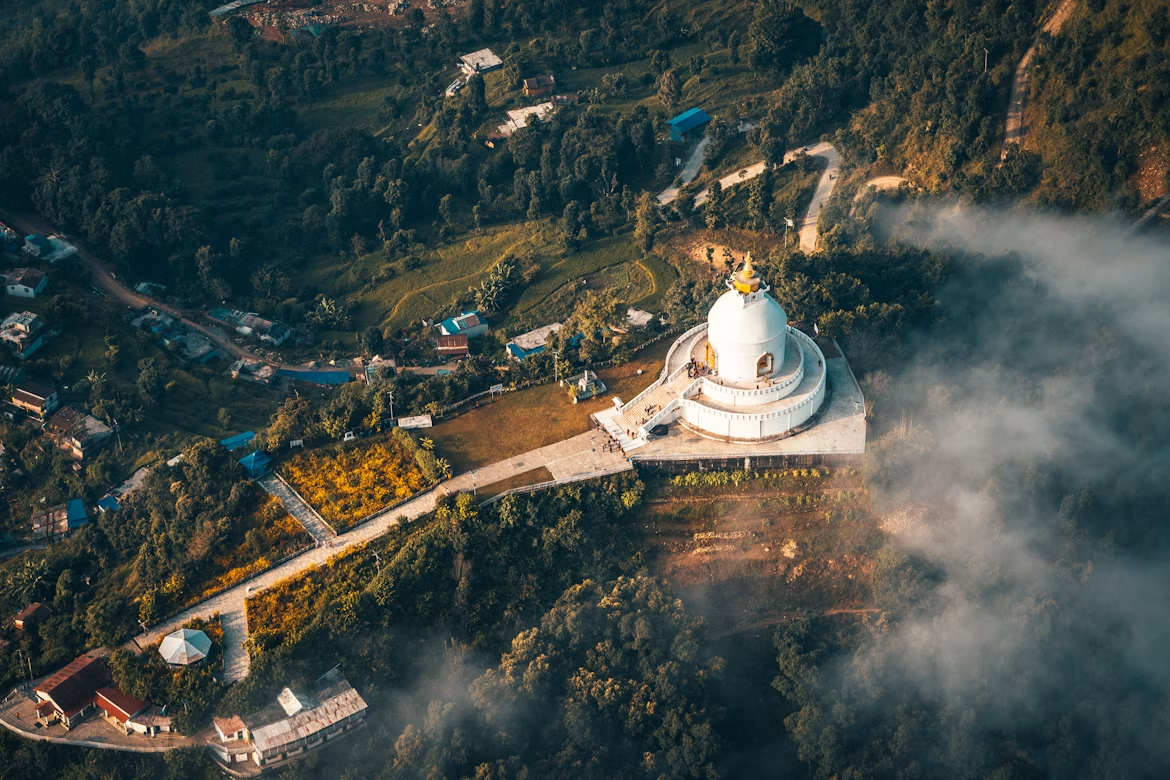
Source: Raimond Kalvins
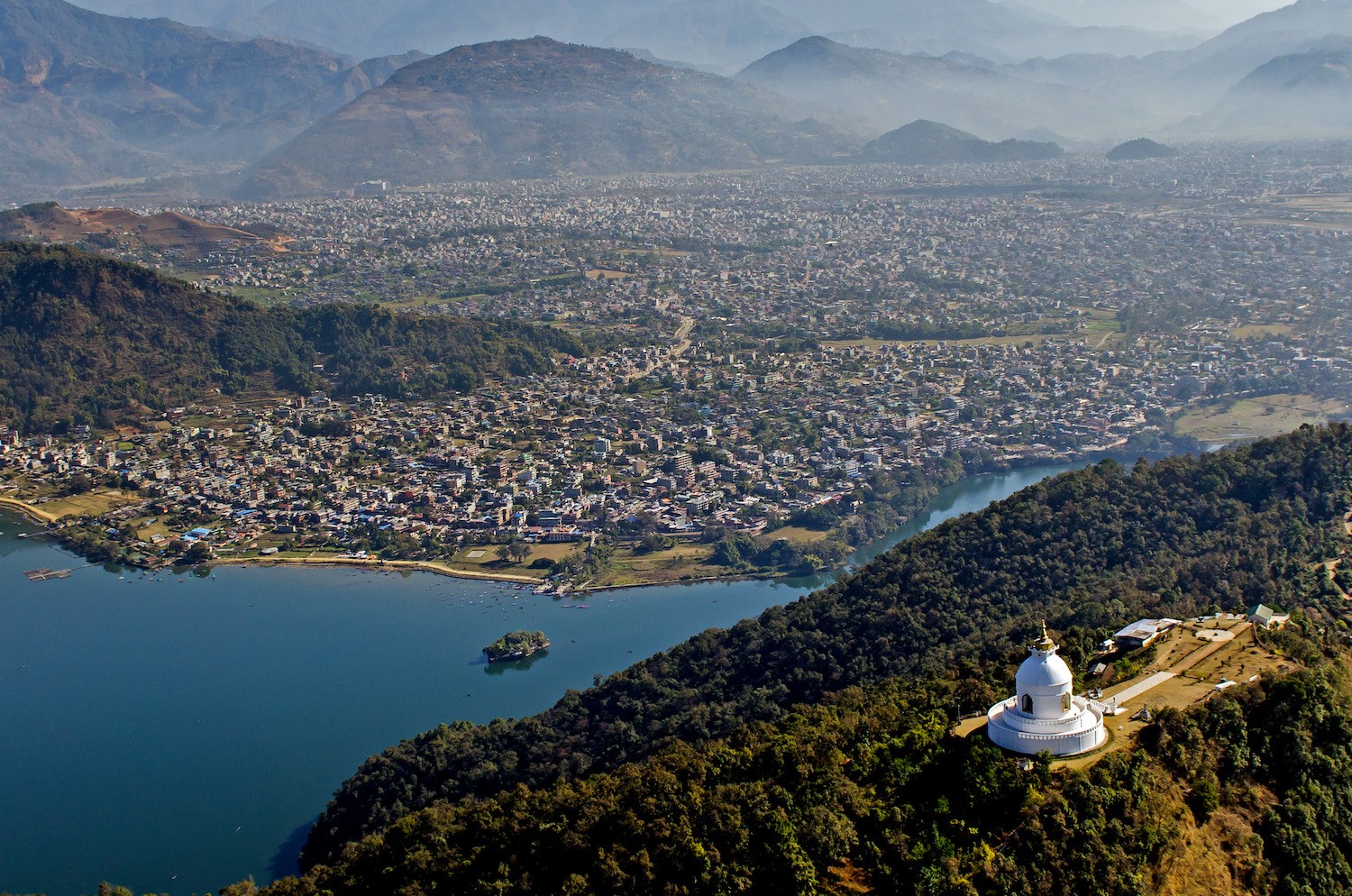
The brilliant white Shanti Stupa (World Peace Pagoda) overlooking Phewa Lake and Pokhara valley.
March is the start of the second peak window. Daytime temperatures climb to 22-27°C, and the rhododendron forests along the Annapurna foothills start their bloom especially visible if you trek up to Poon Hill (3,210 meters) by month's end. Mountain visibility is good in the early month, but afternoon haze begins to build by week three as pre-monsoon dust accumulates.
Festival overlap: Holi typically falls in early-to-mid March. In Pokhara, it's a more contained affair than in Kathmandu, expect color-throwing crowds along Lakeside, but it's wrapped up by 2 PM. Female travelers should dress carefully; the local etiquette is respectful, but tourist-heavy zones can get rowdy.
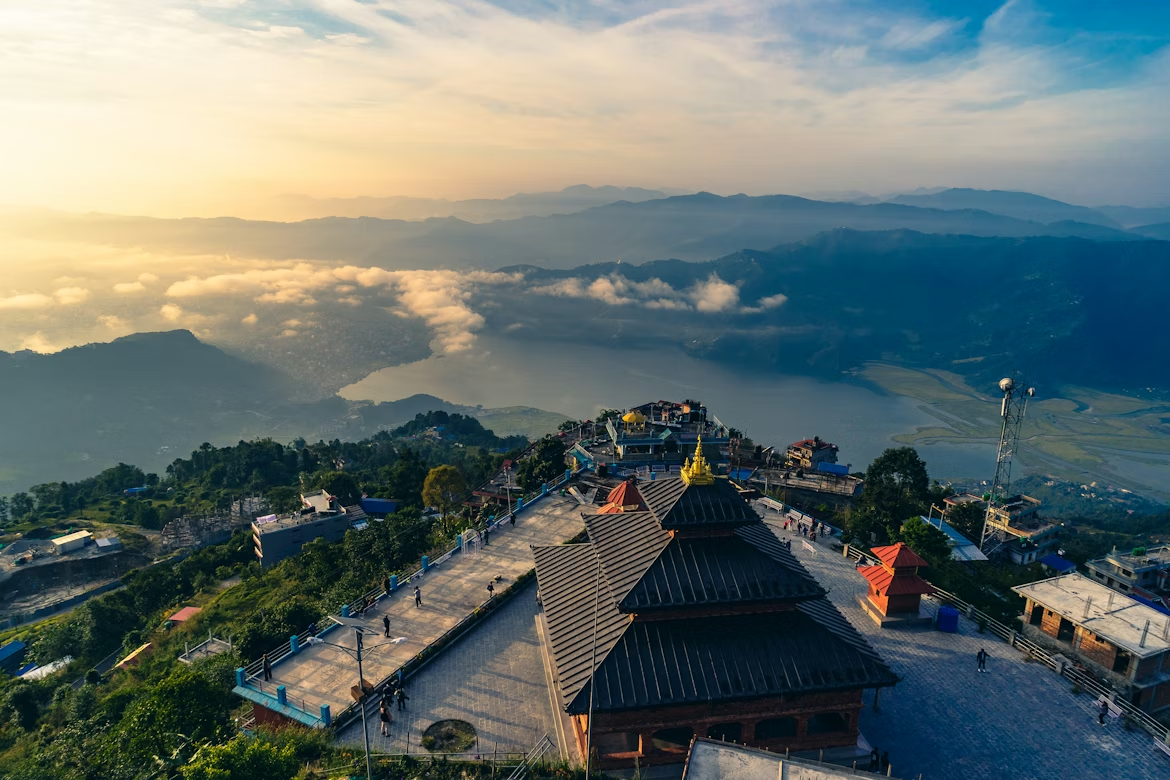
Source: Martin Skřivánek
Stunning sunrise view over the Annapurna mountain range from Sarangkot viewpoint in Pokhara.
April is the busiest spring month. Pokhara's lakeside fills with trekkers returning from or heading toward the Annapurna Base Camp (4,130 meters) circuit. Temperatures reach 25-30°C, swimming in Begnas Lake becomes pleasant, and adventure operators run full schedules.
The catch: afternoon haze regularly obscures the mountains from city level by 11 AM. Sunrise from Sarangkot remains your best bet for clear photos. Expect ACAP permit (NPR 3,000) queues at the Pokhara entry checkpoint and a 10-15% surcharge on most adventure activities.
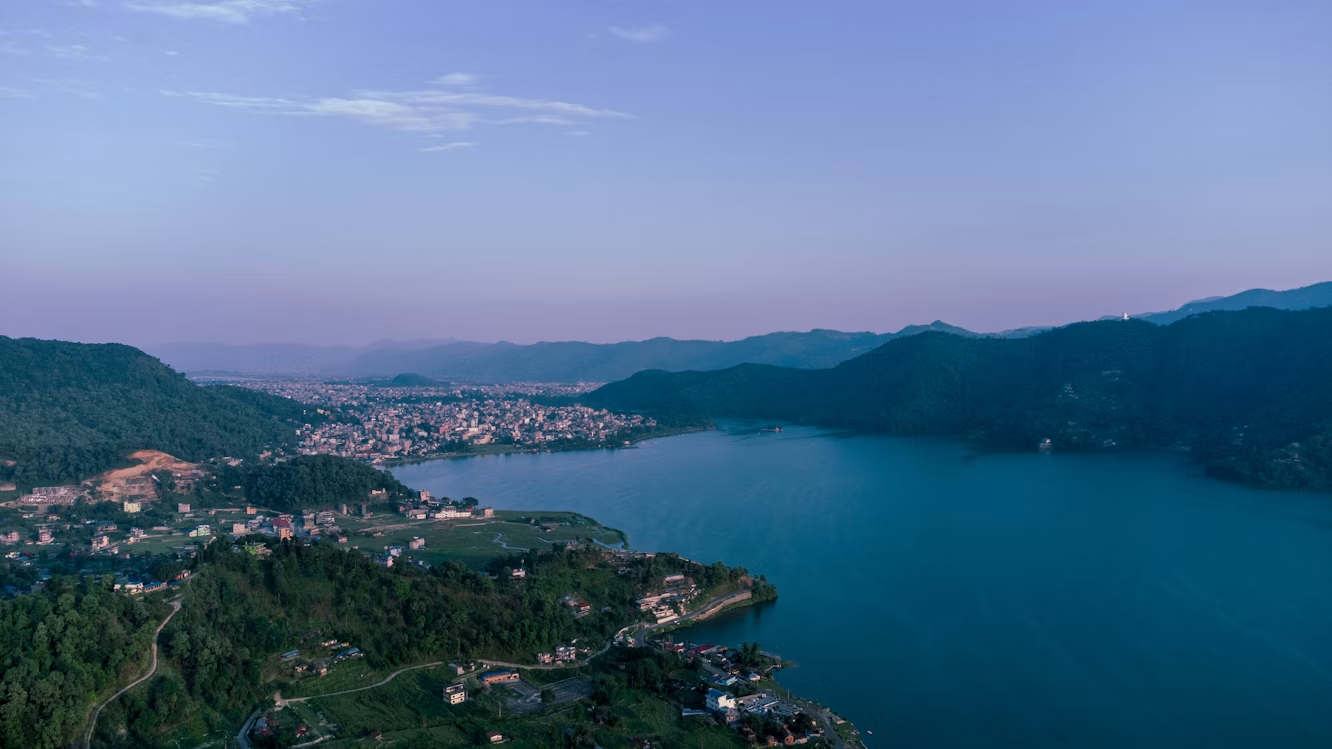
Source: Shepherd
Lush, green lakeside landscape of Pokhara during the month of May.
By May, the valley feels heavy. Highs hit 30-32°C, humidity rises sharply, and pre-monsoon thunderstorms roll in most afternoons. Mountain views are gone for most of the day. This is the quietest of the spring months, savvy travelers find genuine bargains, but the trade-off is real.
Who it suits: Cave explorers (Mahendra and Bat caves stay cool), spa-and-yoga retreat goers, and travelers happy to relocate their schedule to early morning. Skip if mountain visibility is your priority.
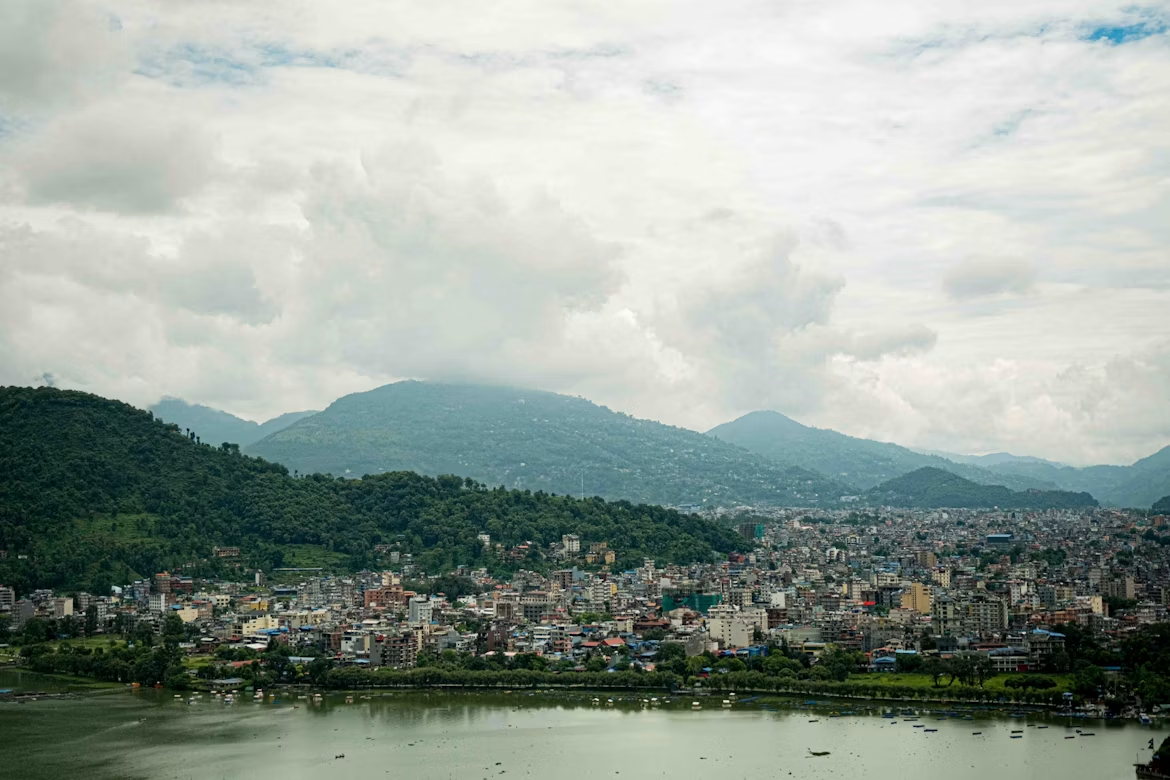
Source: Frederick Shaw
Misty, rain-washed hills and dramatic low clouds over Phewa Lake during the monsoon season.
The southwest monsoon typically hits Pokhara by mid-June. Rainfall jumps to roughly 700-800 mm for the month. The Prithvi Highway from Kathmandu already a punishing 6-8 hour drive due to ongoing road expansion works between Mugling and Pokhara becomes vulnerable to landslides. We've seen the route close for 12-36 hours on multiple occasions during peak monsoon.
Flights to Pokhara Regional Airport face frequent cancellations. Build in a buffer day if you're connecting to an international flight from Kathmandu. That said, hotel rates collapse, quality lakeside rooms drop to NPR 1,200-2,500, and the valley turns a vivid green that photographers actively seek out.
Source: Prince Nature
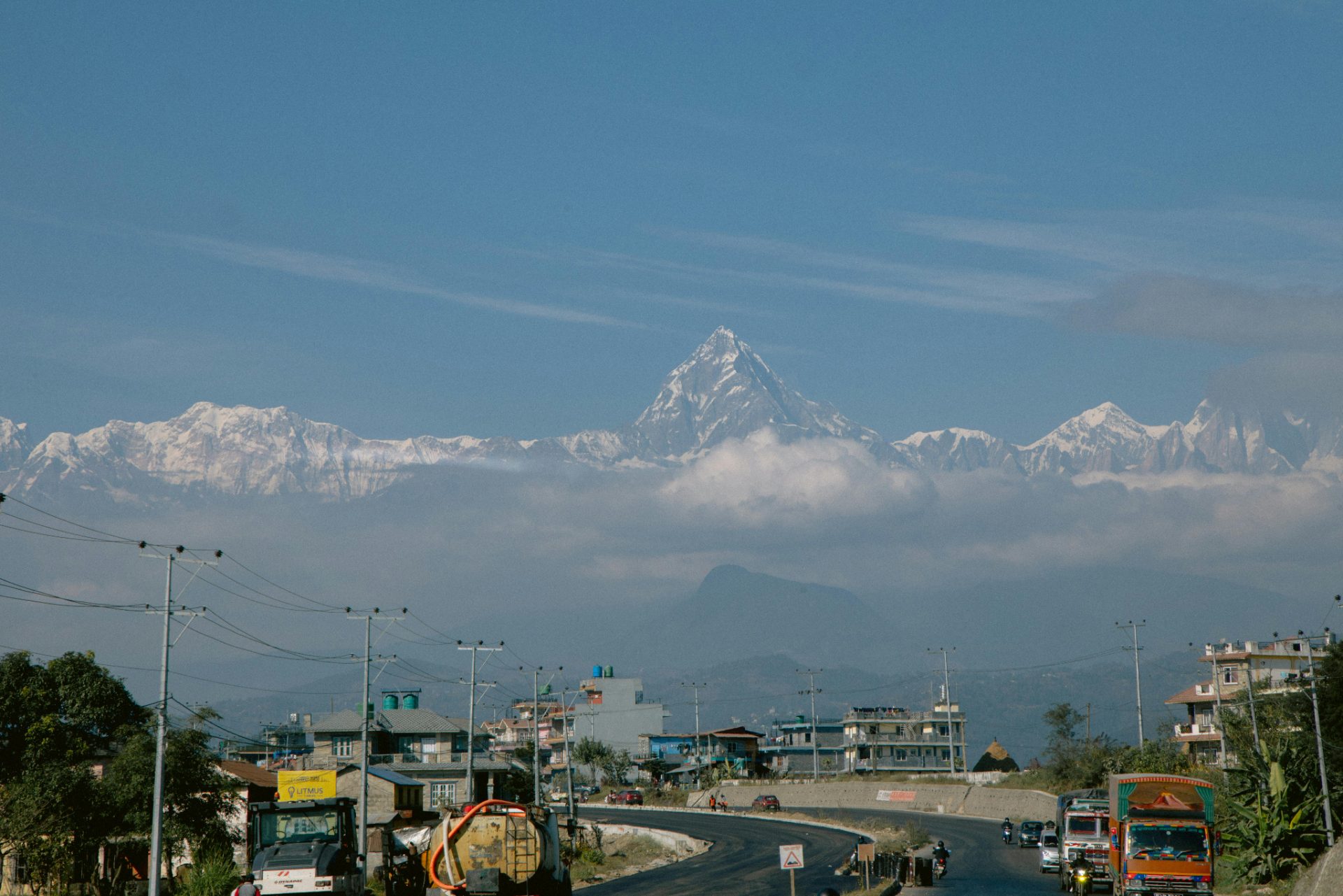
Panoramic landscape view of Pokhara city lakeside with mountain towering in the background.
July is the wet peak. Phewa Lake swells, the boats still run between downpours, and the World Peace Pagoda hike turns into a slippery scramble. Leeches appear on any forested trail below 2,500 meters. Bring DEET and salt.
Safety Alert: Do not attempt the Annapurna Base Camp route in July without an experienced guide. The Modi Khola valley is prone to flash floods, and the trail section near Deurali has historically been an avalanche zone even in summer. Insurance claims spike in this window.
Source: Explore Pokhara
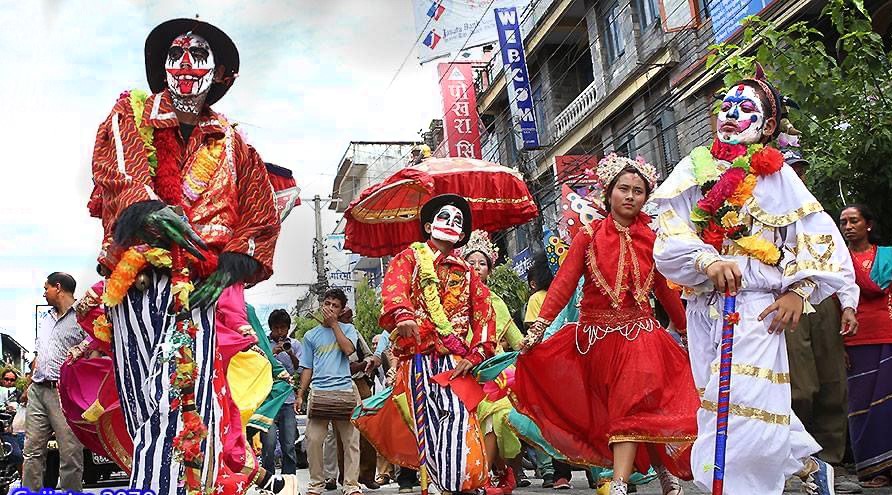
Local community members participating in the traditional cultural Gai Jatra festival procession in Pokhara.
Late August signals the monsoon's gradual retreat. Days are still wet, but mornings begin to clear earlier. Mountains peek out for an hour or two before clouds reassemble. The local Janai Purnima and Gai Jatra festivals fall in this month, quieter in Pokhara than in Kathmandu, but worth seeing if you're already there.
Source: Bishwo Bhandari
Aerial view of Lakeside Pokhara during the Tihar festival.
September is where things get interesting. The first two weeks are still damp, but by mid-September, rainfall drops sharply and the air begins to clear. By the last week, mountain views return sometimes more dramatically clear than in October because the atmosphere has been freshly scrubbed.
Major festival window: Indra Jatra falls in September, followed by the start of Dashain preparations. Local businesses in Pokhara may have reduced hours during peak Dashain days (usually late September into early October in 2026). Some teahouses on Annapurna trails close briefly as staff return to their home villages.
Source: Heather Upadyay
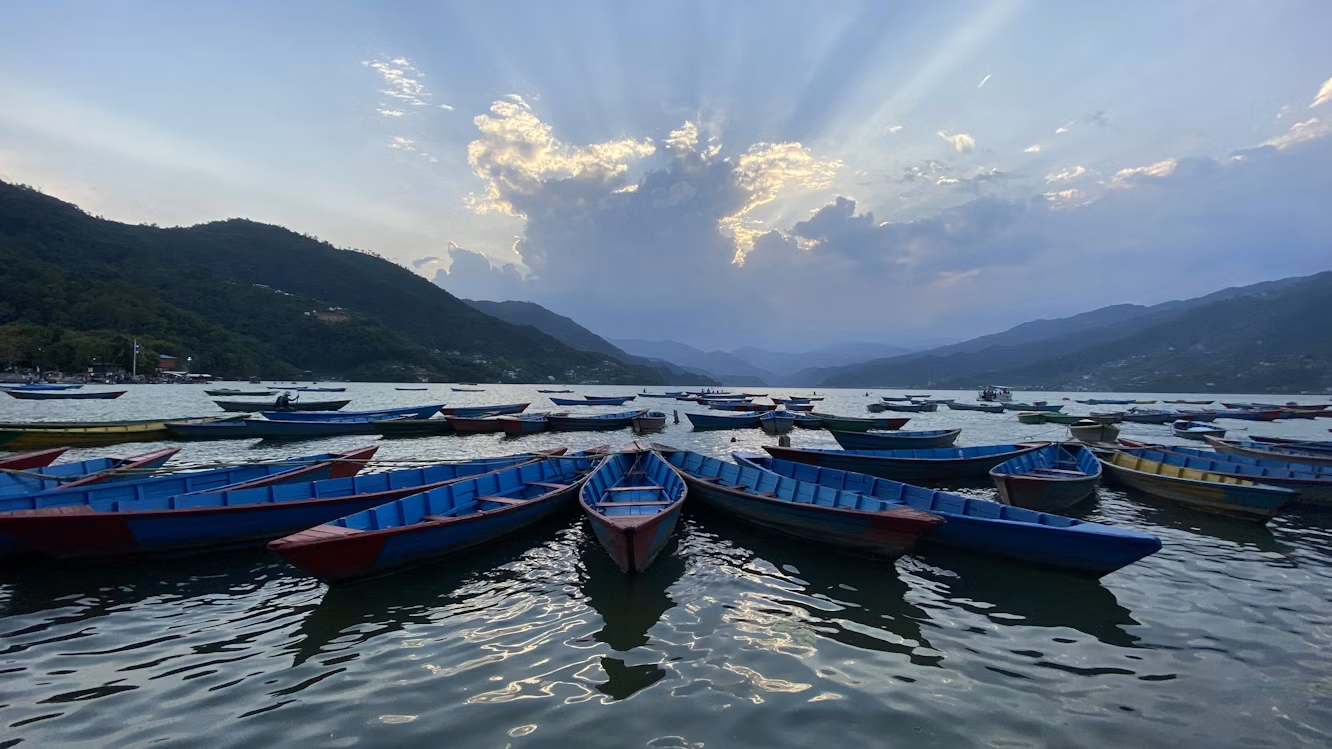
Brightly painted traditional colorful wooden boats moored on the banks of Phewa Lake.
October is the answer if you can only visit Pokhara once. Skies are crystal clear, daytime temperatures hold at 20-25°C, and nights are cool but not cold (10-15°C). Sarangkot sunrise tours sell every seat. Paragliding operators run from dawn to mid-afternoon. Every Annapurna trek is fully open, including the Thorong La (5,416 meters) crossing on the Annapurna Circuit.
The cost: Lakeside hotels charge their highest rates of the year (NPR 4,000-7,500) for solid mid-range rooms, and boutique properties on the lake's north shore push NPR 12,000+ per night. Book paragliding slots 2-3 days ahead. Dashain and Tihar both fall in this window in most years.
Source: Samrat Khadka
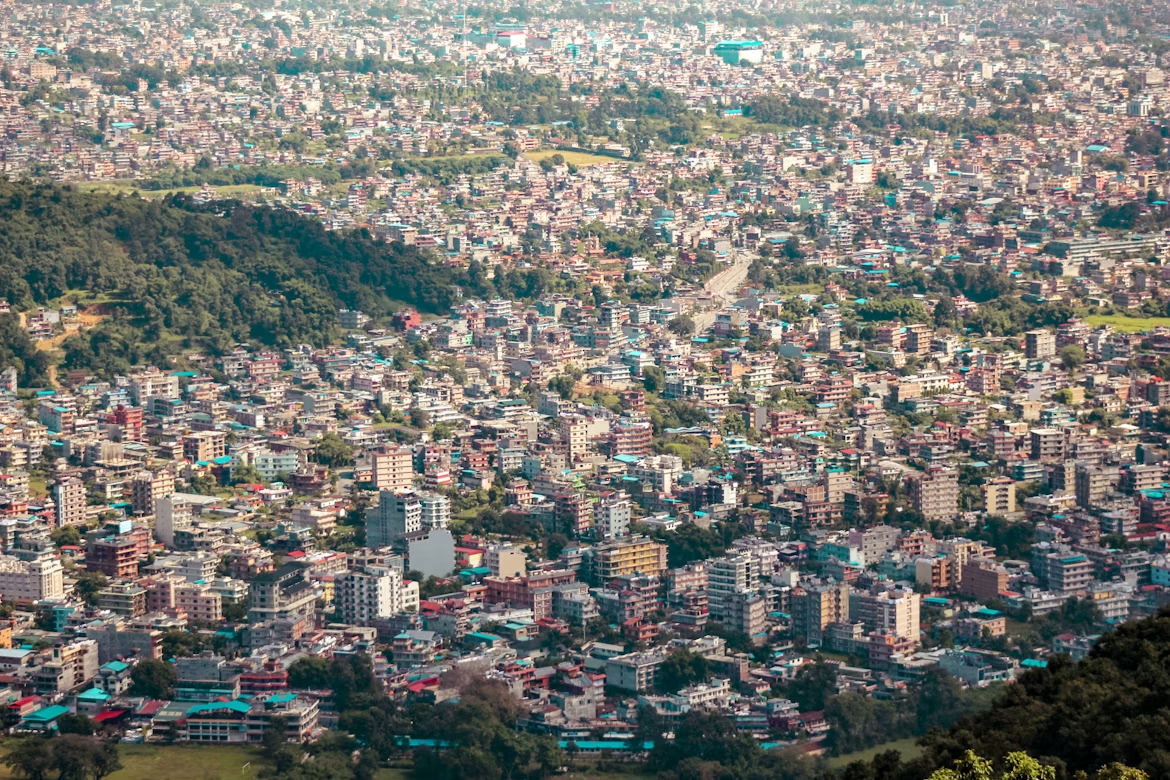
Scenic aerial view of Pokhara city valley and lakeside under a clear blue sky.
The first three weeks of November are nearly identical to October in weather quality, with slightly cooler nights (7-12°C) and gradually thinning crowds. By the last week, morning fog begins to creep back over Phewa Lake, and the high-altitude treks start to feel genuinely cold. This is our pick for travelers who want October's clarity without October's prices. Hotel rates begin to ease by 15-25% after the third week.
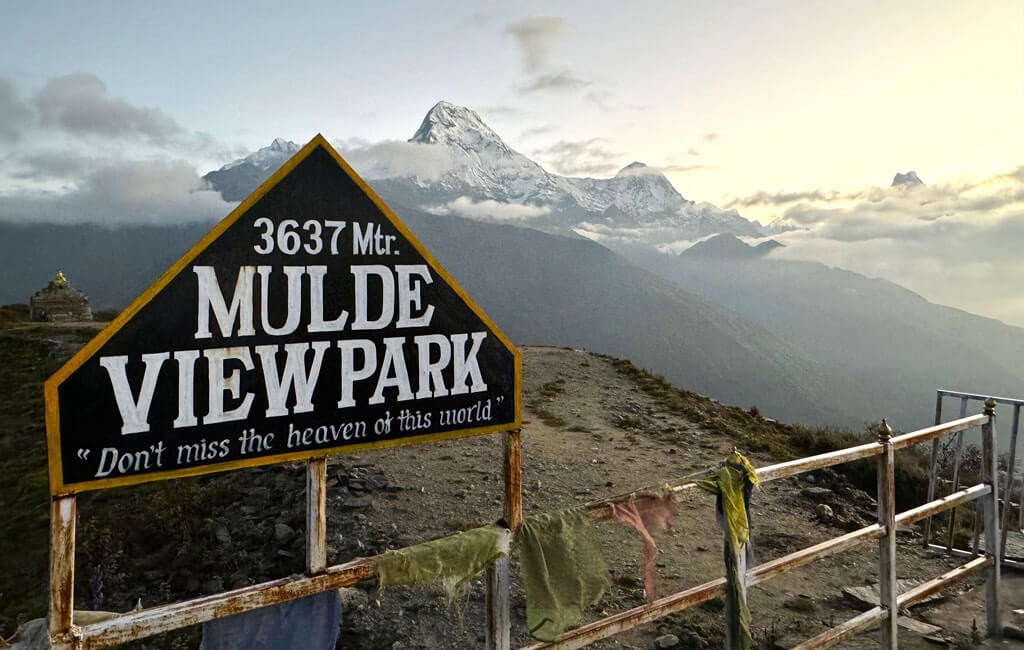
Panoramic sunrise view of the Annapurna and Dhaulagiri mountain ranges from Mulde View Point.
December delivers some of the year's sharpest mountain views once the morning fog lifts (usually by 9-10 AM). Temperatures sit at 15-19°C by day and 4-8°C at night. Christmas and New Year bring a brief tourist bump to lakeside bars and cafes, but it's a fraction of October's volume.
Trekking-wise, lower routes remain feasible. Ghorepani Poon Hill (3,210 meters), Mardi Himal up to Forest Camp, and the Australian Camp / Dhampus loop all work with proper layers. ABC requires more careful preparation; Thorong La is closed.
Best windows are mid-September to mid-November and mid-March to early May. These are the only periods when high passes are reliably open and visibility is consistent.
2026 Regulatory Note: Solo trekking remains banned across all Annapurna region trails. You must trek with a licensed guide arranged through a government-registered agency. Permits required: ACAP (NPR 3,000) and e-TIMS card, verified at checkpoints in Besisahar, Birethanti, and Ghandruk. There are no manual TIMS cards anymore, everything is the e-TIMS QR system.
Target October, November, February, and March. Thermals are most stable in autumn. Tandem paragliding from Sarangkot costs NPR 9,000-11,500 (around $70-90 USD) including the short flight to Phewa Lakeside, with a video package adding NPR 2,500-3,500.
Late September and late December deliver the cleanest air. Sunrise from Sarangkot or the World Peace Pagoda is non-negotiable. For lake reflections, the calm pre-7 AM window on Phewa is unbeatable in autumn and winter.
Hit late February, early September, or late November. You get reasonable weather and crowd-free lakeside cafes at 40-50% off peak rates. Skip pure monsoon unless you genuinely don't care about views.
By Road: The Kathmandu-Pokhara stretch on the Prithvi Highway covers roughly 200 kilometers and currently takes 6-8 hours by tourist bus, often longer due to active road-widening between Mugling and Pokhara. Tourist bus tickets cost NPR 1,200-1,800, while a one-way private car runs NPR 12,000-16,000. The dust and bumps in dry season are real; the landslide risk in monsoon is also real.
By Air: Domestic flights from Kathmandu to Pokhara Regional Airport run 25-30 minutes and cost $110-130 USD for tourists. Cancellations spike in monsoon and during winter fog mornings. Book a morning slot afternoon flights have higher disruption rates.
If you want the safe, undeniable answer go in October. Post-monsoon skies clear dramatically, mountain visibility from Sarangkot reaches peak clarity, and daytime temperatures sit at a comfortable range. If you want October's quality with smaller crowds and lower prices, go in early November or late March.
October and November offer the clearest, haze-free views of the Annapurna range right after the monsoon rains wash the atmosphere.
No, solo trekking is strictly banned; you must hire a licensed guide and obtain an ACAP permit alongside an e-TIMS QR code.
The drive currently takes 6 to 8 hours (or more) due to major ongoing road-widening construction along the Prithvi Highway.
It is safe for Lakeside stays, but highly discouraged for trekking due to leech infestations, trail washouts, and severe highway landslide risks.
A tandem flight costs NPR 9,000 to NPR 11,500 ($70–$90 USD), with video packages adding an extra NPR 2,500 to NPR 3,500.