Aarati Dawadi
The Kathmandu Valley holds something few capital regions on earth can claim: seven UNESCO World Heritage monument zones packed into roughly 20 kilometers of urban sprawl. Walk a single morning here and you'll move from a Hindu cremation ghat where smoke rises into the pine trees, past a 2,000-year-old Buddhist stupa where pilgrims chant in the early light, into a medieval royal square where artisans still carve wooden struts the same way their great-grandfathers did.
Our field coordinators have walked these stones with thousands of travelers, and we've learned that most visitors either rush through in a half-day blur or get hopelessly lost trying to find the right entrance gate. This guide fixes that. Below is the practical, current, and culturally grounded breakdown of every UNESCO site in the Kathmandu Valley, what to see, what to pay, how to behave, and how to actually enjoy it.
The Kathmandu Valley World Heritage Site was inscribed by UNESCO in 1979 as a single property comprising seven distinct monument zones. It includes three royal Durbar Squares (Kathmandu, Patan, Bhaktapur), two major Buddhist stupas (Swayambhunath, Boudhanath), and two Hindu temple complexes (Pashupatinath, Changu Narayan).
What makes this listing rare is the density. Most UNESCO cultural properties are single buildings or campuses. Here, you have living, breathing religious and royal architecture spread across a valley that has continuously practiced Newar Buddhism and Hinduism for over 1,500 years. The monuments aren't museums, they are still actively used for daily worship, weddings, funerals, and festivals.
Site | Foreigner Fee | SAARC Fee | Opening Hours |
Kathmandu Durbar Square | NPR 1,000 | NPR 150 | 9:00 AM – 6:00 PM |
Patan Durbar Square | NPR 1,000 | NPR 250 | 7:00 AM – 7:00 PM |
Bhaktapur Durbar Square | NPR 1,800 | NPR 500 | 6:00 AM – 7:00 PM |
Swayambhunath | NPR 200 | NPR 50 | 24 hours (best 5–8 AM) |
Boudhanath | NPR 400 | NPR 100 | 24 hours |
Pashupatinath | NPR 1,000 | Free for Hindus | 4:00 AM – 9:00 PM |
Changu Narayan | NPR 300 | NPR 100 | 8:00 AM – 6:00 PM |
Carry small Nepalese Rupee notes. Most ticket counters do not accept cards, and Bhaktapur's gate inspectors will turn you back if you show up with only dollars.
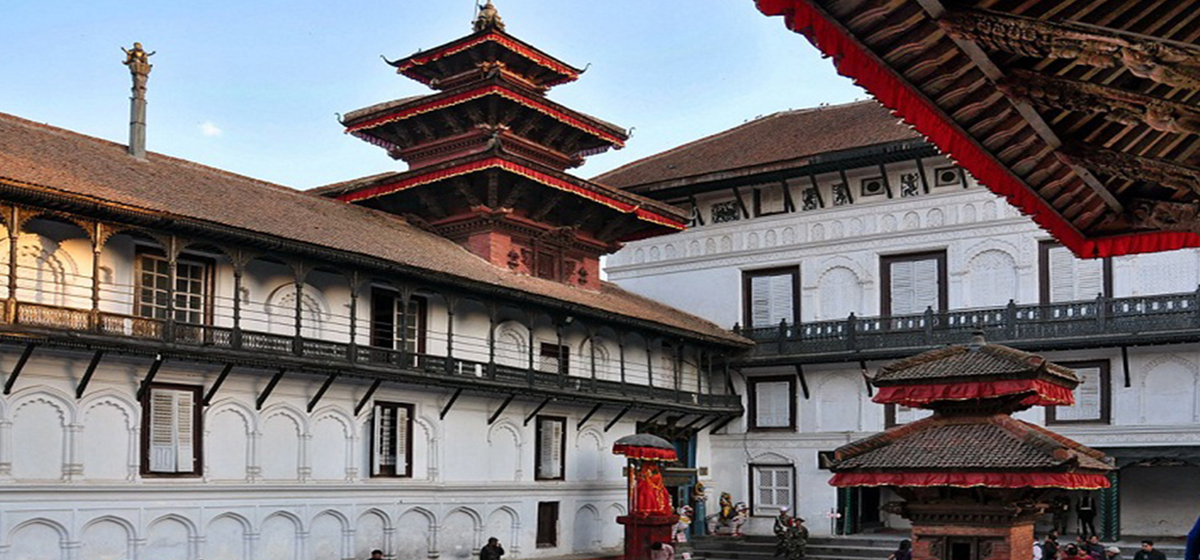
Source: myRepublica
Historic palace buildings and courtyard architecture at Hanuman Dhoka in Kathmandu Durbar Square.
Kathmandu Durbar Square is the historic royal palace complex of the old Kingdom of Kathmandu, located in the heart of the old city near Basantapur. The site contains the Hanuman Dhoka Palace, the legendary Kasthamandap pavilion, the Kumari Ghar (home of the Living Goddess), and over 50 temples spanning the 12th to 18th centuries.
The square took the heaviest blow during the April 2015 earthquake. Kasthamandap, the wooden pavilion that gives Kathmandu its name collapsed entirely. It has now been fully reconstructed using traditional Newar joinery and salvaged timber, reopened to the public in 2022. Some smaller shrines remain under scaffolding, but the square is fully functional.
Head straight for the Kumari Ghar, the ornate 18th-century residence of Kathmandu's Living Goddess. If you wait quietly in the inner courtyard, the young Kumari often appears at her latticed first-floor window for a brief darshan (viewing). Photography of the Kumari herself is strictly forbidden, your camera will be confiscated.
Then walk the platform of Maju Deval for the best elevated view of the square. Finish at the Hanuman Dhoka Palace Museum, which is included in your entry ticket.
Keep your ticket — you can ask for a multi-day pass at the counter if you mention your passport details, which lets you re-enter throughout your stay in Kathmandu free of charge. Most tourists don't know to ask.
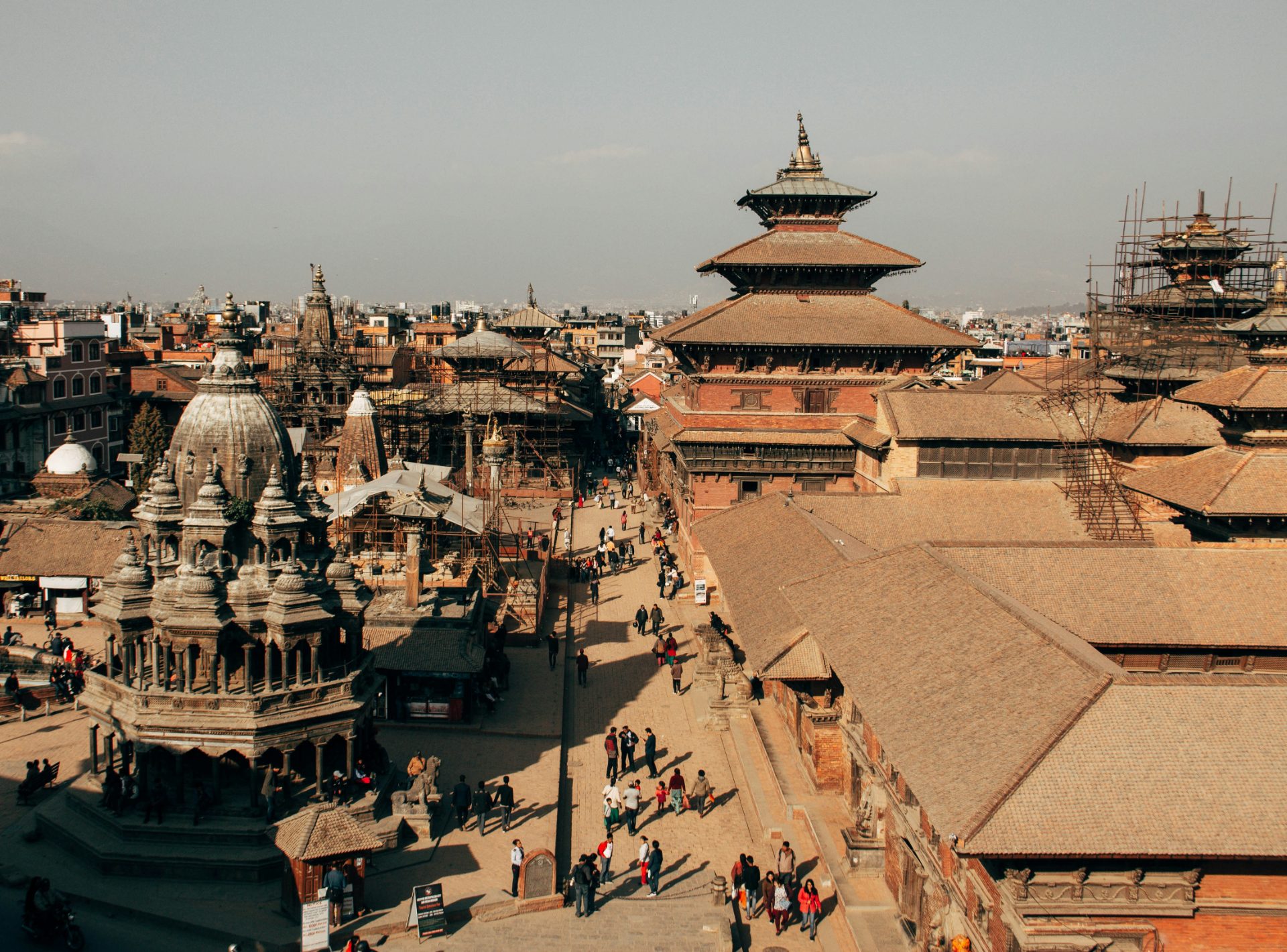
Source: Aaron Santelices
Intricate Newari architecture and stone temples of Patan Durbar Square in Lalitpur.
Patan Durbar Square sits in the city of Lalitpur, roughly 5 kilometers south of Thamel across the Bagmati River. It is widely considered the most architecturally refined of the three royal squares, with the highest concentration of Newar metalwork, stone carving, and pagoda craftsmanship in the valley.
The square centers on the Krishna Mandir, a 17th-century stone temple built in the Shikhara style, completely unusual for the wood-dominant valley. Its 21 golden pinnacles and intricately carved friezes depicting scenes from the Ramayana and Mahabharata are remarkable.
Inside the palace complex, the Patan Museum is the single best museum in Nepal. It's housed inside the restored Keshav Narayan Chowk and curates traditional Hindu and Buddhist bronzes, ritual objects, and Newar paubha paintings. Plan 90 minutes minimum. The museum is included in your entry ticket.
Patan's old town surrounding the square is alive with metal workshops. Walk five minutes in any direction and you'll find artisans hand-hammering singing bowls and casting bronze deities using the lost-wax method passed down through generations. Buying directly from these workshops costs significantly less than tourist shops in Thamel.
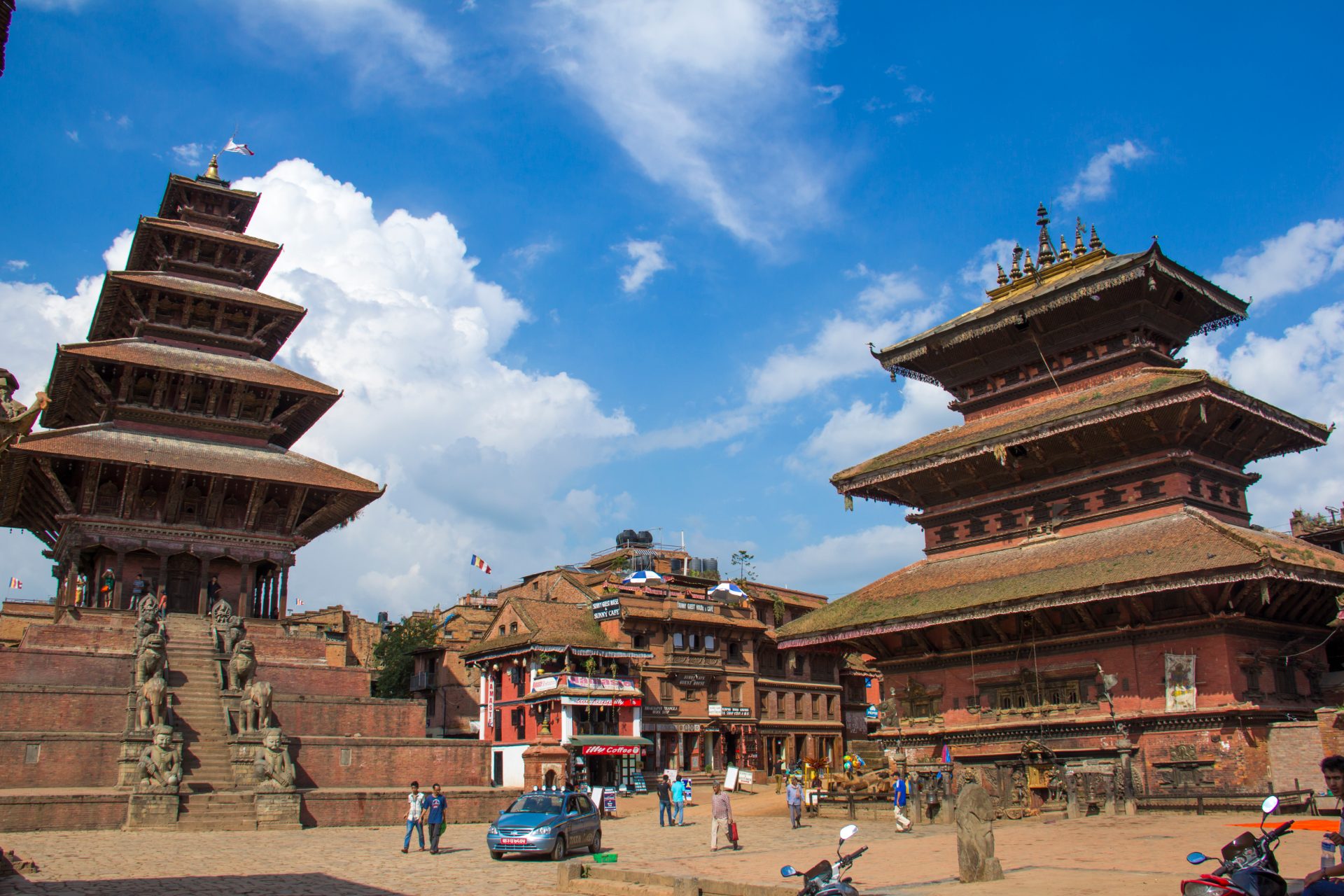
Source: Wikipedia
The towering five-story Nyatapola Temple alongside Bhairavnath Temple in Bhaktapur Durbar Square.
Bhaktapur Durbar Square is the largest and most preserved medieval city center in the valley, located 13 kilometers east of Kathmandu. The entry fee of NPR 1,800 grants access to the entire walled old city, including Taumadhi Square (home of the five-tiered Nyatapola Temple) and Dattatreya Square.
Bhaktapur was the capital of the Malla Kingdom until the 15th century. Walking its streets feels genuinely time-shifted, there are no motorbikes inside the core, women dry red chilies on stone platforms, and potters still throw clay in the open-air Potter's Square just south of the main complex.
The 55-Window Palace showcases the finest Newar wood carving in the valley. The Nyatapola Temple, standing at 30 meters tall, is the tallest pagoda in Nepal and survived the 2015 earthquake entirely intact due to its tiered seismic-resistant design from 1702. The Golden Gate entering the palace courtyard is considered the most refined piece of metalwork in the country.
Bhaktapur deserves more than the typical 2-hour tourist drop-off. Stay for lunch, try the local specialty juju dhau (king curd), a thick, sweetened yogurt set in clay bowls. The town empties of day-trippers after 4:00 PM, and walking the square in golden hour with the locals returning home is genuinely magical.
Source: Distinct Destinations
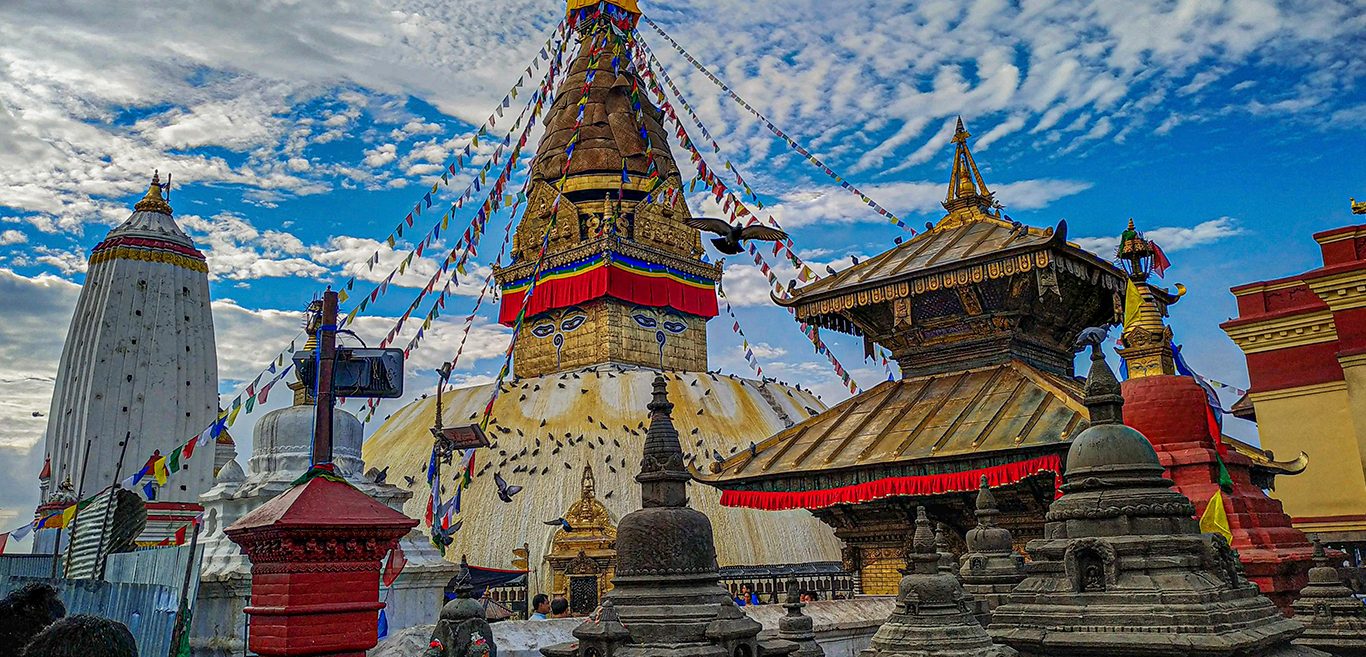
The iconic eyes of Buddha on the golden spire of Swayambhunath Monkey Temple overlooking Kathmandu.
Swayambhunath is an ancient Buddhist stupa complex perched on a hilltop 3 kilometers west of central Kathmandu. The site dates to at least the 5th century CE and is one of the holiest Buddhist pilgrimage sites in Nepal, equally venerated by Newar Buddhists and Hindus.
The main stupa is reached by climbing 365 stone steps from the eastern entrance. The painted eyes of the Buddha on each side of the gilded spire have become an iconic symbol of Nepal. Yes, there are monkeys, keep food packed away and don't make direct eye contact with the larger males.
Visit at sunrise (around 5:30 AM in spring/autumn). The valley fog burns off below you, monks circumambulate clockwise spinning the prayer wheels, and butter lamps flicker in the early dark. By 10 AM, the site fills with tour buses and the energy shifts entirely.
Always walk clockwise (keeping the stupa on your right) around the main shrine. Pass mani stones and chortens on the left side of your path. Remove your shoes before entering any of the side gompas, and never photograph inside prayer halls without explicit permission from the resident monks.
Source: Holiday Nepal
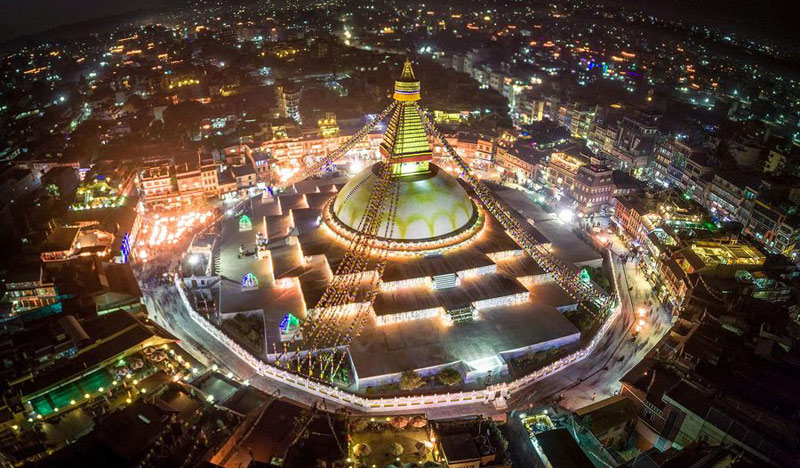
The massive white dome of Boudhanath Stupa with fluttering colorful prayer flags in Kathmandu.
Boudhanath is one of the largest spherical stupas in the world, located 7 kilometers northeast of central Kathmandu in the Tibetan Buddhist quarter. The stupa dates to the 14th century and serves as the spiritual center for Nepal's substantial Tibetan exile community.
Unlike Swayambhunath, Boudhanath sits at ground level surrounded by a ring of monasteries, Tibetan cafes, and thangka painting schools. The dome is 36 meters in diameter, and walking a full kora (circumambulation) takes about 10 minutes at a meditative pace.
Come at dusk. As the sun drops, hundreds of locals and monks gather to walk kora while butter lamps are lit around the stupa base. The accumulated sound of mantras and clicking prayer beads is something you remember years later.
The stupa was extensively damaged in 2015 but was rebuilt entirely through community donations without government funds and reconsecrated in November 2016. You won't see any visible scars today.
The rooftop restaurants ringing the stupa offer excellent thukpa, momos, and Tibetan butter tea with eye-level views of the gilded spire. Roadhouse Cafe and Garden Kitchen are reliable.
Source: Himalayan Glory Travels
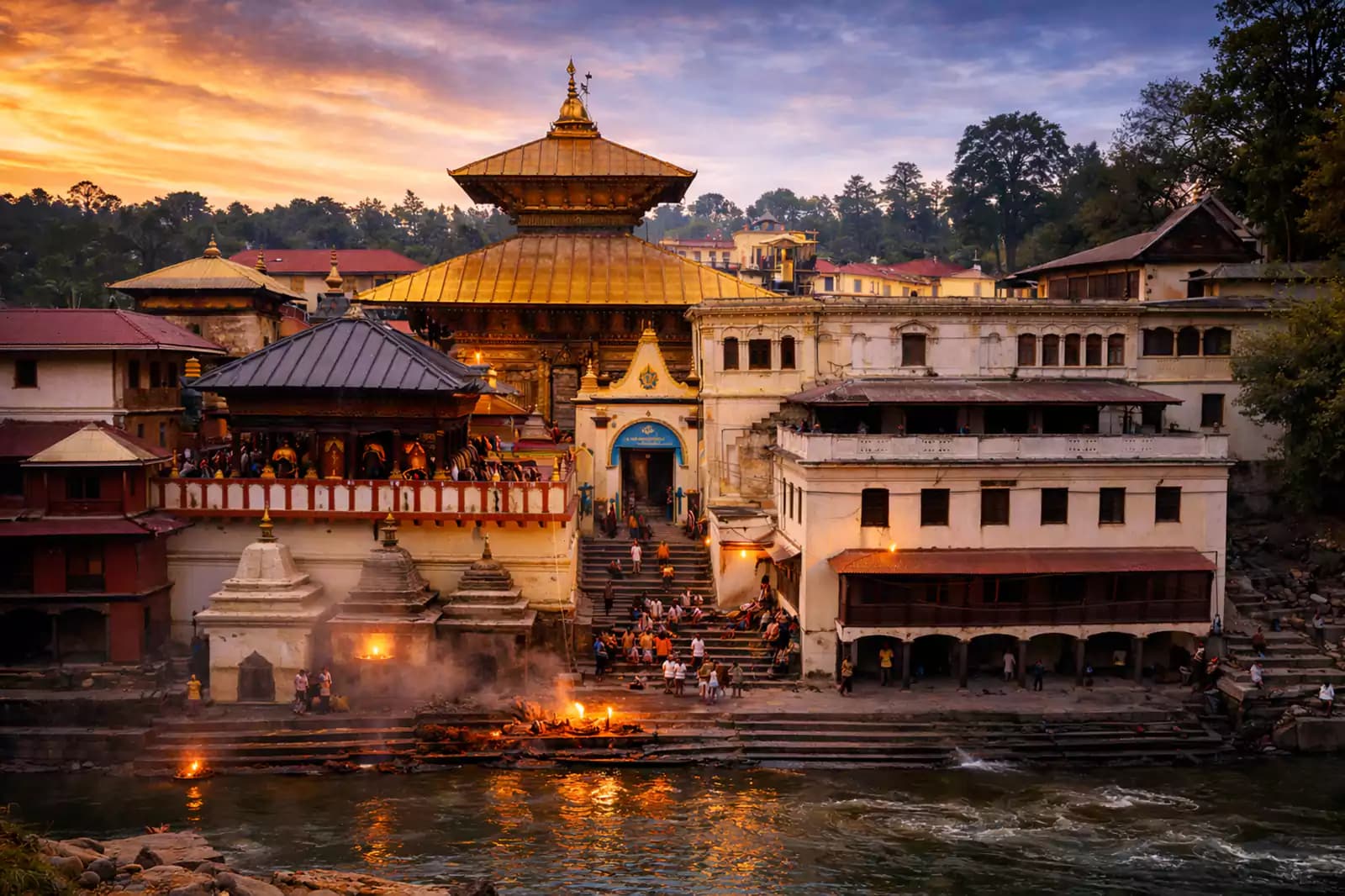
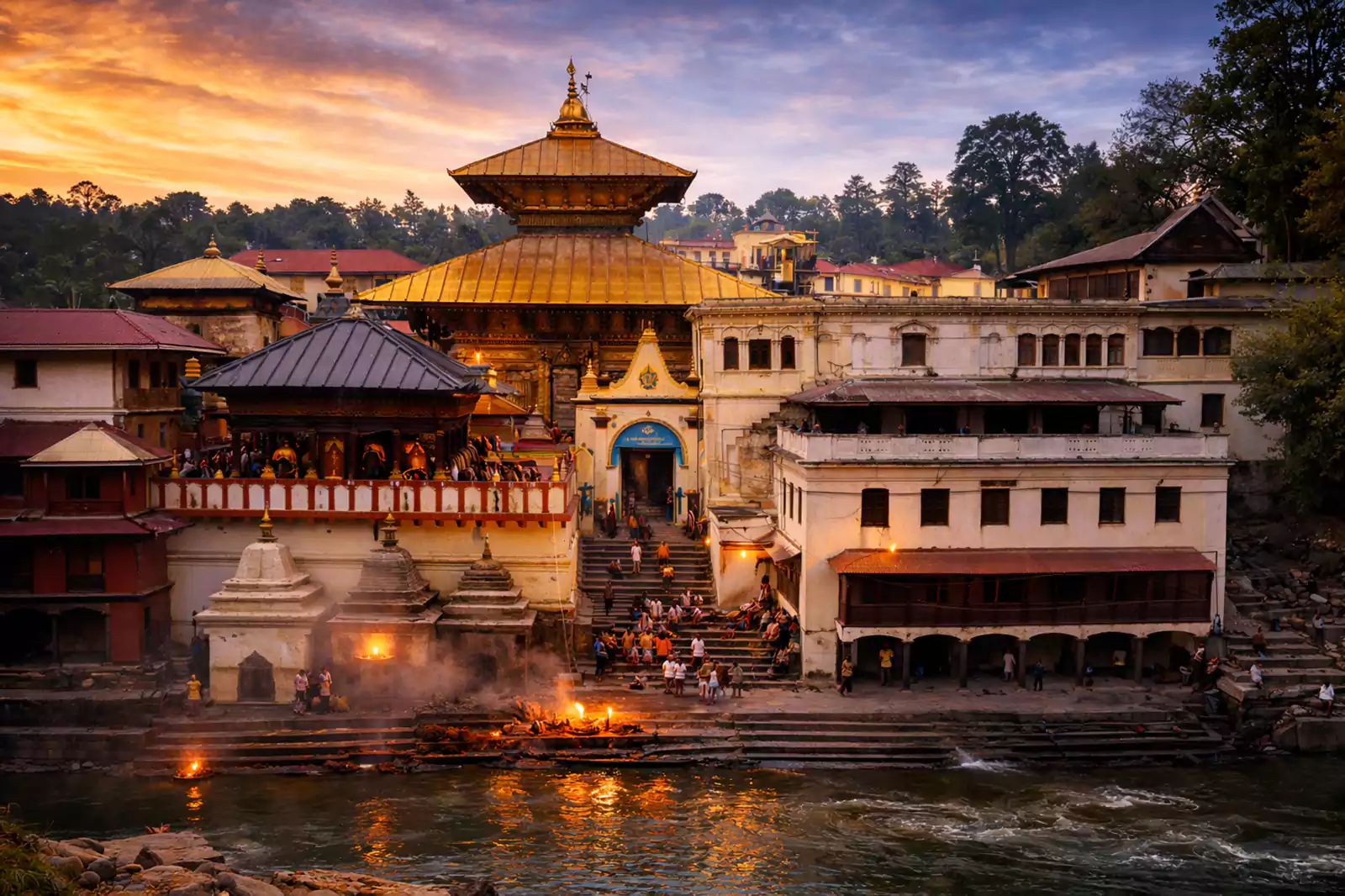
Sacred pagoda roofs of Pashupatinath Temple complex on the banks of the Bagmati River.
Pashupatinath is the most sacred Hindu temple in Nepal and one of the four major Shiva temples in South Asia. Located on the banks of the Bagmati River about 5 kilometers east of Thamel, the complex spans 264 hectares and includes hundreds of shrines, ashrams, and active cremation ghats.
Non-Hindus cannot enter the main inner sanctum, this rule is strictly enforced. However, the eastern bank of the Bagmati offers a complete view of the temple, the ghats, and the sadhus (Hindu ascetics) who live among the cliffside caves.
Open-air Hindu cremations happen daily on the Arya Ghat platforms along the river. This is not tourist theater, it's a sacred funeral rite. Stay on the opposite bank, do not photograph the bereaved families directly, and maintain quiet, respectful behavior. Our guides typically explain the symbolism and timing of the rites from a distance, which transforms what could be voyeurism into meaningful cultural understanding.
Come either at 6:00 AM for the morning aarti rituals or at 6:30 PM for the evening Bagmati aarti — a flame ceremony similar to Varanasi's Ganga aarti, performed nightly on the riverbank platforms.
Source: The Kathmandu Post
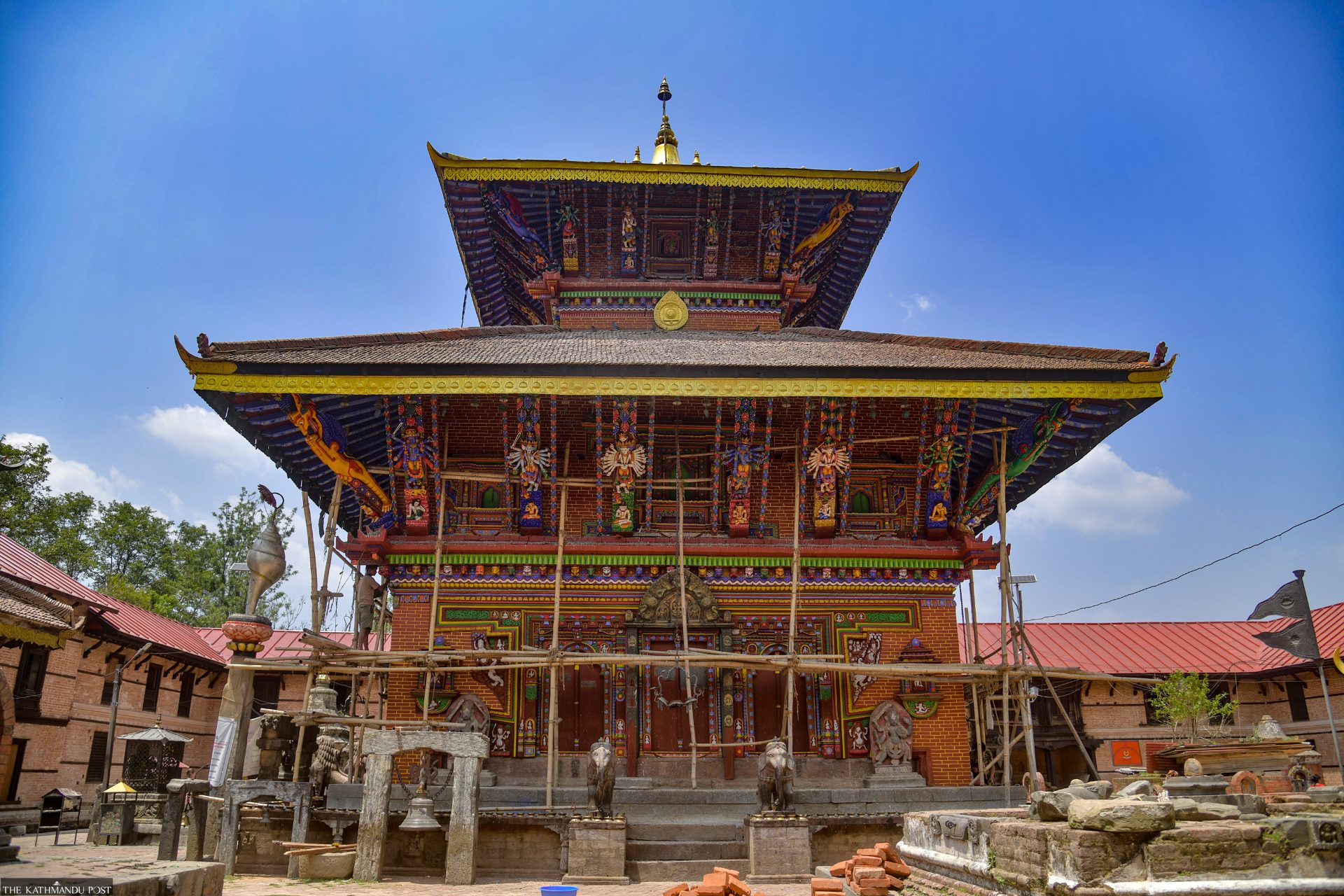
Ancient double-roofed Changu Narayan Temple, the oldest traditional Hindu temple in Nepal.
Changu Narayan is the oldest Hindu temple still in continuous worship in Nepal, dating to the 4th century CE. It sits atop a forested ridge about 22 kilometers east of Kathmandu, between Bhaktapur and Nagarkot, dedicated to Lord Vishnu.
This is the least visited UNESCO site in the valley and our team considers that a quiet gift. The temple courtyard contains the oldest stone inscription in Nepal (dated 464 CE) and an extraordinary collection of stone sculptures from the Licchavi period, including a 5th-century Vishnu Vishwarupa carving that is genuinely one of the finest pieces of ancient Hindu art in South Asia.
Pair Changu Narayan with either Bhaktapur (in the morning) or a sunrise at Nagarkot. A hired car for this combined route from Kathmandu typically runs in the realistic range of NPR 6,000–9,000 for the full day, though prices fluctuate, confirm live rates with your booking platform.
Day | Morning | Afternoon |
Day 1 | Swayambhunath (sunrise) + Kathmandu Durbar Square | Patan Durbar Square + Patan Museum |
Day 2 | Bhaktapur Durbar Square (full day) | Changu Narayan + sunset at Nagarkot |
Day 3 | Pashupatinath (morning aarti) | Boudhanath (sunset kora + dinner) |
Hire a licensed guide for at least the first day. The iconography in these temples, every carving has meaning and is largely invisible without someone to interpret it. Licensed cultural guides typically charge $35–$60 USD per day in the valley.
Dress modestly. Cover shoulders and knees, especially at Pashupatinath. Slip-on shoes save time at every shrine entrance.
Carry cash. Most ticket counters and small temple donation boxes are cash-only. ATMs are common in Thamel and Boudhanath but rare around Bhaktapur's old town.
Avoid Saturday mornings at Pashupatinath. It's the local holy day and crowds are intense. Saturday is, however, the liveliest time at Boudhanath.
SIM cards help. Pick up a local Ncell or Nepal Telecom (NTC) SIM at the airport for offline maps and translation. The valley's narrow alleys defeat most international roaming plans.
There is one UNESCO listing, the Kathmandu Valley World Heritage Site comprising seven monument zones: three Durbar Squares (Kathmandu, Patan, Bhaktapur), two stupas (Swayambhunath, Boudhanath), and two temples (Pashupatinath, Changu Narayan).
No. Non-Hindus are strictly barred from the main inner sanctum. You can view the complex, cremation ghats, and surrounding shrines from the eastern bank of the Bagmati River, which is open to all visitors with a valid NPR 1,000 entry ticket.
Plan for 3 to 4 full days to experience them meaningfully. A rushed 2-day version is possible but reduces the experience to photo stops. Our team typically recommends spacing visits to avoid temple fatigue.
No. All entry ticket counters operate in cash only. Some larger restaurants and shops near Boudhanath and Thamel accept cards, but smaller vendors, taxis, and donation boxes are strictly cash. Carry sufficient NPR before each visit.
Most major monuments have been restored, including Kasthamandap and Boudhanath. Some smaller temples in Kathmandu Durbar Square remain under active reconstruction, which is itself a fascinating insight into traditional Newar carpentry and seismic engineering.
Outdoor photography is generally allowed. However, photographing inside monastery prayer halls, inside Pashupatinath's inner sanctum, or of the Kumari (Living Goddess) is strictly prohibited. Always ask before photographing monks, sadhus, or worshippers up close.
If you hire a private cultural guide, tipping is culturally expected. A standard guideline is 15%–20% of the guide's daily rate, handed directly at the end of the engagement. For drivers, NPR 500–1,000 per day is appropriate for full-day valley tours.
The seven UNESCO sites of the Kathmandu Valley reward travelers who slow down. Walking them with a knowledgeable local guide transforms a stone courtyard into a 1,500-year-old story you'll carry home. Our marketplace connects you directly with licensed Newar and Tibetan cultural guides based in Kathmandu, vetted, English-speaking, and deeply rooted in the traditions they share. Browse curated heritage walking tours, custom multi-day itineraries, and private cultural experiences directly on our platform, or message a local coordinator to design a route around your schedule and interests.
The ultimate guide to planning your dream web travel adventure with the experts from myeasyguide.
Spam free. Unsubscribe anytime. We respect your privacy.