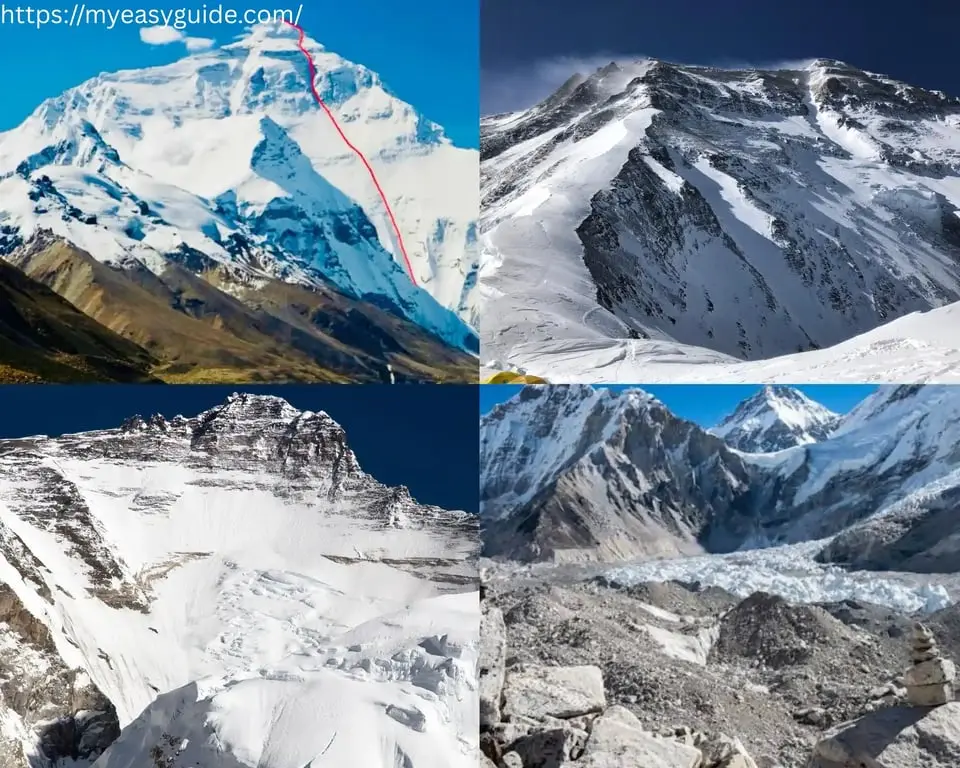
When people think of Everest Base Camp, they think about the bustling South Base Camp in Nepal, but what is less popular is that there is the North side Base Camp of Everest in Tibet.
This quieter, colder side of the mountain lies a face that feels almost mythical, which is called the North Face of Everest. This side of Everest, though, is less popular is remote but beautiful, offering mountaineers to climb Everest from the North Ridge Route.
This side of the World’s Highest Peak isn’t just a challenge for climbers but stares at them. When you stand beneath the towering ice walls in Tibet, you don’t just see Everest; there is a different kind of power that is hard to put into words.
Compared to the well-trodden and commercialized southern routes, the north face is all about mysteries, where even the winds bite harder and the landscape feels more unforgiving, and the silence is deeper.
This is a place where history, ambition, and extreme nature collide. Be it the legendary early expeditions to the modern-day climbing expeditions, this side of Everest has quietly shaped some of mountaineering’s most dramatic stories.
The North Face of Mount Everest is a realm of awe and challenge. It stands as a testament to nature's grandeur and the human spirit. This side of Everest is less traveled, yet it holds a unique allure.
Climbers face steep, icy slopes and unpredictable weather. The North Face is known for its technical difficulty. It offers a solitary experience, away from the crowds of the South Col route.
Located in Tibet, the North Face provides a different cultural backdrop. The central Rongbuk Glacier lies below, serving as a base for adventurers. This glacier is a gateway to the formidable ascent.
The North Face is steeped in history and mystery. Legendary climbers like George Mallory and Andrew Irvine have left their mark here. The first successful ascent was by a Chinese team in 1960.
Photographers are drawn to its dramatic appearance. The towering cliffs and deep crevasses create stunning visuals. The North Face is a symbol of the ultimate mountaineering challenge.
For some, it offers extreme adventures like snowboarding. However, this requires expert skills and is fraught with risk. The North Face climbing season runs from late April to early June.
This article explores the challenges and features of the North Face. It delves into its routes, history, and visual characteristics. Join us in uncovering the secrets of this majestic face of Everest. It also clears the doubts on questions such as, “Is Mount Everest in Nepal?” because this explores which part lies in Nepal and Tibet.
The North Face of Mount Everest presents a distinct allure. Its unique characteristics set it apart from other faces of the mountain. This side is famed for its technical challenges and historical significance.
Situated in Tibet, the North Face offers a culturally rich approach. Climbers pass through Tibetan landscapes, encountering unique customs and spiritual sites. This adds to the experience beyond just the climb.
The route itself is less crowded, providing solitude. Many climbers seeking a more personal adventure prefer this path. The atmosphere is serene, with fewer people, unlike the bustling South Side.
The technical challenges are formidable. Climbers must navigate icy slopes and severe terrain. The extreme weather conditions add to the complexity, making preparation crucial.
Several key features define the North Face:
These features highlight the route's complexity and danger. Climbers must be prepared for the unexpected, with unpredictable weather patterns posing additional threats.
The historical resonance of the North Face is palpable. Many legendary climbers have attempted its ascent, leaving behind tales of adventure and mystery. This history imbues the route with a sense of awe and respect.
Understanding this side of Everest requires a deep appreciation of its natural and historical facets. Each climb on the North Face is not just a test of skill but also a journey through time and nature's fury. This combination makes it an enduring challenge in the mountaineering world.
The North Face of Mount Everest holds a stark beauty. Its towering cliffs and icy structures are both mesmerizing and formidable.
Characterized by dramatic terrain, this side is shaped by harsh elements. Steep slopes rise sharply, interspersed with jagged rock formations. Ice fields span wide expanses, creating a landscape of freezing desolation. These ice fields demand skill and precision from those who cross them.
The face is often obscured by clouds, adding a mysterious aspect. When visible, the view reveals a formidable sight that captures the imagination. Beyond its visual impact, the North Face holds inherent geographical intrigue. Here, the mountain’s elevation rapidly ascends, stretching towards the sky.
Several prominent features define its appearance:
These features contribute to its rugged allure, each playing a role in its daunting presence.
The Rongbuk Glacier, in particular, lies at the base. This glacier serves as a gateway for those daring enough to climb.
The extreme altitude presents another layer of challenge. Air thins out quickly, creating severe physiological strains on climbers.
Strong winds often sweep across the face, carving patterns into the snow. These winds add dynamic energy to an already vibrant landscape. The North Face’s visual palette is one of contrasts. Blue ice, white snow, and dark rock create dramatic juxtapositions.
Photographers seek out these contrasts, capturing the sublime nature of the face. The images they produce reveal the awe-inspiring beauty of this remote location.
Therefore, the North Face's geography is both a climber’s challenge and a beacon for nature lovers. Its natural architecture stands as a testament to Earth’s violent processes and timeless beauty. Such features make it a destination filled with wonder and respect.
If you plan to explore the North face of Everest and find yourself at its foot, you’ll come across an ice river that is quietly shaping the entire landscape that you see, and it is the Central Rongbuk Glacier.
This glacier is slow, with its ancient movement that tells powerful stories of the mountain. This glacier is the lifeline of the Tibetan side of Everest, of the valleys, feeding moraines that guide every expedition that dares to approach the mountain from the north.
The Central Rongbuk Glacier is a key feature of the North Face of Everest. It functions as the main access point for climbers pursuing the north route. This glacier extends beneath the imposing heights of Everest. Its icy surface forms the base camp where climbers launch their treks.
Situated in Tibet, the Rongbuk Glacier presents a unique starting point. It offers a different ambiance compared to the South Col approach. Traversing this glacier requires careful navigation. Its crevasses are hidden, waiting to challenge even the most experienced explorers.
The glacier's role as a gateway is critical. Here, climbers acclimatize before tackling the steeper and more perilous parts of the face.
For mountaineers, it is both a starting line and a test of skill. The harsh environment demands respect from all who venture onto it. The ethereal beauty of the glacier contrasts with the physical demands it imposes. Yet, this duality defines much of the Everest climbing experience.
The area is surrounded by towering peaks and expansive ice fields. These surroundings create a dramatic backdrop, heightening the sense of adventure.
In spring, the glacier becomes a hive of activity. Tents dot the ice, forming a temporary village of global adventurers. Despite its challenges, Rongbuk Glacier captivates those who visit. Its icy domain is a vital part of Everest's allure, representing the start of an epic ascent.
Ultimately, this glacier's significance is both practical and symbolic. It is the first step in a journey to conquer Earth's highest summit.
The Everest North Route offers a challenging yet less crowded alternative to its southern counterpart. This route begins in Tibet, weaving through some of the most dramatic landscapes on Earth.
Unlike the South Col route, the North Route presents a unique blend of technical challenges and stark beauty. Its path is marked by steep climbs and harsh conditions. From the base at the Central Rongbuk Glacier, climbers ascend to a series of camps. Each camp serves as a step closer to the summit, offering a chance to acclimatize.
The initial trek involves negotiating rocky terrain, where loose scree tests balance and agility. This first section is a precursor to the more daunting challenges ahead. Reaching Advanced Base Camp, climbers face the immense North Col. This steep pass is often shrouded in ice, demanding meticulous technique and concentration.
Beyond the North Col, the route becomes even more formidable. Climbers must tackle the Three Steps, each adding its own layer of difficulty and danger. The Second Step is particularly notorious, featuring a near-vertical wall. It requires both courage and skill, pushing climbers to their limits.
Higher up, the Oxygen mask becomes a constant companion. The altitude extracts a heavy toll, draining energy and complicating every movement. The weather on the north route can shift abruptly. Climbers contend with fierce winds and severe drops in temperature, complicating their ascent significantly.
The strategic placement of camps necessitates longer periods at high altitudes. This helps in acclimatization but also adds to the physical toll of the expedition. At the summit push, the route demands constant vigilance. Loose snow and icy surfaces provide little room for error, especially in fading daylight.
In summary, the Everest North Route is a test of endurance, skill, and mental fortitude. It stands as a testament to the lure and challenge of the North Face.
The North Face of Mount Everest features several key landmarks that challenge even the most experienced climbers. Among these are the Three Steps, known for their perilous nature and technical demands. These features lie between the Advanced Base Camp and the summit, each presenting unique obstacles.
The First Step is the least difficult but still requires careful navigation. Its icy rocks and steep gradient test climbers' endurance right from the start. Even here, a single misstep can be costly, so precision is essential.
As climbers advance, they reach the Second Step, which is often described as the crux of the North Route. This nearly vertical wall stretches about 40 feet and poses serious technical challenges. Using fixed ladders, climbers must exert significant effort to haul themselves over it.
The Third Step, while shorter, does not lack in difficulty. Its position at altitudes exceeding 8,500 meters means climbers contend with thin air, adding to the burden of their ascent. Every breath at this altitude is labored, complicating even simple maneuvers.
Beyond the Three Steps lies the Norton Couloir. This wide gully offers an alternative path to the summit, known for its steep incline and loose, powdery snow. It stands as one of the few non-technical alternatives to reach the peak, yet it remains demanding in its own right.
Parallel to this is the Hornbein Couloir. This steep and narrow channel carves through the rock face, representing a more direct but perilous route to the top. Its icy path and sheer walls require adept skill in ice climbing techniques, leaving no margin for error.
Both the Norton and Hornbein Couloirs are rarely attempted, given their significant risks. Avalanches and shifting snow add unpredictability, enforcing an ominous air. These routes are best left to seasoned climbers with a penchant for adventure.
In summary, key landmarks on the North Face serve as proving grounds for climbers. They test physical limits, mental resilience, and technical prowess. The Everest North Route is not merely an ascent but a battle against these formidable landmarks.
Climbing the North Face of Mount Everest is fraught with weather-related challenges. Harsh winds whip across the mountain, often reaching speeds that make progress impossible. These gales are capable of picking up and throwing loose snow, reducing visibility to near zero.
Temperatures on the North Face plummet drastically. Sub-zero conditions are the norm, particularly during nighttime climbs. The biting cold can lead to frostbite, a common hazard for exposed extremities.
Altitude is a relentless adversary. At such elevations, oxygen levels are thin, and climbers often experience high-altitude sickness. Symptoms include nausea, dizziness, and impaired judgment, making decision-making strenuous.
Unpredictable avalanches are a constant threat on the North Face. The steep slopes and heavy snowfalls create ideal conditions for these icy torrents. This danger demands constant vigilance from climbers.
Sudden weather changes further complicate the ascent. A clear sky can swiftly transform into a treacherous storm. These storms bring with them heavy snowfall and lightning, forcing climbers to seek shelter quickly.
The environment on the North Face is also affected by its high exposure to solar radiation. The intense sunlight can cause snow blindness, making protective eyewear a necessity. Climbers must guard against this underestimated risk with due care.
Additionally, crevasses present hidden dangers on the glacier fields. These deep fissures in the ice can be concealed under fresh snow. A wrong step could lead to a fall into a seemingly bottomless void.
In summary, these environmental challenges on the North Face test every climber's resolve. Each obstacle demands respect and careful planning, vital for success in such hostile conditions.
Mount Everest's North Face has witnessed countless tales of bravery. This storied face of the mountain has long been a magnet for adventurers and climbers. Their quests have left an indelible mark on mountaineering history.
In the early 20th century, the North Face drew attention for its seemingly unconquerable paths. Expeditions from around the world set their sights on its daunting slopes. However, success often proved elusive.
Notable among these attempts were those led by British climbers in the 1920s and 1930s. These pioneers battled harsh conditions with rudimentary gear. Their tenacity paved the way for future ascents.
Many climbers on the North Face have met the mountain's fierce challenges head-on. Their experiences have contributed to the rich tapestry of Everest's history. Legends arose from both triumphs and tragedies.
The North Face is a stage where legends are born, particularly during the historic expeditions of the 20th century. Names like George Mallory and Andrew Irvine are forever linked to this side of the mountain. Their mysterious disappearance in 1924 remains one of mountaineering's great enigmas.
In the decades following, the North Face continued to pose formidable challenges. Each new expedition brought advancements in climbing techniques and equipment. Yet, the mountain remained a formidable foe.
One of the key moments in the history of Everest was the first confirmed ascent of the North Face. This achievement forever altered the perception of what was possible on Everest. It showed that human will could overcome nature's barriers.
Climbers like Reinhold Messner later took on this route, pushing limits further. Their fearless climbs expanded the boundaries of what was thought achievable. Messner and others turned the harsh North Face into a proving ground.
With each successful climb, the North Face has continued to inspire future adventurers. Climbers see it as a testament to human determination and spirit. They chase their dreams on its steep, icy paths.
The story of George Mallory and Andrew Irvine is legendary. Their 1924 expedition aimed to conquer the North Face. They vanished high on the mountain, sparking a mystery that persists today.
Mallory was a seasoned climber, respected for his determination. Irvine, though younger, showed great promise. Together, they formed a formidable team with a shared goal.
Their last confirmed sighting was just below the summit. Many believe they may have reached the top before tragedy struck. This uncertainty fuels endless speculation among historians and climbers alike.
In 1999, Mallory's body was found, providing some answers. Yet, crucial questions linger, such as whether they submitted before their deaths. Irvine's remains and their camera, which could hold definitive proof, are still missing.
The mystery enhances their legendary status. Mallory's famous quote, "Because it's there," resonates deeply. It embodies the timeless allure of exploring the uncharted North Face.
In 1960, a Chinese expedition achieved the impossible. They became the first to conquer the North Face. The team was led by Wang Fuzhou, Qu Yinhua, and Gongbu. The ascent came amid international skepticism. Many doubted the climb was feasible via the North Face. This achievement silenced critics and marked a milestone in mountaineering history.
Their success was not without immense struggle. They braved intense cold and high winds, showcasing unparalleled resilience. This triumphant ascent inspired a new generation of climbers.
Since that historic climb, the North Face has seen many expeditions. The Chinese team's success remains a beacon of human perseverance. It underscores the spirit of exploration that drives mountaineers to this day.
In the modern era, the North Face of Mount Everest remains a formidable challenge. Technological advances have significantly enhanced climbing strategies. However, the unpredictable weather still poses serious risks.
Contemporary expeditions benefit from improved gear and satellite technology. Climbers now have better chances of tracking weather patterns. These advancements reduce some of the uncertainties of past expeditions.
The evolution of North Face climbing reflects a shift in techniques. New routes and strategies have emerged over the decades. As a result, climbers can tackle the ascent with renewed confidence.
Modern climbers often focus on minimizing the time spent on the North Face. Speed climbing has gained popularity among seasoned alpinists. This approach decreases exposure to harsh conditions and altitudes.
The demand for authentic experiences has driven interest in this route. Climbers seek the solitude and raw challenge it offers. The less-commercialized path adds to its distinct allure.
Meanwhile, the community of North Face climbers continues to grow. Shared knowledge and experiences boost expedition success rates. Networking among climbers has led to innovations in techniques and equipment.
Safety has become a paramount concern in recent expeditions. Teams invest heavily in risk assessment and emergency response plans. Effective communication systems are now standard in North Face climbs.
The evolution of climbing on the North Face highlights human ingenuity. Each expedition teaches valuable lessons. These lessons drive future climbers to continue pushing the limits.
The North Face and South Col routes on Mount Everest offer contrasting experiences. Each presents unique challenges and rewards. Understanding these differences helps climbers choose the right path for them.
The North Face is known for its technical difficulty. Climbers face steep slopes and treacherous rock sections. This path requires significant climbing expertise and endurance.
In contrast, the South Col route is more popular among guided expeditions. It tends to be less technically demanding, though still challenging. Many climbers opt for this route due to its relative accessibility.
Weather conditions also vary between these routes. The North Face is often windier, with harsher climatic conditions. It demands greater resilience to endure the extreme environment.
Cultural differences also play a role. The North Face is accessed from Tibet. This offers a distinct cultural and logistical experience. The South Col approaches via Nepal, offering a different cultural backdrop.
The level of solitude differs markedly. The North Face tends to be less crowded. This provides a more solitary experience, ideal for those seeking tranquility.
These differences fundamentally shape each climbing experience. Choosing the right route depends on personal preferences and skills. Each path represents a unique journey and set of challenges.
Climbing the North Face of Mount Everest involves substantial risks. The harsh environment poses several life-threatening challenges. Understanding these risks is crucial for preparation and survival.
Avalanches are a constant threat on the North Face. The steep slopes and shifting snow create precarious conditions. An avalanche can occur without warning, making it incredibly dangerous.
High winds present another significant hazard. The North Face is exposed to fierce winds that can reach extreme speeds. These winds not only make climbing difficult but also increase the risk of frostbite.
Altitude is an unavoidable challenge on Everest. The thin air at such high altitudes affects physical and cognitive functions. Without proper acclimatization, climbers risk altitude sickness, which can be fatal.
Weather conditions on the North Face can change rapidly. Clear skies can quickly turn into severe storms. Climbers must be prepared for sudden changes and plan accordingly.
The North Face route is less traveled, meaning fewer established safety measures. This lack of infrastructure demands self-reliance and meticulous planning. Every climber must be equipped with a robust risk management strategy.
These risks demand respect and readiness. Climbers must be vigilant and cautious at every step. The North Face tests both physical and mental limits, demanding the utmost preparation.
The North Face of Mount Everest offers a unique solitude. Unlike the busier South Col route, the North Face is less frequented. This isolation adds an enchanting allure for many mountaineers.
Embracing solitude on the North Face means connecting deeply with nature. Climbers find themselves in a vast, untamed wilderness. The environment is raw, offering both challenge and inspiration.
The allure of the North Face extends beyond its solitude. Its towering cliffs and rugged terrain are captivating. These visual elements blend into a dramatic, picturesque setting. Adventurers are drawn to the North Face for its purity and authenticity. The less commercialized experience provides an unfiltered connection to the mountain. It's a place where climbers test their limits against nature's raw power.
For many, the North Face represents more than just a climb; it's a personal journey. It offers moments of introspection amidst the challenges. The solitude enhances this introspection, making the experience deeply personal and rewarding.
Snowboarding down the North Face of Mount Everest is an extreme adventure like no other. This pursuit requires expert skills and immense courage. The sheer drop and icy slopes present a formidable challenge.
The North Face offers snowboarders a surreal experience. Few locations on earth offer such dramatic descents. The terrain is steep, with sudden changes in snow conditions. Snowboarders on the North Face face unpredictable weather. Sudden storms and high winds can complicate descents. Preparing for these conditions is essential for survival.
Only a small number of snowboarders have attempted this daring feat. Their success stories inspire others seeking extraordinary experiences. Each descent is a testament to human resilience and skill.
Key considerations for those attempting this adventure include:
These elements are crucial for a successful North Face snowboarding expedition.
The North Face of Mount Everest captivates photographers worldwide. Its dramatic views offer endless opportunities for stunning photographs. Climbers often document their journeys through striking images.
Photographs capture the sheer cliffs and icy expanses. Each image tells a story of adventure and challenge. The shifting light on the face adds depth to these visual narratives. The North Face is renowned for its formidable beauty. Images often showcase the steep ascent paths. The snow-covered ridges create an otherworldly panorama.
Visual documentation immortalizes the extreme weather conditions. Snowstorms and winds often blur the majestic scenery. These pictures reflect both danger and wonder. Mountaineers and photographers alike seek out unique frames. Capturing moments of triumph amid natural splendor. The North Face's pictures inspire aspiring climbers and adventurers.
Ultimately, these images reveal the raw essence of the North Face. The visuals convey the challenge it poses. They highlight the enduring allure of this majestic peak.
The North Face of Mount Everest plays a crucial role in scientific research. Scientists study its glaciers to understand climate patterns. The data gathered helps in predicting future climate shifts.
The central Rongbuk Glacier below the North Face is a key area of study. This glacier's health reflects broader environmental changes. Scientists track its melting rates and ice flow dynamics.
Researchers focus on the impact of global warming on these ice structures. The thinning ice affects the stability of the face itself. These observations are vital for understanding the Earth's climate.
The area presents unique challenges and insights for glaciologists. Glaciology is the scientific discipline that studies all aspects of ice on landmasses. The high altitude offers an extreme environment for their work. The findings here provide a window into high-altitude glacier dynamics.
Key research areas include:
Understanding these processes is essential for climate science. It aids in assessing the impact of human activity on high-altitude ecosystems. The North Face remains a significant symbol in these scientific endeavors.
Embarking on a North Face expedition requires meticulous preparation. Climbers must hone their skills and physical fitness to endure the extreme conditions. Technical climbing skills are essential for tackling this challenging route. Aspiring climbers should practice ice and rock climbing. Mastering these techniques can make the difference between success and failure.
Fitness plays a crucial role in any North Face expedition. Climbers should engage in cardiovascular and strength training. High-altitude endurance exercises are highly recommended. The logistics of a North Face climb can be complex. Planning ahead is crucial to manage supplies and equipment effectively. A well-coordinated support team is vital for a successful ascent.
Climbers should prepare for unexpected weather. The North Face is notorious for sudden storms and strong winds. Packing appropriate gear is essential for safety. Acclimatization is key when climbing such high altitudes. Proper acclimatization helps prevent altitude sickness. Climbers should allow ample time for their bodies to adjust.
Coordination with local authorities and guides is necessary. These experts provide insight into current conditions and potential hazards. Collaborating with experienced guides can improve expedition chances.
Here’s a quick checklist for climbers:
Preparing for a North Face expedition is a formidable task. It tests both the mind and body. But with the right preparation and mindset, climbers can embrace the challenge head-on.
The North Face of Mount Everest stands as a testament to the human spirit and resilience. Its steep slopes and freezing winds are challenges few dare to face. This side of Everest symbolizes the ultimate test for mountaineers. The North Face demands not only physical strength but also mental fortitude. It is less trodden yet rich in history and adventure.
The 1960 Chinese expedition paved the way for daring climbers. Yet, the mystery of Mallory and Irvine remains, adding intrigue to its challenging paths. These stories continue to inspire climbers worldwide.
Climbers today are drawn to its rugged beauty. The North Face offers solitude, making each ascent a deeply personal journey. It leaves a lasting impression on all who conquer its heights.
As the world changes, The North Face endures. It challenges us to explore, to reach beyond our comfort zones. Its legacy grows with each daring attempt, fueling our fascination with adventure and discovery.
The North Face is known for its steep, icy slopes and less crowding. It offers climbers solitude and technical challenges.
The optimal season is from late April to early June. This period offers the most stable weather conditions for climbers.
The North Face is often more treacherous. Factors include high winds, avalanches, and its notorious "Second Step."
Some climbers prefer the North Face of Everest over the South Col Route because it is less commercialized and often seen as a purer form of Everest adventure. The main reason is that the North Face provides a more isolated experience.
While possible, snowboarding is extremely risky and suitable only for experts. The terrain is steep and challenging.
The Rongbuk glacier is located on the north side of Mount Everest in Tibet, China, and at the foot of the mountains. It is among the largest and famous glaciers in the Everest area.
Yes, the north face of Everest is harder than the South Face/ South Col Route because of the strong winds, freezing temperatures, and difficult as well as steep terrain with vertical rocks, making it extremely difficult over 8,500 m.
The north face of Everest is the northern part of Everest, which is on the Tibetan side and can be seen from Tibet.