Prabesh Tamang
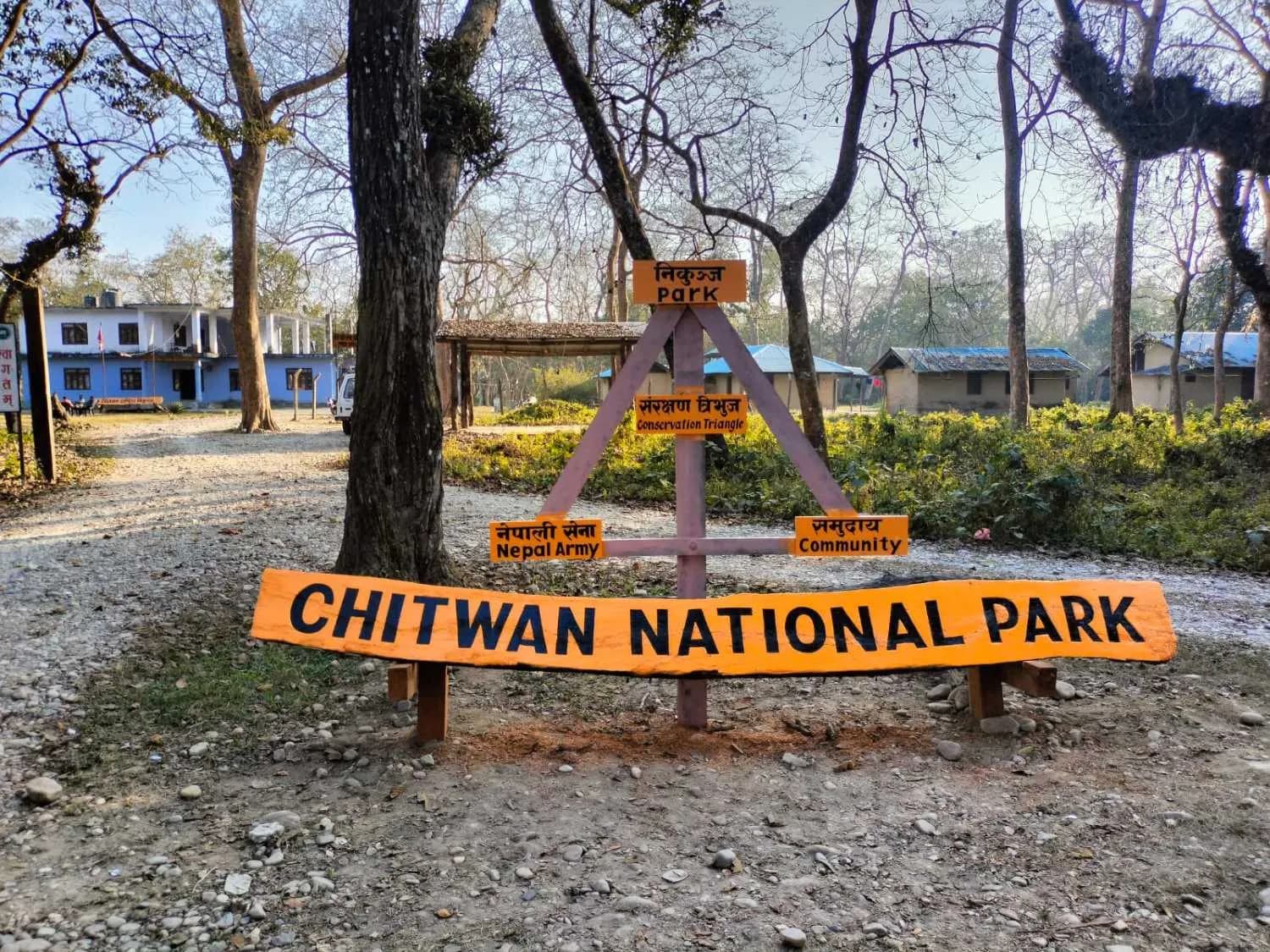
Forget the snow-capped giants for a moment. Down in Nepal's steamy southern lowlands, where the Rapti and Narayani rivers carve through sal forests and tall elephant grass, there's a wilder side of the country that travelers consistently call the highlight of their trip. Chitwan National Park, a UNESCO World Heritage Site since 1984, covers 952.63 square kilometers of subtropical jungle that shelters Bengal tigers, one-horned rhinos, gharial crocodiles, and over 500 bird species.
Our marketplace team has coordinated thousands of Chitwan itineraries, and we've built this 2026 bucket list from direct field reports, current permit structures, and the genuine pulse of Sauraha — the gateway village where most travelers base themselves. This isn't a travel-brochure summary. It's the practical, on-the-ground guide we'd give a friend flying into Bharatpur next week.
Chitwan National Park is Nepal's premier wildlife destination, offering the highest probability of spotting the endangered greater one-horned rhinoceros (population 752 as of 2021) outside of India. Beyond safaris, the region delivers authentic Tharu indigenous culture, river canoeing, and birdwatching — all accessible in a compact 2 to 4-day trip from Kathmandu or Pokhara.
Every activity inside the park requires the official entry permit issued at the National Park office in Sauraha. Buffer-zone activities (like village walks) don't require it, but jungle walks, jeep safaris, and canoe rides do. Our field coordinators recommend purchasing the permit on the morning of your first activity.
Permit / Service | Cost (2026) |
National Park Entry (Foreigner) | NPR 2,000 per day (NPR 2,000 + 13% VAT) |
National Park Entry (SAARC) | NPR 1,000 per day (NPR 1,000 + 13% VAT) |
Licensed Naturalist Guide (half day) | NPR 2,500 – 3,500 |
Canoe Ride (per person) | NPR 1,500 – 2,000 |
Full-Day Jeep Safari | NPR 4,500 – 6,500 |
Tharu Cultural Show Ticket | NPR 200 – 400 |
Cash reality: ATMs exist in Sauraha (NIC Asia, Nabil), but they frequently run dry on weekends. Carry sufficient Nepalese Rupees from Kathmandu or Bharatpur. International cards are accepted only at upper-tier lodges.
Source: Viator
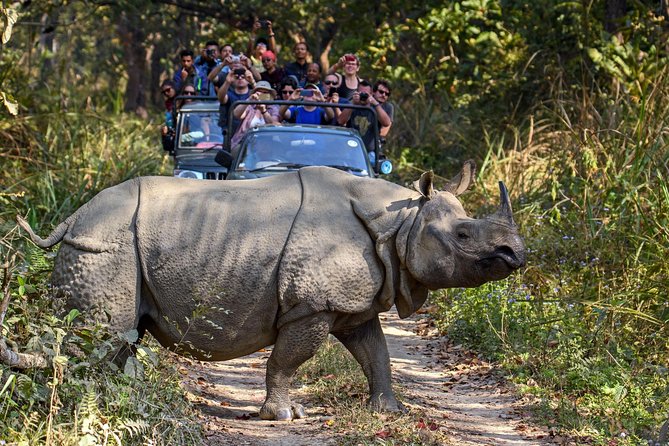
One-horned rhinoceros spotted during a jeep safari tour in Chitwan National Park.
A full-day jeep safari is the single best way to cover Chitwan's core zone and maximize rhino sightings. Open-top 4x4s depart Sauraha around 6:00 AM, cross the Rapti River via a flat-bottomed boat, and traverse 40 to 60 kilometers of jungle tracks over 7-8 hours, with a midday picnic stop near a watchtower.
The dry season (February to May) thins out the elephant grass dramatically, lifting rhino sighting probability to nearly 90% based on our operator data. Tiger sightings remain rare — perhaps 1 in 15 trips — but sloth bears, gaur, and wild boar appear regularly. Bring binoculars; the guides spot far more than they say aloud.
Source: Chitwan Tourism
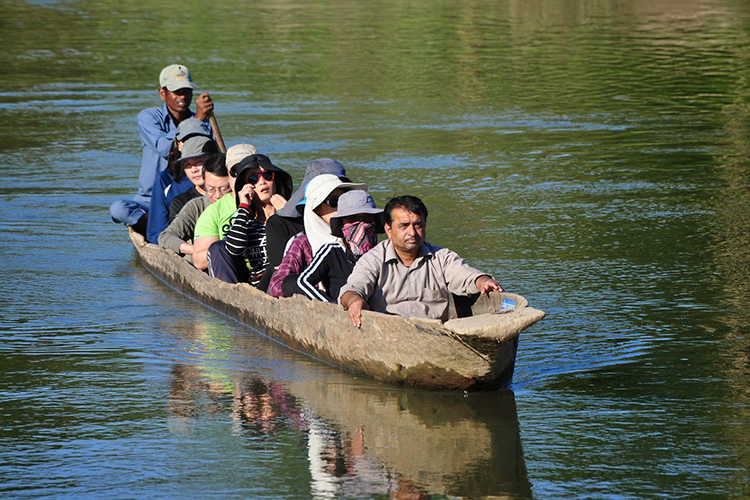
Tourists enjoying a traditional dugout canoe ride on the Rapti River.
The traditional dugout canoes, hand-carved from a single kapok tree trunk, glide silently along the Rapti at dawn. The ride lasts roughly 45 minutes to 1 hour and is the easiest way to see mugger crocodiles sunning on the banks and the critically endangered gharial, recognizable by its slender snout.
Pair the canoe with a return jungle walk for the classic half-day combo. We recommend the 6:30 AM departure — mist on the water, kingfishers darting across the bow, and the jungle waking up on the far bank.
Source: Jungle Safari Resort
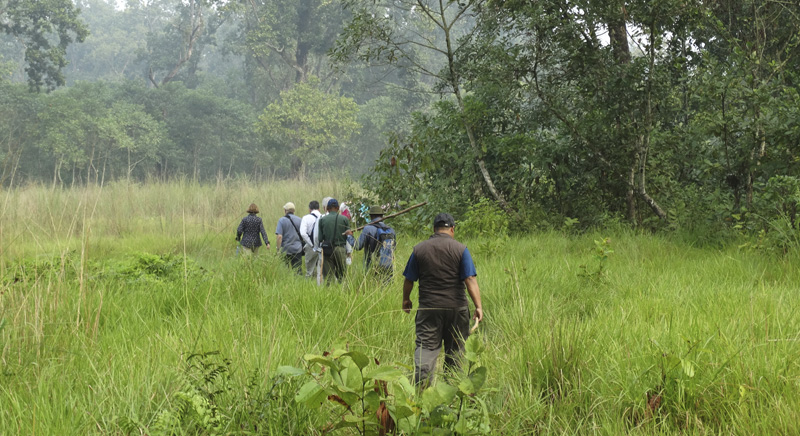
Travelers on a guided jungle walking safari through tall elephant grass.
Walking the jungle on foot is the rawest Chitwan experience available. Two licensed naturalists — one leading with a bamboo stick, one watching the rear — escort small groups of 4 to 6 people through rhino paths and tiger territory. Half-day walks cover 8-10 kilometers; full-day options stretch to 20 kilometers.
The safety briefing is real: if a rhino charges, climb a tree or run in a zigzag. Our team only books jungle walks with guides holding current Nepal Tourism Board accreditation. This is not a casual stroll, and travelers with mobility issues should opt for the jeep safari instead.
Source: Chitwan Wildlife Safari
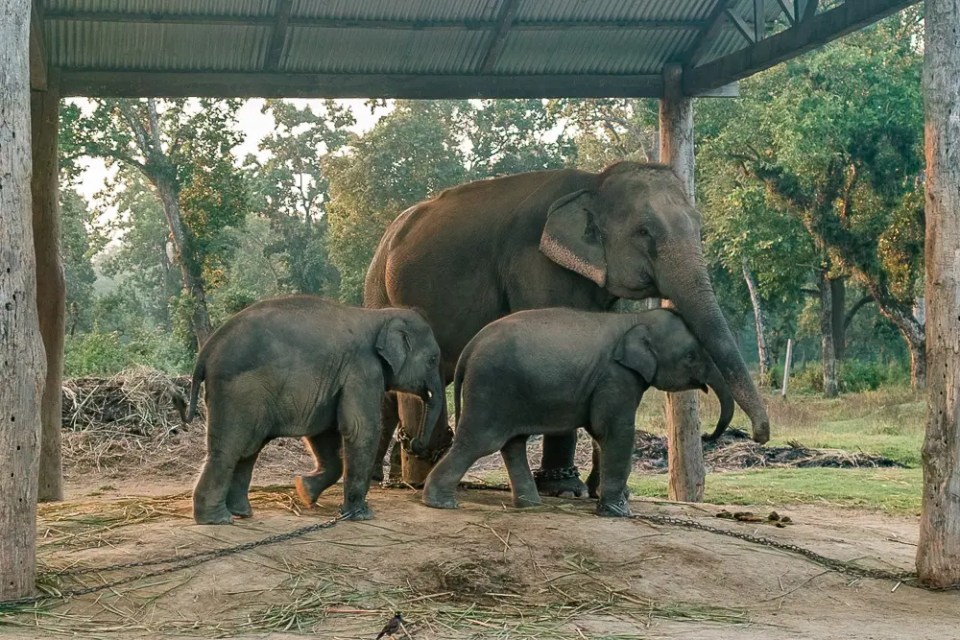
An adult elephant with two calves at the Chitwan Elephant Breeding Center.
Located about 3 kilometers west of Sauraha across the Budhi Rapti River, the government-run Elephant Breeding Center houses domesticated elephants used for park patrols and conservation. Visiting hours run 6:00 AM – 6:00 PM, and entry is NPR 100.
We strongly advise observing the elephants respectfully — feeding, riding, and bathing programs have been phased out across reputable operators due to welfare concerns. Watching baby elephants interact with their mothers in the early morning is enough magic on its own.
Source: Kasara Resort
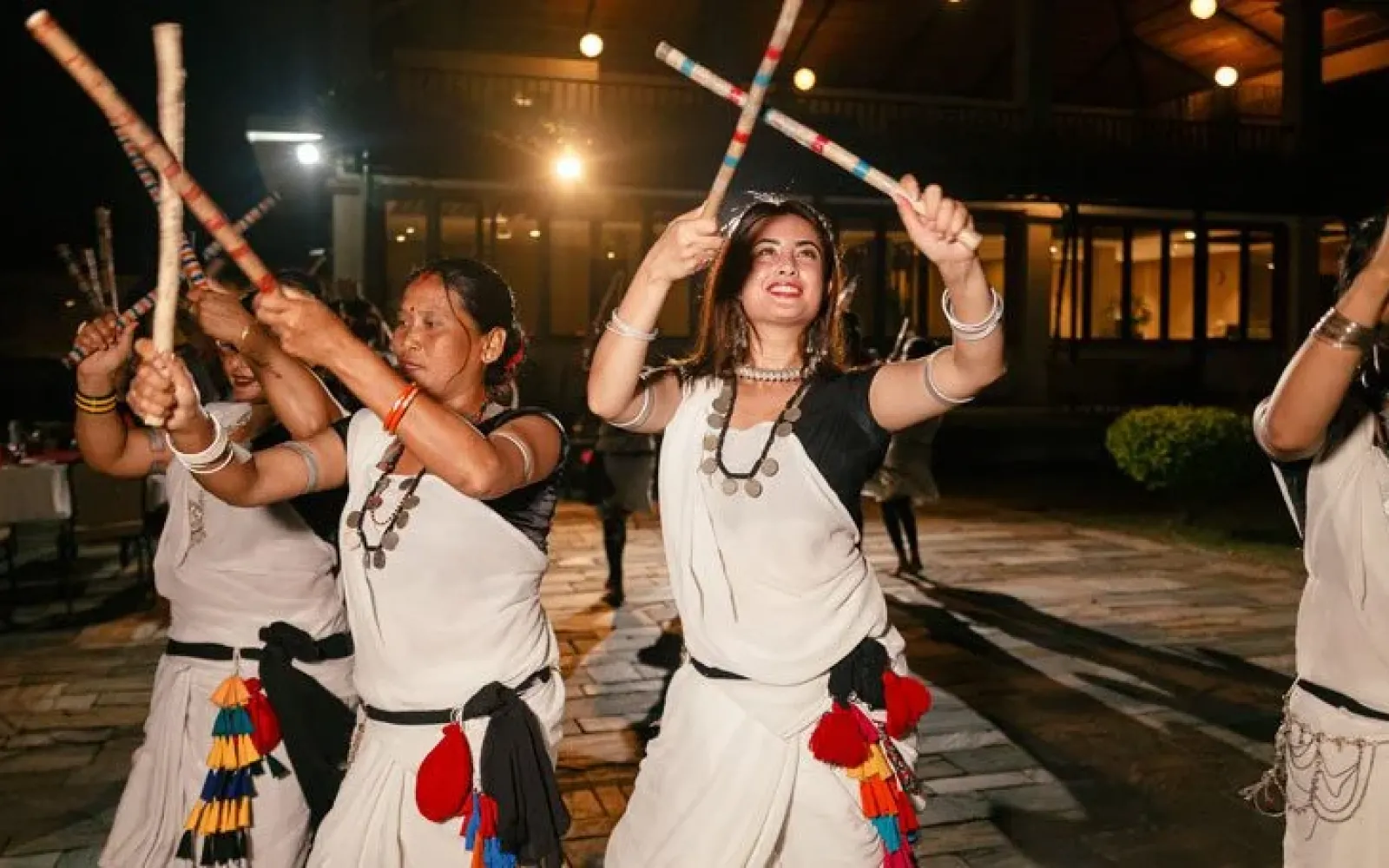
Dancers performing the traditional Tharu stick dance at a resort in Chitwan.
The Tharu are the indigenous people of the Terai, immune to malaria for generations and the original stewards of this land. Their stick dance — performed by men in synchronized formations clashing bamboo staves — is hypnotic and ends with audience participation that nobody escapes.
Shows run nightly at the Tharu Cultural Museum and several community venues, starting around 7:00 PM. Tickets cost NPR 200-400. Skip the staged hotel performances and book through a community-run venue — your money supports the village directly.
Source: Localee
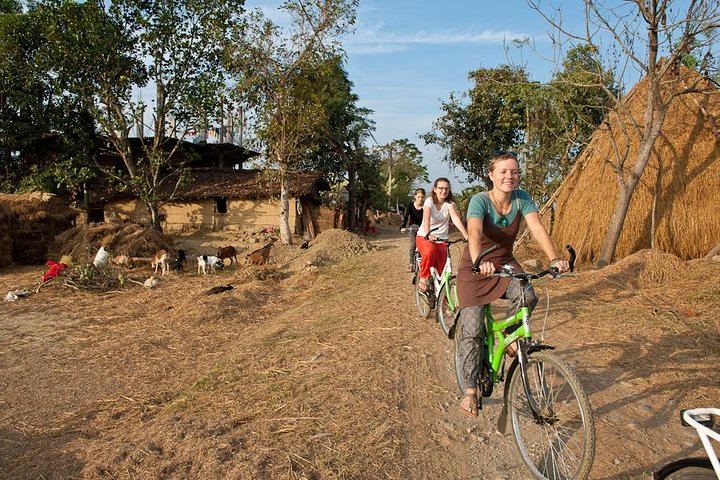
Guided village cycling tour through a traditional Tharu indigenous community.
Rent a basic bicycle in Sauraha for NPR 300-500 per day and pedal the flat dirt roads through Bachhauli, Patihani, and the surrounding Tharu hamlets. You'll pass mud-and-dung longhouses painted with white geometric murals, mustard fields, and women winnowing rice in the courtyards.
The terrain is genuinely flat — a welcome change from the rest of Nepal — and the loop takes 2-3 hours at a relaxed pace. Bring water and a hat; the Terai sun is unforgiving by 10:00 AM.
Source: Mountain Delights Treks
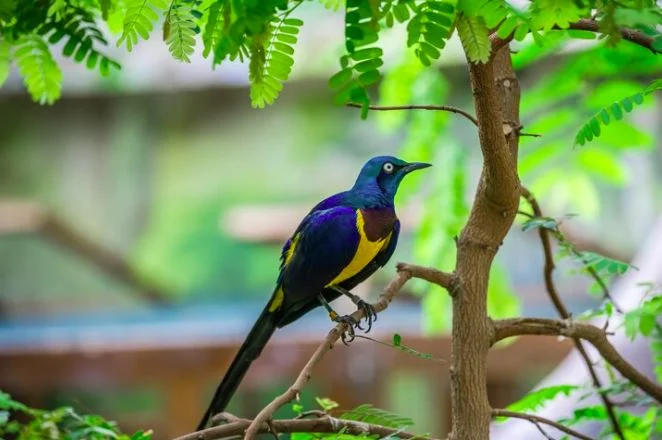
Bird watching tour in Nepal featuring a colorful exotic bird on a branch.
Chitwan hosts over 500 recorded bird species, making it one of South Asia's premier birding destinations. The Bishazari Tal (Twenty Thousand Lakes) Ramsar wetland, located 15 kilometers from Sauraha, attracts paradise flycatchers, lesser adjutant storks, and ruddy shelducks.
Serious birders should hire a specialist guide (NPR 4,000-5,000 per day) — generalist naturalists know the big mammals, but bird IDs require dedicated expertise. Peak migration runs November through February.
Source: The Longest Way Home
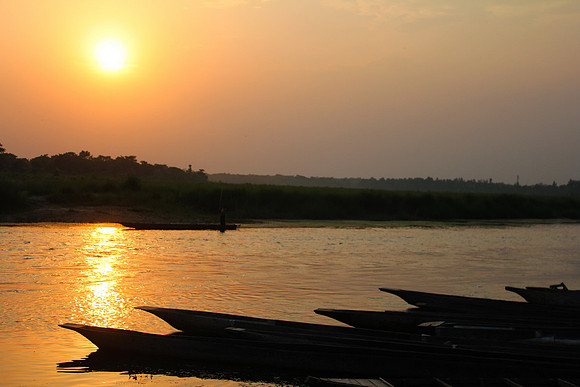
Golden sunset over the Rapti River with traditional canoes on the riverbank.
Every evening around 5:00 PM, travelers and locals gather on the wide sandy bank of the Rapti at the southern edge of Sauraha. Plastic chairs appear, chai vendors materialize, and the sun drops behind the silhouetted sal forest of the park.
This is free, unticketed, and arguably the most photographed moment of any Chitwan trip. Occasionally a rhino wanders out onto the opposite bank to drink — bring a zoom lens.
Source: Kasara Resort
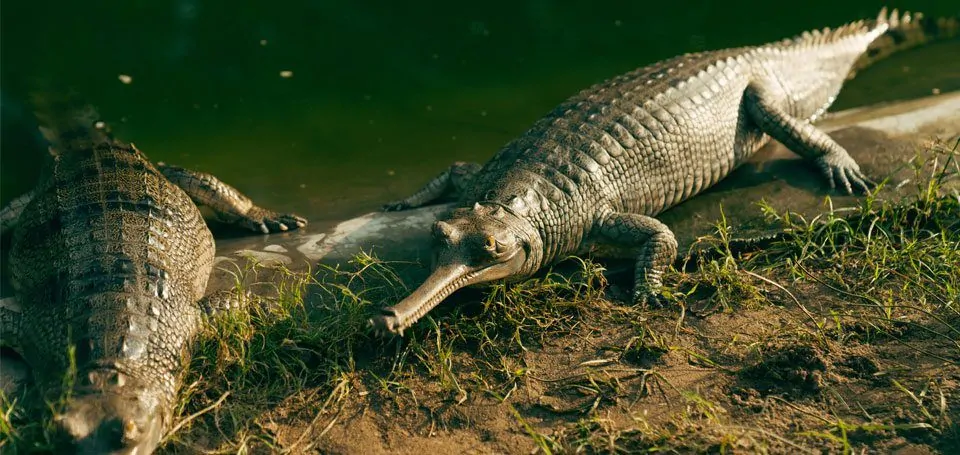
Rare Gharial crocodiles at the Kasara crocodile breeding center in Chitwan.
Deep inside the park near Kasara headquarters, the Gharial Conservation Breeding Center has been rebuilding the critically endangered gharial population since 1978. Fewer than 250 adult gharials remain in the wild globally, and this facility releases juveniles into the Narayani river system each year.
The center is typically combined with a full-day jeep safari since it sits roughly 20 kilometers inside the park. Entry is included with your park permit.
Source: Community Homestay Network
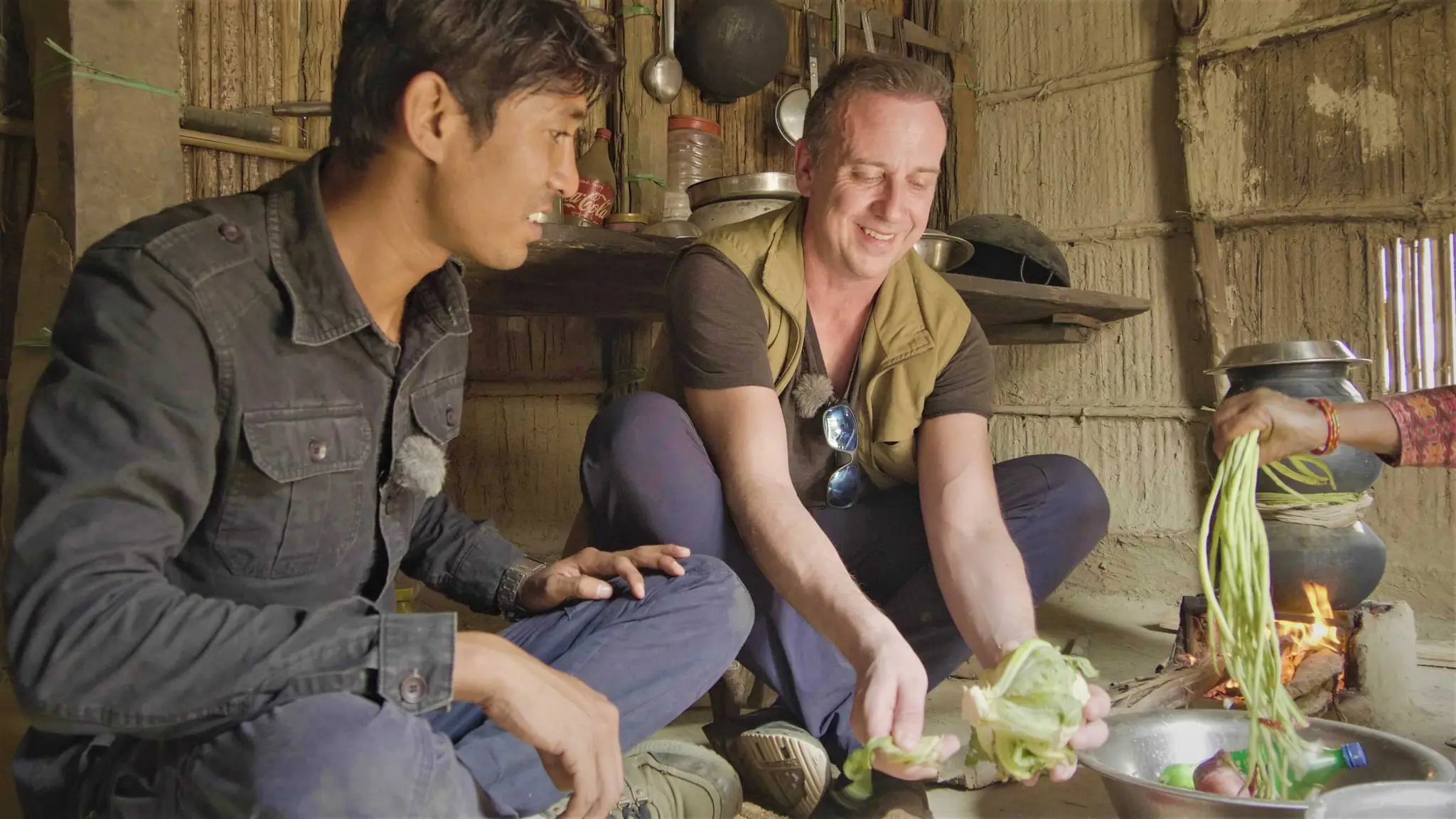
Tourists participating in a traditional Tharu community homestay cooking class.
Tharu cuisine is dramatically different from the Dal Bhat you'll eat elsewhere in Nepal. Expect ghonghi (river snail curry), dhikri (steamed rice flour dumplings), and fermented bamboo shoots. Several homestays in Bachhauli offer half-day cooking classes for NPR 1,500-2,500, including market shopping and the full meal.
From a dietary safety perspective, this is also one of the few regions in Nepal where fresh meat (chicken, fish) is widely available and safe — refrigeration and supply chains function normally in the Terai lowlands.
Source: Flickr
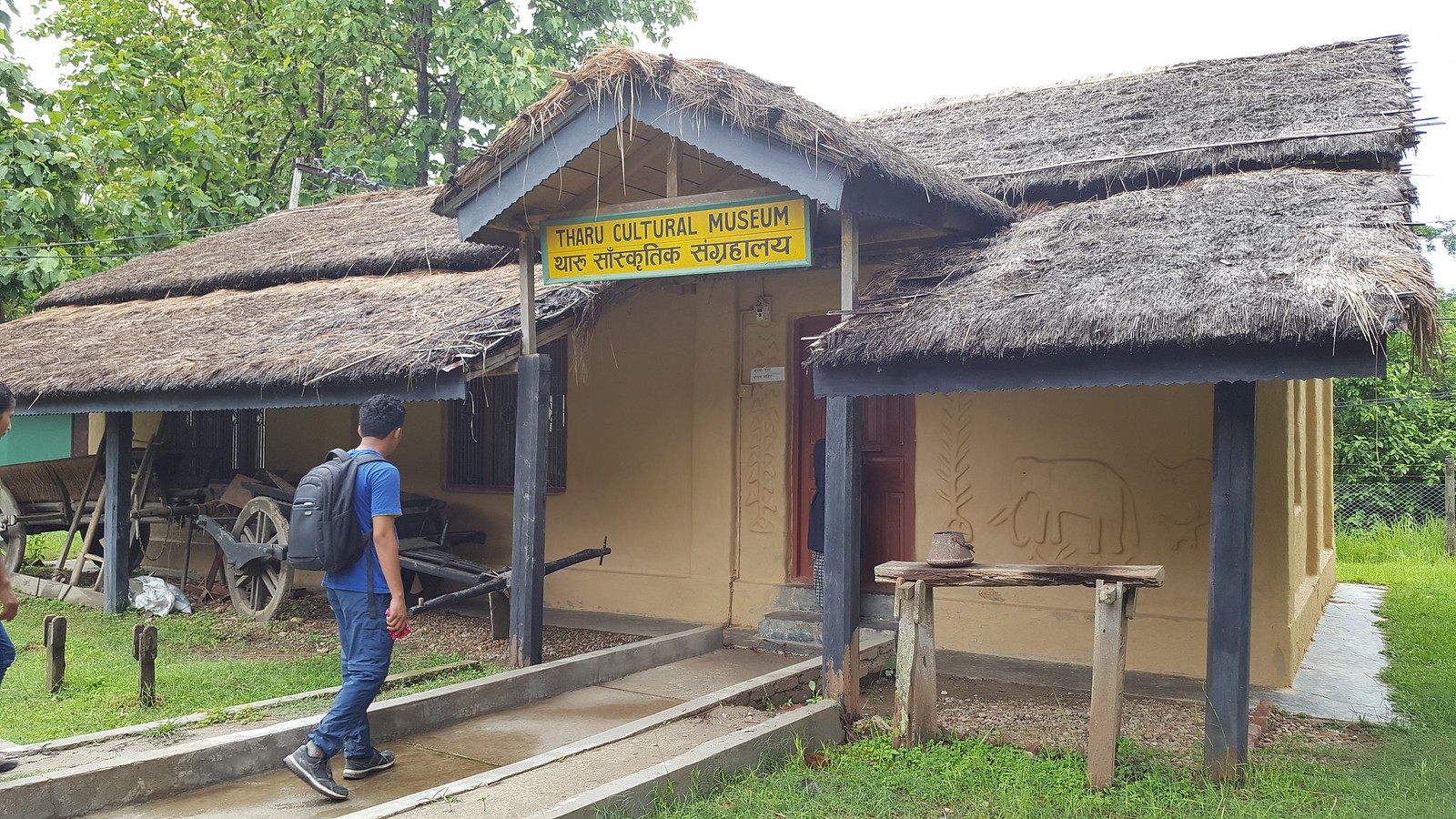
Exterior of the Tharu Cultural Museum with a traditional thatched roof house.
Located in central Sauraha, the small but well-curated museum displays traditional Tharu farming tools, fishing nets woven from jute, ceremonial masks, and photographs documenting the community's pre-1950s isolation. Entry is NPR 100, and the visit takes 30-45 minutes.
Pair this with the cultural show in the evening for proper context — the dances make far more sense after seeing the agricultural calendar on display.
Source: Community Homestay Network
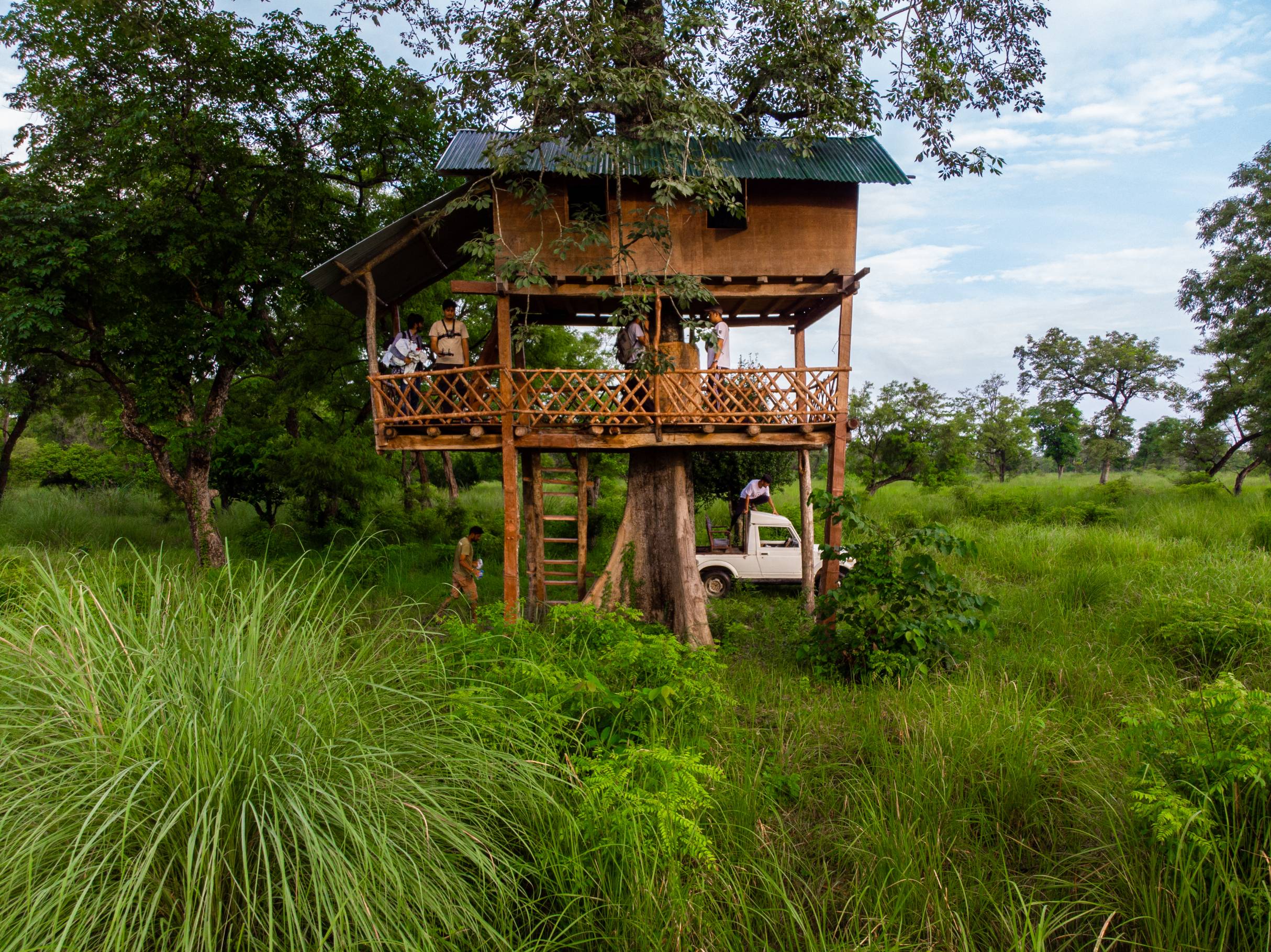
Eco-friendly treehouse accommodation in a jungle community homestay network.
Hidden inside the park are several elevated wooden watchtowers (machans) where serious wildlife photographers can sit silently for hours. Overnight machan stays require special permission and a guide, costing approximately USD 80-120 per person, including meals.
Tigers, leopards, and sloth bears use the same trails repeatedly, and dawn from a machan tower delivers sightings that day-trippers never see. Book this through a licensed operator at least 2-3 weeks in advance.
Source : Holiday Nepal
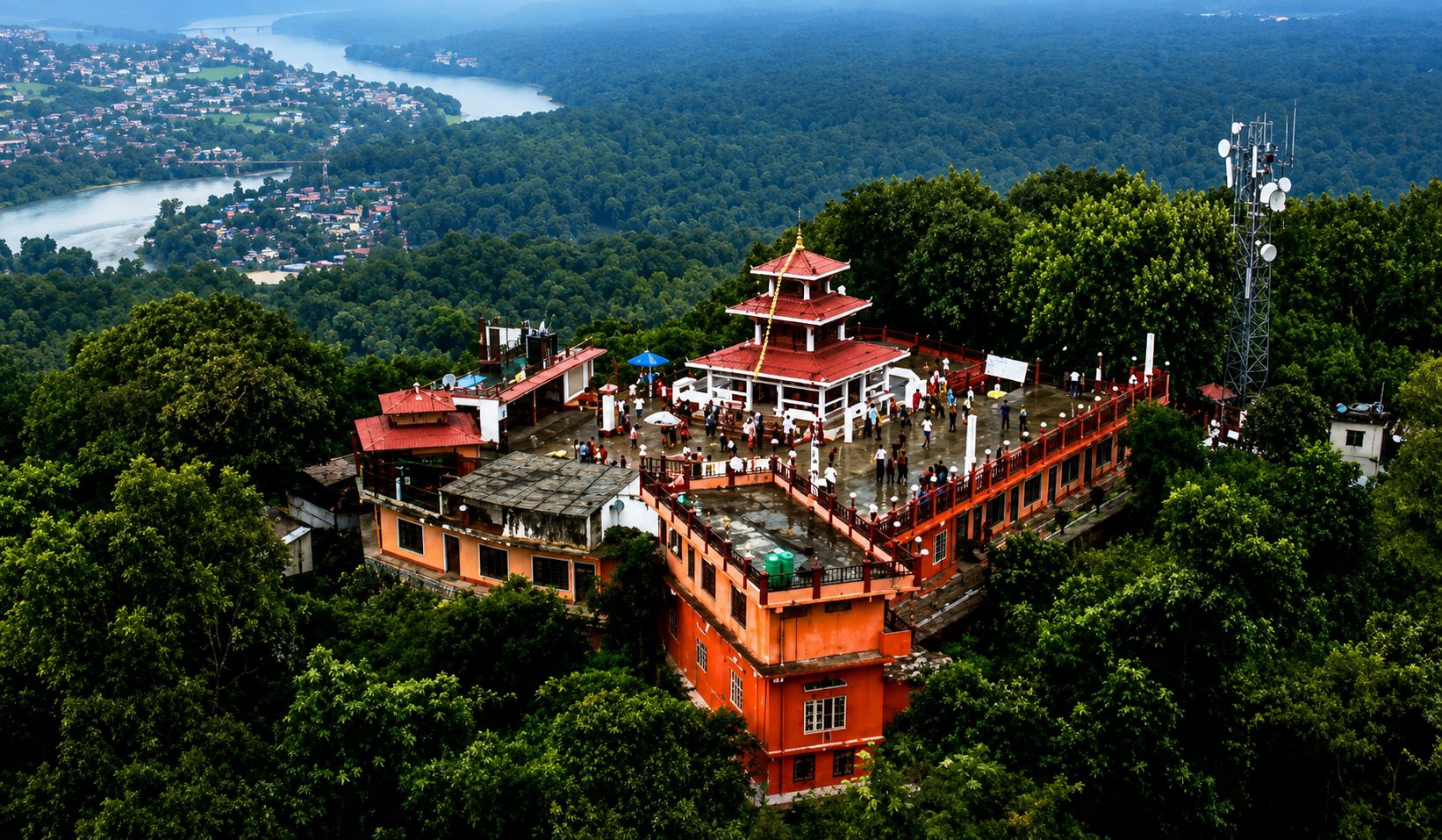
Aerial view of the sacred Devghat temple complex in Bharatpur overlooking the river.
About 10 kilometers from Bharatpur, Devghat marks the sacred confluence of the Kali Gandaki and Trishuli rivers, forming the Narayani. Hindu pilgrims come here to perform last rites and bathe during Maghe Sankranti (mid-January). It's a quiet, atmospheric counterpoint to the jungle and offers genuine cultural insight without tourist crowds.
Dress modestly — covered shoulders and knees — and remove shoes before approaching the riverside shrines. Photography of cremation ceremonies is strictly forbidden.
Source: Evendo
Riverside cafe with outdoor seating and thatched-roof huts in Sauraha, Chitwan.
The main strip of Sauraha hosts a surprisingly good cluster of cafes catering to returning trekkers and overlanders. Wood-fired pizzas, real espresso, and homemade apple pie make this an easy decompression stop between Kathmandu and Pokhara. Our team consistently recommends the riverside spots near Gaida Chowk or along the main Rapti beach embankment for sundowners.
Wi-Fi is generally reliable across Sauraha — Ncell 4G coverage is strong throughout the buffer zone, and most cafes offer free guest networks.
Source: Nepal Trek Adventure
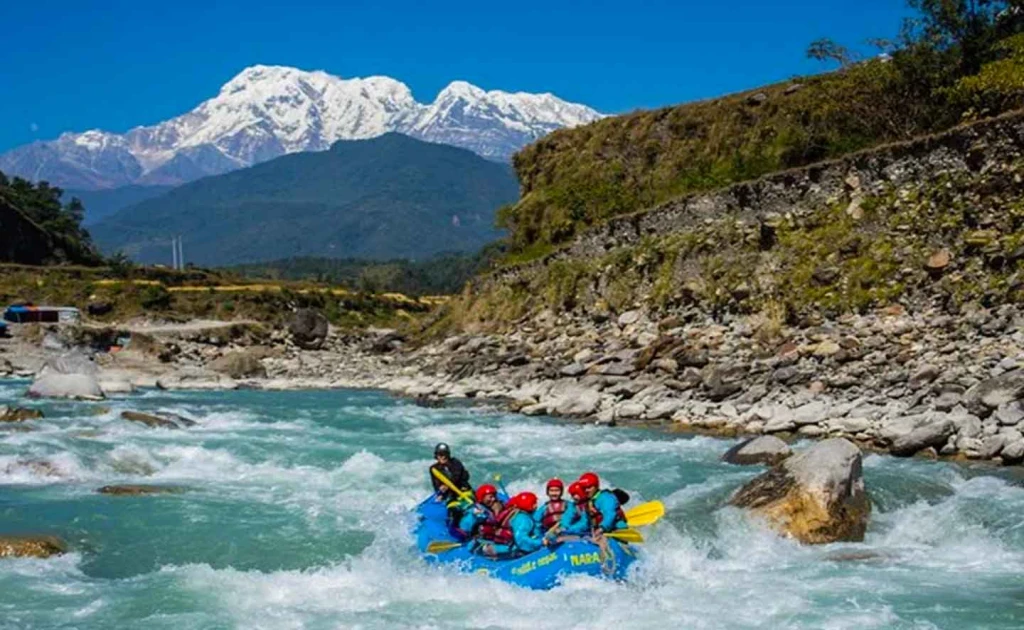
White-water rafting adventure on the Trishuli River with snow-capped mountains.
The Trishuli River, which runs along the main highway artery connecting Kathmandu and Pokhara to the plains, offers fantastic Class II-III white-water rafting. Most travelers add a rafting segment to split up the long bus ride before arriving at Chitwan's northern boundary river, the Rapti.
Rafting day trips run USD 35-55 per person and include lunch and gear. The river is safe year-round outside the peak monsoon weeks (July-August).
Season | Months | Conditions | Wildlife Score |
Cool Dry | Oct-Feb | 15-25°C, clear, foggy mornings | Excellent |
Hot Dry | Mar-May | 25-38°C, hazy, best for tigers | Best |
Monsoon | Jun-Sep | 28-35°C, heavy rain, leeches | Limited |
Post-Monsoon | Late Sep-Oct | 22-30°C, lush, mosquitoes | Good |
From Kathmandu, tourist buses depart at 7:00 AM from Sorhakhutte and Kantipath, reaching Sauraha in 6-7 hours for around NPR 1,000-1,500. Private jeeps cut the time to 5-6 hours. Domestic flights from Kathmandu to Bharatpur Airport take just 25 minutes, with rates varying seasonally — verify live pricing through your agency.
From Pokhara, the road journey is 4-5 hours via Mugling. Tourist buses cost around NPR 800-1,200. The route is scenic but the Mugling-Narayanghat section can be slow due to truck traffic.
Tipping is genuinely expected and forms a meaningful part of guide and jeep-driver income. For a standard 2-night, 3-day package, we suggest NPR 1,500-2,500 per guide and NPR 800-1,200 per driver, distributed at the end of the trip. For multi-day private safaris, allocate 15%-20% of the total package cost across the crew.
Tharu villages welcome respectful visitors, but cultural decorum matters. Ask before photographing people, especially women and elderly residents. Remove shoes before entering homes. Hindu shrines should be circumnavigated clockwise. If invited to share food, accept with both hands or your right hand only — using the left hand alone is considered impolite.
Chitwan sits at 150 meters elevation, so altitude is irrelevant here — but wildlife encounters carry real risk. Rhinos cause more human injuries in Chitwan than tigers, and crocodiles are a genuine hazard near unattended river banks. Standard travel insurance covering medical evacuation is sufficient (high-altitude helicopter coverage is not needed at this elevation).
Malaria has been largely eliminated from the region, but dengue cases occur seasonally. Strong repellent and covered clothing at dusk are your best defense.
Day | Morning | Afternoon | Evening |
Day 1 | Arrival Sauraha, check-in | Tharu village cycling | Rapti sunset + cultural show |
Day 2 | Full-day jeep safari | Continue safari + Gharial center | Tharu cooking class dinner |
Day 3 | Canoe ride + jungle walk | Elephant Breeding Center | Departure to Pokhara/Kathmandu |
The permit costs NPR 2,000 per day for foreign nationals, NPR 1,000 for SAARC nationals, and NPR 150 for Nepali citizens. Permits are issued at the National Park office in Sauraha and required for all in-park activities.
Elephant-back safaris have been heavily restricted and are ethically discouraged by all reputable operators. We recommend jeep safaris, canoe rides, and guided jungle walks instead. The Elephant Breeding Center allows respectful observation without riding.
October through March delivers the best combination of cool weather and wildlife visibility. February to April offers the highest rhino and tiger sighting probability as vegetation thins. Avoid June to August due to monsoon flooding.
Tourist buses take 6-7 hours for around NPR 1,000-1,500. Private jeeps take 5-6 hours. Domestic flights to Bharatpur Airport take just 25 minutes followed by a 30-minute drive to Sauraha.
Yes — Chitwan hosts approximately 125 Bengal tigers per the 2022 census. Sightings remain rare and require luck. Multi-day jeep safaris during March-May, when grass is short and animals concentrate near water, offer the highest probability.
Yes, all activities inside Chitwan National Park require a licensed naturalist guide for safety and regulatory compliance. Solo entry into core jungle zones is strictly prohibited under National Park rules, and guides are mandatory for jeep safaris, canoe rides, and jungle walks.
Our marketplace connects you directly with verified, licensed Chitwan naturalist guides and Tharu community operators — no middlemen, transparent pricing, and itineraries you can customize down to the smallest detail. Whether you're adding a quick 2-day jungle stop between Kathmandu and Pokhara or building a dedicated 5-day wildlife photography expedition, browse current Chitwan packages on our platform and message a guide today.
The ultimate guide to planning your dream web travel adventure with the experts from myeasyguide.
Spam free. Unsubscribe anytime. We respect your privacy.